Locations:


Some birth control methods — and how you use them — may lighten or stop your period
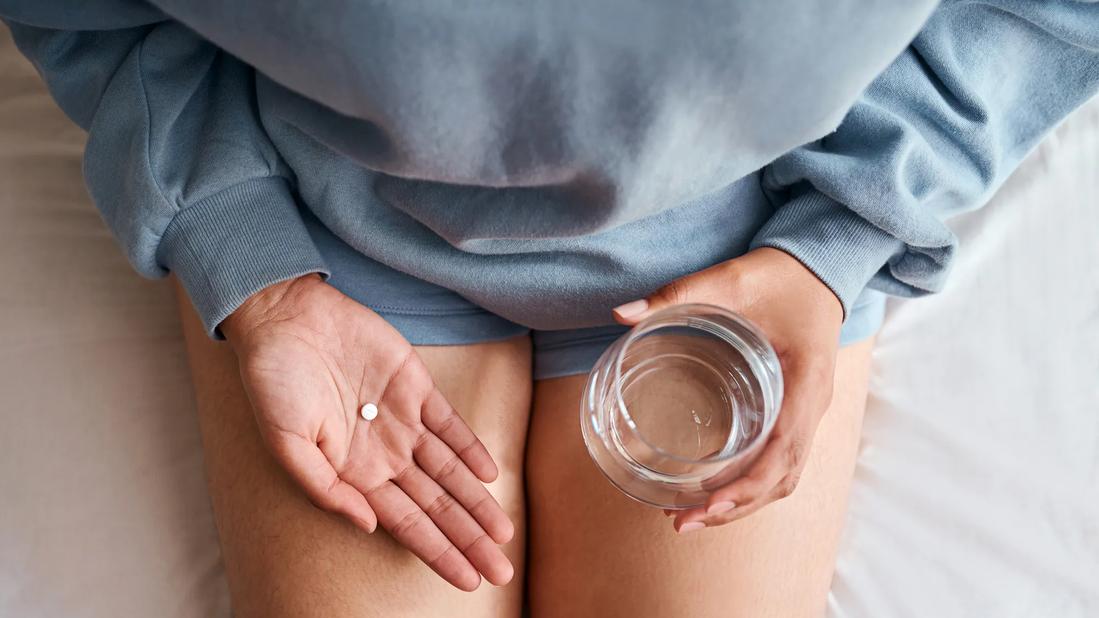
Image content: This image is available to view online.
View image online (https://assets.clevelandclinic.org/transform/cf9d4ee9-6b7d-45ae-bcb3-9a05f04abf1a/birth-control-2148819094)
Person sitting, holding a pill in one hand and a glass of water in the other over their legs
Having periods is part of life from puberty through menopause. But ... do they have to be?
Advertisement
Cleveland Clinic is a non-profit academic medical center. Advertising on our site helps support our mission. We do not endorse non-Cleveland Clinic products or services. Policy
Certain birth control methods may make your periods lighter. They may even stop them altogether.
Ob/Gyn Erica Bishop, MD, explains your options for using birth control to stop your period.
With typical use, birth control pills don’t stop your period. But if you skip the week of hormone-free pills, it may stop it, or at least make it much lighter.
Here’s how that works.
If you take a combination birth control pill (the kind that includes both estrogen and progestin), your pack likely comes with three weeks of active pills and one week of hormone-free pills — or 24 days of active pills and four days of hormone-free ones.
When you take the hormone-free pills, your hormone levels drop, and you bleed.
But there’s another strategy that could stop your period: Rather than taking the hormone-free pills, you simply start the next pack.
“That keeps your hormone levels stable and, in most cases, can prevent bleeding,” Dr. Bishop explains.
It’s worth noting that this strategy doesn’t work with low-dose progestin-only pills, which are sometimes called the “minipill.” Those packs don’t include placebo pills.
The pill isn’t the only birth control out there that can be used to halt your period.
“There are a lot of different birth control options available, and several of them can make your period lighter or go away altogether,” Dr. Bishop notes.
Advertisement
She says these other hormonal birth control methods can help stop or slow your flow:
Some women opt to skip their periods simply because it’s convenient. (After all, who wants to worry about blood stains on new white pants, or packing period supplies for a vacation at the beach?)
There can be some real health benefits to being period-free, too. Using birth control to stop your periods can also help manage challenges like painful cramps, bloating, moodiness and other period-related discomforts.
“Even if you don’t have any particular challenges with your period, you may still prefer to skip your period,” Dr. Bishop says. “This approach can be especially helpful for women who have heavy bleeding and other severe symptoms during their periods.”
Advertisement
Skipping your period may also come with benefits like:
It may feel unnatural to not have regular periods. But skipping or stopping your period is safe, Dr. Bishop reassures.
“The only real downside to using birth control to miss your periods is that there’s a small chance of breakthrough bleeding,” she says. “So, you still might want to carry some pads or tampons with you just in case.”
You may also have been told that you need to have your period in order to “clean out” your uterus. But that’s simply not true. When you use birth control to stop your period, the lining of your uterus doesn’t thicken as it otherwise would — so there’s no blood to be “cleaned out.”
Advertisement
And if you’re not planning to get pregnant, your hormones don’t need to follow the natural ebb and flow that allows for ovulation and conception.
Just be sure to use your birth control consistently to prevent pregnancy: Take your pill at the same time every day, change your ring on time and get your IUD replaced before it expires.
If you’re interested in using birth control to stop your period, talk with a women’s healthcare provider about your options. They can help you find the best method to meet your needs.
Advertisement

Sign up for our Health Essentials emails for expert guidance on nutrition, fitness, sleep, skin care and more.
Learn more about our editorial process.
Advertisement

Your fertility, menstrual cycle and period symptoms can return quickly
The Yuzpe regimen is less effective than other forms of emergency contraceptives, and it’s associated with more side effects
Both are about equally effective when used properly — IUDs are long-lasting and don’t require you to think about them

Birth control medications are more than 99% effective, but only when used properly
Today’s birth control pills don’t usually cause depression — but hormones affect everyone differently
No, you can’t prevent pregnancy by douching after sex, having sex standing up or having sex only at the ‘safe’ time
IUDs can make your period lighter, heavier, irregular or stop it completely

Birth control gel is simple to use and an effective method for preventing pregnancy
Research hints at improved strength, balance, blood flow and weight loss, but more evidence is needed
The blended oat beverage may help curb hunger, but it doesn’t work like a GLP-1
Teen cycles are often ‘off-cycle’ for the first few years
 Search