Locations:





Sweat less by using antiperspirant, wearing breathable fabrics and talking to a provider about medical options
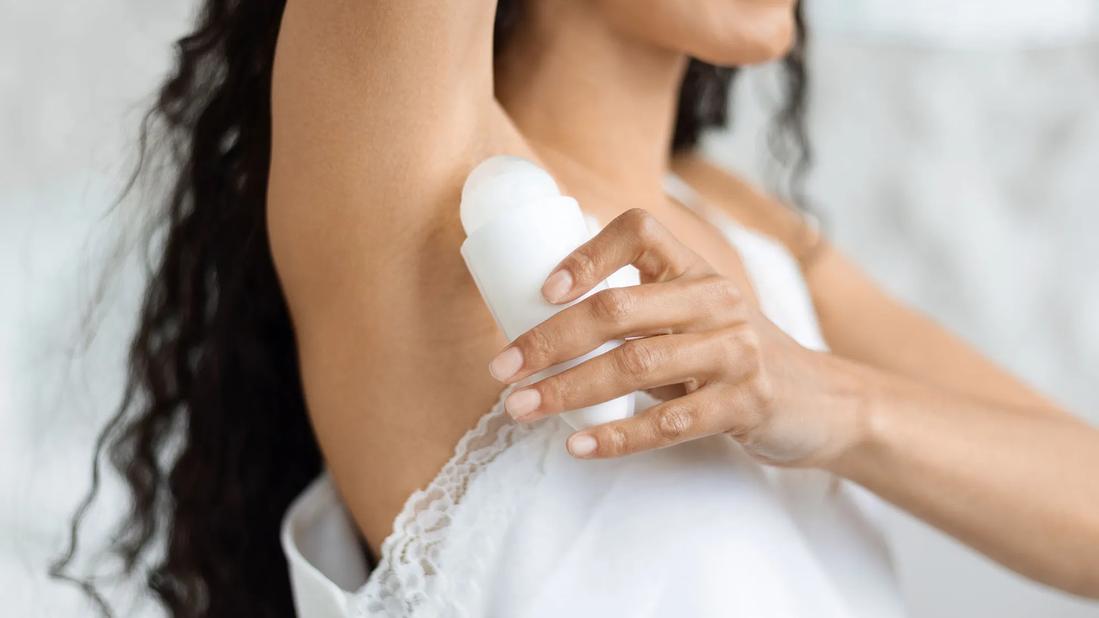
Image content: This image is available to view online.
View image online (https://assets.clevelandclinic.org/transform/73765ac1-a7ee-414e-a742-415c2b858e0e/apply-deodorant-no-sweat-1480107850)
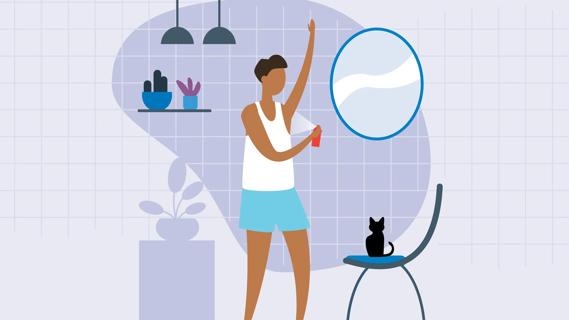
Person applying deoderant
Beads dripping from your forehead. Clammy palms. Pit stains. Sweat can happen almost anywhere on our bodies, and often, at all the wrong times.
Advertisement
Cleveland Clinic is a non-profit academic medical center. Advertising on our site helps support our mission. We do not endorse non-Cleveland Clinic products or services. Policy
Embarrassing and inconvenient as it may be, sweat plays an important role in your health, says dermatology specialist Lauren Lorek, CNP. “Sweating assists in a process called thermoregulation, which manages your body’s temperature. It can also help hydrate your skin and balance your fluids and electrolytes.”
In other words, a bit of sweat can help keep you from overheating. But if you feel like you’re sweating too much, there are ways to safely manage it. Lorek offers up six ways to stop sweating so much.
If your armpits are extra sweaty, you might want to check your medicine cabinet. Make sure you’re using an antiperspirant — not just deodorant.
Deodorant helps mask smells. It typically includes ingredients like baking soda, alcohol and added fragrances. Antiperspirant, on the other hand, stops sweat at the source by blocking your sweat glands. It’s typically made with aluminum salts.
What you wear can make a big difference in how much you sweat. And we’re not just talking about how many layers you put on.
“You want to stay away from synthetic fabrics, like nylon, acrylic and spandex,” Lorek advises. “They don’t allow moisture to be wicked away from your skin.”
Instead, opt for cotton or mesh fabrics. They’re more breathable and can help keep your body cool.
Advertisement
Certain foods can crank up your body’s thermostat and leave you dripping.
“A diet high in fat and low in fiber can make your digestive system work harder, which can raise your internal temperature,” Lorek explains.
Watch your intake of sweat-inducing foods, like:
So, what should you be eating if you want to limit how much you sweat? Lorek recommends upping your intake of hydrating foods and calcium, like:
Drinking enough water won’t stop you from sweating. But it can keep you from sweating too much. That’s because staying hydrated can help cool down your internal temperature.
Perhaps even more importantly, sweating causes your body to lose water, so you need to make that up by drinking more.
You’ve probably heard a host of reasons not to smoke. But you may not know that excessive sweating is yet another unwanted effect.
“Nicotine can increase your body temperature and your heart rate, which essentially causes your sweat glands to go into overdrive,” Lorek explains.
If those changes aren't doing the trick, it may be time to talk to a healthcare provider about other options.
You could have hyperhidrosis, a medical condition where you sweat more than you need to regulate your body temperature. Treatments for this condition depend on where you’re sweating.
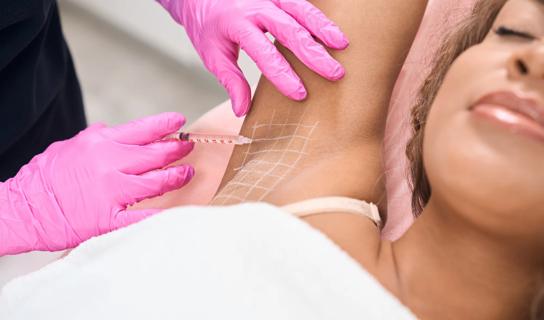
Treatment options for excessive sweating include:
While it may make you uncomfortable to talk to a doctor about, Lorek says not to sweat sweating.
“If it’s impacting your daily life or having an impact on your mental health, let us know,” she encourages. “We want you to have a happy, healthy life, and we can offer a variety of treatments to help.”
Advertisement

Sign up for our Health Essentials emails for expert guidance on nutrition, fitness, sleep, skin care and more.
Learn more about our editorial process.
Advertisement
If you’re waking up drenched, it could be menopause, stress, medications and other causes
Exercise, weather, anxiety, hormone changes and spicy foods can cause you to perspire more than usual
It can be a warning sign of low blood sugar or something more serious like a heart attack
One reduces the amount of sweat, while the other masks body odor

Tackle perspiration and odor by wearing breathable fabrics, showering after exercising and using an absorbent powder
Injections of Botox can significantly reduce sweating for up to a year, especially in your armpits
Keeping your skin dry, wearing the right clothes and investing in anti-chafe products can help minimize skin irritation
Hormone therapy, medication and lifestyle changes and can help you get the restful ZZZs you need

Rapid weight loss can cause loose skin, facial volume loss and body contour changes
Swallowing too much air, certain foods and drinks, and digestive conditions can all make you belch more
From poor hand hygiene and ventilation issues to contaminated food, many factors can make infectious diseases spread quickly
 Search










