Locations:





 Search
Most people fall asleep within 10 to 20 minutes, but if your experience is different, adjusting your sleep schedule may help

Some people fall asleep the moment their bedroom lights go out. Others stare at the ceiling for what seems like an eternity before finally nodding off.
Advertisement
Cleveland Clinic is a non-profit academic medical center. Advertising on our site helps support our mission. We do not endorse non-Cleveland Clinic products or services. Policy
Either could signal issues with the quality of sleep you’re getting. Basically, they’re the opposite extremes of “sleep latency,” a term that refers to the amount of time it takes to transition from full wakefulness to sleep.
So, how long should it take you to fall asleep? Let’s pull back the covers on that question with behavioral sleep medicine psychologist Michelle Drerup, PsyD, DBSM.
Most people need about 10 to 20 minutes to fall asleep. “But this is just an average,” emphasizes Dr. Drerup. “Everyone is different. We don’t want to put too much emphasis on that number.”
But if you’re outside of that range, meaning you fall asleep more quickly or more slowly, it’s worth asking yourself why. Either extreme could offer clues about the quality of your sleep and sleep routine.
Conking out seconds after your head hits the pillow might be a sign of sleep deprivation or sleep deficiency, says Dr. Drerup. It could be your body’s way of saying it’s fatigued from not catching enough ZZZs at night.
Most adults need seven to nine hours of sleep per night to be at their best. If you’re consistently getting less than that and feel sleepy or extremely fatigued during the day, odds are, your sleep needs aren’t being met.
Advertisement
Besides zonking out immediately, here are five other signs you may need to prioritize getting enough sleep:
If your eyes routinely stay open for a half-hour or more after the lights go out, count yourself among the millions of people dealing with insomnia.
Those wakeful moments in bed when you should be snoozing rob you of that all-important rest your body needs, notes Dr. Drerup. That lack of sleep can lead to many of the same way-too-tired signs mentioned above.
“You need sleep to function, just like you need food and water,” she adds. “But just like food and water, not enough or too much can be problematic.”
If you have trouble falling asleep at least three nights a week for more than three months and it’s affecting your daily functioning, you may be dealing with chronic insomnia.
“At that point, it’s best to talk to a doctor to figure out why it’s happening,” advises Dr. Drerup.
If you’re routinely lying awake in bed, a few changes to your bedtime routine may help you reach dreamland a little more quickly. Dr. Drerup suggests:
Advertisement
How long it takes you to fall asleep at night — whether it’s super-fast or agonizingly slow — can help you gauge whether you’re getting the rest your body needs.
Bottom line? If you often wake up feeling unrested, don’t just ignore it and simply pour more coffee.
“Look at sleep as an investment,” says Dr. Drerup. “It makes such a big difference in your daily life and overall health. You really can’t afford to skimp on sleep or ignore signs that you’re not getting enough of it.”
Advertisement
Learn more about our editorial process.
Advertisement
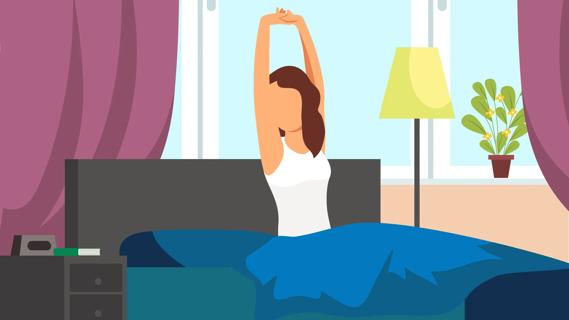
Sleep disorders, mental health conditions and other health concerns can all affect the quality of your sleep

Stick to a consistent schedule, be mindful of screen time and work on reducing your stress levels before bed

Napping can boost focus, memory and mood — if you time it right

These devices can help shed light on what’s happening with your body during rest

Keep a dream journal, set your intentions before bed and make sure you’re getting a full night of high-quality sleep

Controlling your dreams may help you tap into your creativity and even reduce anxiety
A 15- to 20-minute power nap is best to boost alertness — beware napping longer than an hour

Limited research suggests a weighted blanket may help with anxiety, insomnia and other conditions

Wearing a scarf, adjusting your outdoor activities and following your asthma treatment plan can help limit breathing problems
Your diet in the weeks, days and hours ahead of your race can power you to the finish line
When someone guilt trips you, they’re using emotionally manipulative behavior to try to get you to act a certain way











