Locations:


PD-1 inhibitors harness your immune system to shrink tumors
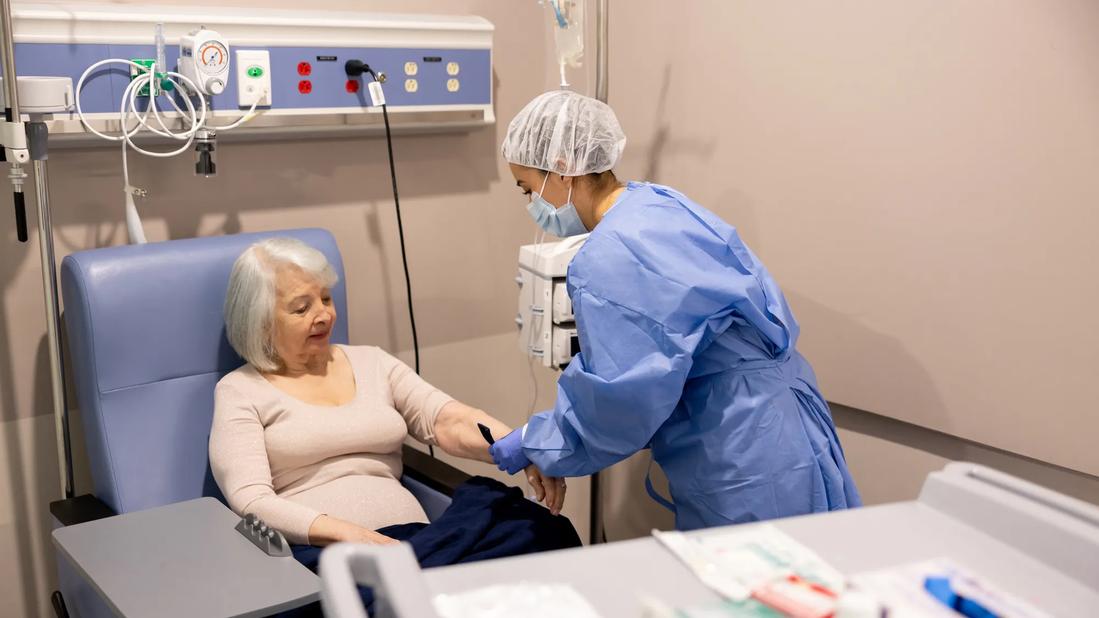
Image content: This image is available to view online.
View image online (https://assets.clevelandclinic.org/transform/c574a704-00fc-4a69-821f-0a0872979e18/Immunotherapy-1404912372)
Healthcare provider getting a patient ready to receive immunotherapy
If you have advanced nonmelanoma skin cancer, you may have heard of immunotherapy. It’s quickly become an option for managing advanced cutaneous squamous cell carcinoma and advanced basal cell carcinoma, especially in people who aren’t good candidates for surgery.
Advertisement
Cleveland Clinic is a non-profit academic medical center. Advertising on our site helps support our mission. We do not endorse non-Cleveland Clinic products or services. Policy
“Immunotherapy doesn’t work for everyone with advanced skin cancer, but it works for a lot of them, and it’s typically very well tolerated,” says head and neck oncologist Jessica Geiger, MD.
Dr. Geiger explains how immunotherapy works for advanced nonmelanoma skin cancer and who may benefit.
Immunotherapy is a treatment that harnesses your immune system to fight cancer.
But what does that mean?
Your immune system works to keep you safe by killing invaders that can harm you. One way it does that is with T cells, which are powerful soldiers that fight off potential threats.
But T cells can get overzealous. So, your body has natural checks and balances to keep them from killing healthy cells. They’re called checkpoint proteins, and their job is to turn off T cells to keep them from going rogue.
Here’s the problem with that.
Advanced skin cancer cells can take advantage of that system. They bind to a protein called PD-1 on your T cells. That sends a message telling your T cells to back off, which keeps them from seeking out and destroying the cancer.
That’s where immunotherapy comes in.
“Immunotherapy medications called PD-1 inhibitors block the message that turns off your T cells,” Dr. Geiger explains. That switches your T cells back on, so they can go in and do what they do best: Attack the cancer.
Advertisement
There are three PD-1 inhibitors used in managing nonmelanoma skin cancer. They’re both given by IV infusion:
Immunotherapy with PD-1 inhibitors is an option for some people with nonmelanoma skin cancer, and it can be very effective.
“Immunotherapy is considered to have palliative intention, meaning that our goal is not to cure but, rather, to control,” Dr. Geiger explains. “However, we have seen a great deal of people have long-term, complete responses to this treatment.”
In other words, immunotherapy isn’t expected to cure your cancer. But research on pembrolizumab suggests that the effects can be major.
In one study, 34% of patients with advanced cutaneous squamous cell carcinoma saw their tumors shrink significantly. And for about 6%, their cancer became undetectable.
Surgery is typically the preferred treatment for advanced skin cancer — when it can be removed safely and effectively. But sometimes, skin cancers are too big, too advanced or too risky to remove.
In some cases, immunotherapy may be used before surgery to shrink a tumor.
“Treating someone with immunotherapy can mean a less intensive surgery,” Dr. Geiger says.
Or your provider may suggest immunotherapy as an alternative to surgery.
“Most of these cancers are in the head and neck area,” she adds. “That’s some precious real estate that can be difficult to approach surgically.”
For example, tumors that are near your eyes, nose, throat or other structures can be tough to remove. You may risk losing your vision or having trouble with your hearing, swallowing and more. You and your team may also have concerns about nerve damage or cosmetic effects.
What’s more, surgery for advanced nonmelanoma skin cancer can be extensive. Anesthesia, surgery and recovery can carry a heavy burden. Depending on your overall health, immunotherapy may be a better option.
It’s a lot to consider, but you’re not alone. Talk with your care team about your options for managing advanced skin cancer. They can help you understand your risks and your likelihood of success with immunotherapy or other treatments.
Advertisement

Sign up for our Health Essentials emails for expert guidance on nutrition, fitness, sleep, skin care and more.
Learn more about our editorial process.
Advertisement

If your platelet count still isn’t where it should be, your provider will revisit your treatment plan to see what needs to change
Your provider will consider ITP treatments based on your health, preferences and other factors
Skin cancer can sometimes itch, but it’s not usually the most common symptom — a persistent itch still warrants a visit to a healthcare provider

Sunlight helps your body produce vitamin D, but be mindful of your sun exposure

The size, shape and color of moles may offer clues that point to melanoma

Side effects like nausea and fatigue are common, but there are ways to feel better

Scalp cancers can occur because of long-term sun exposure

Your care team can help you manage the side effects of surgery, chemo and radiation — but you have to let them know what you’re experiencing

This simple practice can help you notice what’s meaningful, comforting or going well

Maca root supplements claim benefits like sexual health, menopause symptom relief and more energy — but human research is limited

It can take a few months — and you’ll need to put down the tweezers to give your brows time to recover
 Search