Locations:





Annual screenings should start at 40 for most — but some should start younger
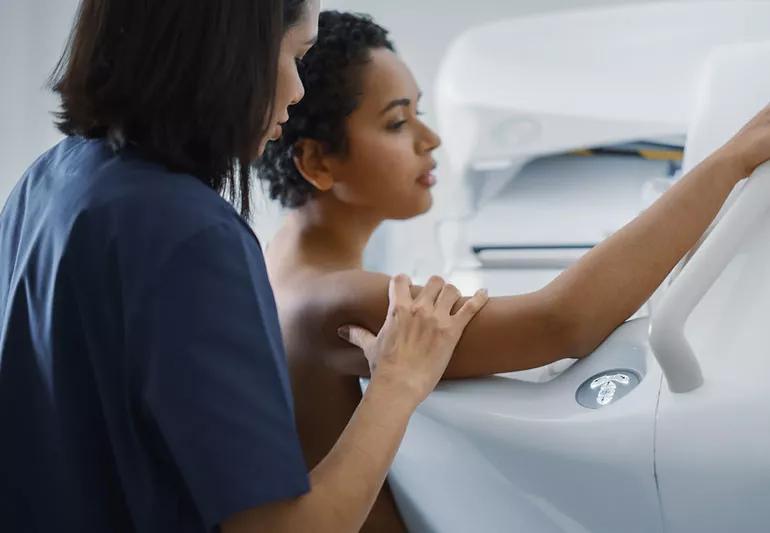
Image content: This image is available to view online.
View image online (https://assets.clevelandclinic.org/transform/824199e0-1751-40d4-9a3b-9bccda434ae2/patientNurseMammogram-1352435554-770x533-1_jpg)
Nurse helping to position a patient's arm during a mammogram.
You’ve probably heard it before, but let’s say it again: Getting regular mammograms is incredibly important for your health. That’s because mammograms are the absolute best tool we have for detecting breast cancer. And that matters. Because breast cancer is one of the most common cancers in females in the United States. It’s second only to skin cancer.
Advertisement
Cleveland Clinic is a non-profit academic medical center. Advertising on our site helps support our mission. We do not endorse non-Cleveland Clinic products or services. Policy
But recommendations for who should get mammograms and how often have changed over time. Those guidelines may vary depending on who you ask. And they’re not one-size-fits-all.
We talked with diagnostic radiologist Laura Dean, MD, to sort it out, so you can be confident you’re taking the best care of yourself and managing your breast health.
The most widely accepted recommendations say that females should get mammograms every year, starting at the age of 40. If you’re at higher risk for breast cancer, your provider may recommend mammograms starting earlier.
Those are the guidelines supported by the American College of Radiology, the Society of Breast Imaging and the American Cancer Society. Newly proposed recommendations from the U.S. Preventive Services Task Force are slightly different. They suggest mammography screenings every two years beginning at age 40.
But most breast health specialists in the U.S. support annual mammography screenings.
“We know that lives are saved when breast cancer is found earlier,” Dr. Dean states. “The strongest evidence from all of the longest-running trials is that annual screening starting at the age of 40 saves the most lives.”
It’s important to note that these recommendations are intended for females. But you don’t have to have breasts to get breast cancer. Though rare, males can get breast cancer, too. Even people who've had their breasts removed can still get breast cancer.
Advertisement
Dr. Dean advises all adults to perform breast self-exams regularly. Talk with a provider if you notice any changes or are concerned about your risk for breast cancer.
For some, earlier screening for breast cancer is better.
“Ideally, by your 30s, you’ll have a conversation and breast cancer risk assessment with your provider to understand your risk and talk about your personal plan for screenings,” Dr. Dean says.
Based on your personal risk of breast cancer, your provider may recommend beginning mammography screenings before the age of 40. Your provider may recommend additional supplemental screening tests if:
Breast cancer causes more than 685,000 deaths worldwide each year. In the U.S., it’s the leading cause of cancer death in women between the ages of 35 and 54.
Regular screening mammograms are the first line of defense.
“Mammograms are the gold standard for screening for breast cancer,” Dr. Dean notes. “Regular screening is the best tool we have to find breast cancer early and save lives.”
Early detection of breast cancer is key to treating it before it has a chance to grow or spread.
Screening mammograms can detect abnormalities in your breast tissue. To be clear: That doesn’t mean they see cancer specifically. Screening mammograms can detect if something is going on that may be cancer, or some other breast health concern. Based on those results, your provider may suggest additional tests or monitoring to understand if there’s reason for concern.
Following an abnormal mammogram finding, your provider may recommend a diagnostic mammogram or a breast biopsy to determine if tissue is cancerous or not.
It’s important to talk to your healthcare provider, like an Ob/Gyn or primary care physician, about your risk for breast cancer. Together, you can create a plan for screening mammograms.
Video content: This video is available to watch online.
View video online (https://cdnapisec.kaltura.com/p/2207941/sp/220794100/playManifest/entryId/1_zfs3jhcm/flavorId/1_5f3sgelj/format/url/protocol/https/a.mp4)
Early detection is key when it comes to diagnosing and treating breast cancer.
Advertisement

Sign up for our Health Essentials emails for expert guidance on nutrition, fitness, sleep, skin care and more.
Learn more about our editorial process.
Advertisement
They’re different versions of the same tool, all with the goal of early detection of breast cancer

A second appointment is common, especially after your first mammogram and if you have dense breasts — but it doesn’t necessarily mean anything is wrong
One is the gold standard for breast screening, while the other is used as a complementary diagnostic tool

The short answer from a radiologist

Managing your weight through physical activity may lower your chances of getting this common cancer

Not all breast lumps signal cancer, and not all breast cancer causes lumps — it’s important to know the facts

The kind of testing you need depends on your symptoms

Spoiler alert: Douching and feminine odor products cause more problems than they solve
Managing your weight through physical activity may lower your chances of getting this common cancer

It typically starts in October and winds down in early spring, with cases at their highest in the middle of winter

Anxiety disorders, health conditions and past trauma can make driving nerve-wracking — help is available
 Search










