Locations:





Correct positioning is one of the keys to getting the best results
Knowing how to use nasal spray properly can be the difference between breathing easily and struggling against sniffles.
Advertisement
Cleveland Clinic is a non-profit academic medical center. Advertising on our site helps support our mission. We do not endorse non-Cleveland Clinic products or services. Policy
“Technique is very important with nose sprays,” explains allergist Mark Aronica, MD. “Sometimes, patients tell me their spray isn’t working. But when we improve their technique, it really helps.”
Dr. Aronica shares his tips for using these treatments.
Whether it’s a prescription medication or an over-the-counter decongestant, there are a few tricks that can help make sure you use a nasal spray correctly.
“Using the spray isn’t always as simple as it seems,” Dr. Aronica recognizes. “Correct positioning and technique are the keys to getting the best results.”
He breaks the process down step by step.
It’s not enough to know how to use a nasal inhaler — you need to know how to use your nasal inhaler. So, before you start spraying:
Advertisement
Now, you’re ready to go.
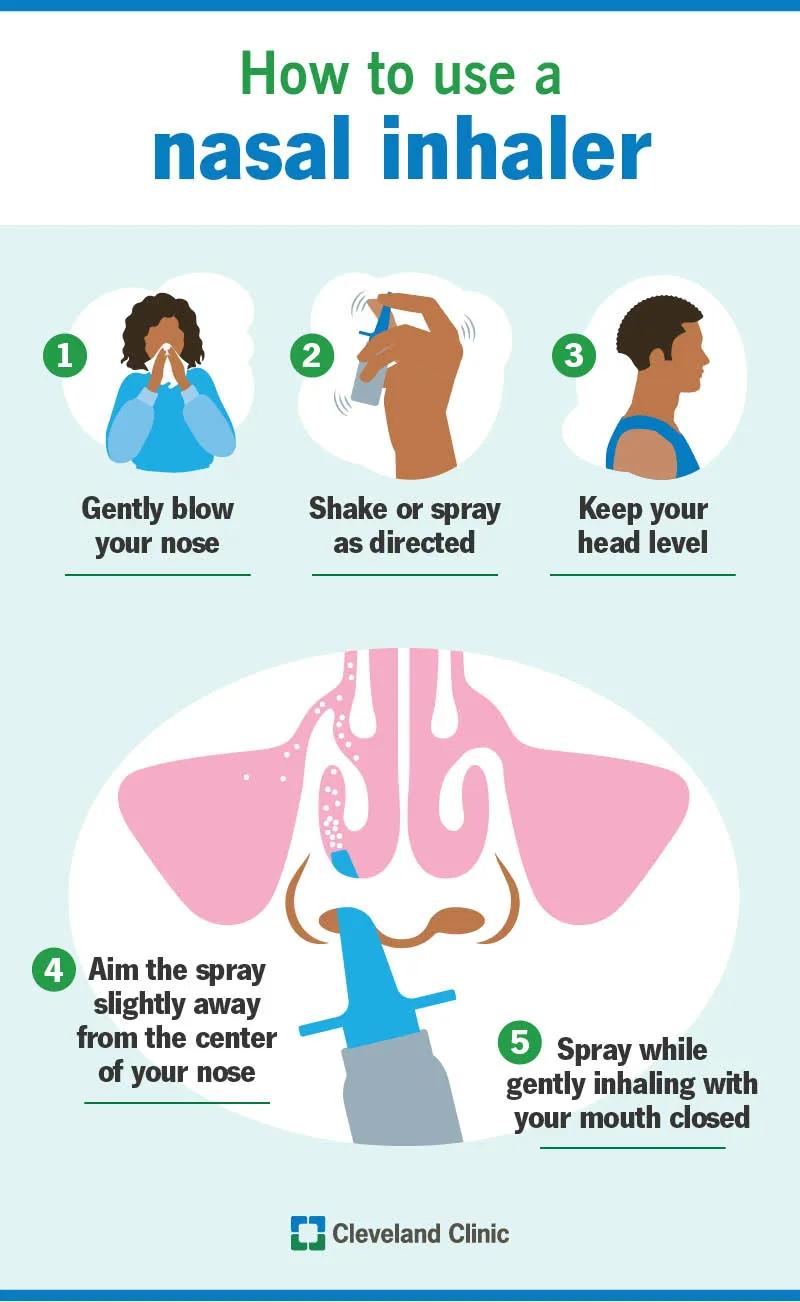
Image content: This image is available to view online.
View image online (https://assets.clevelandclinic.org/transform/9cacab1c-fa67-419e-8c30-950ac500c232/UsingNasalSpray-800x1400)
To properly use your nasal inhaler:
It’s also important to know how to clean and store your nasal spray. For starters, keep it (and any nasal bacteria you may be harboring) to yourself. Once you’ve stuck something in your nose, it shouldn’t go in anyone else’s!
“Keep the bottle clean and only allow one person to use it,” Dr. Aronica urges. “Remember to wipe down the nasal spray bottle and put the cap back on after each use.”
Another tip: Check the product instructions to be sure you’re storing it properly. Occasionally, some types of compounded and prescription nasal sprays need to be refrigerated.
Many over-the-counter nasal spray manufacturers recommend discarding their products within 30 to 90 days of opening them, even if the expiration date is still months or years away. That way, you don’t risk using a product with degraded or contaminated ingredients.
Always check the instructions on the label for specific guidance. And when in doubt, ask your doctor or pharmacist for help.
Advertisement

Sign up for our Health Essentials emails for expert guidance on nutrition, fitness, sleep, skin care and more.
Learn more about our editorial process.
Advertisement
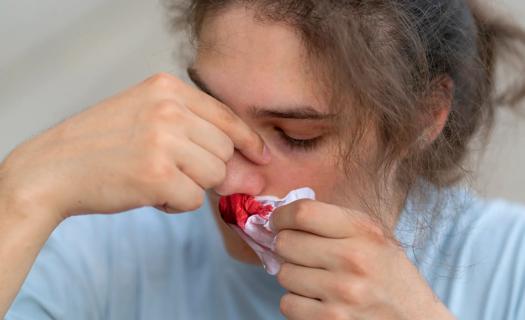
A few simple steps — including a well-placed pinch on your nose — can help the healing

If your nose is constantly running, it could be allergies, chronic sinusitis, nasal polyps or other concerns
Allergies, indigestion and the effects of gravity can all mess with your nose at night

Dry air, allergies or nose-picking may be to blame for nighttime epistaxis

Take care of your runny or stuffy nose by staying hydrated, using a humidifier and considering a medication

Allergies, acid reflux and even pregnancy can increase drainage and upset your stomach
Seek help if bleeding doesn’t stop or they’re interfering with your life

It’s usually the way your nose manages airflow, but sometimes, it could be other issues

Rapid weight loss can cause loose skin, facial volume loss and body contour changes

Swallowing too much air, certain foods and drinks, and digestive conditions can all make you belch more
From poor hand hygiene and ventilation issues to contaminated food, many factors can make infectious diseases spread quickly
 Search










