Locations:





You can improve your athletic performance over time by breaking up your workout regimen into focused cycles
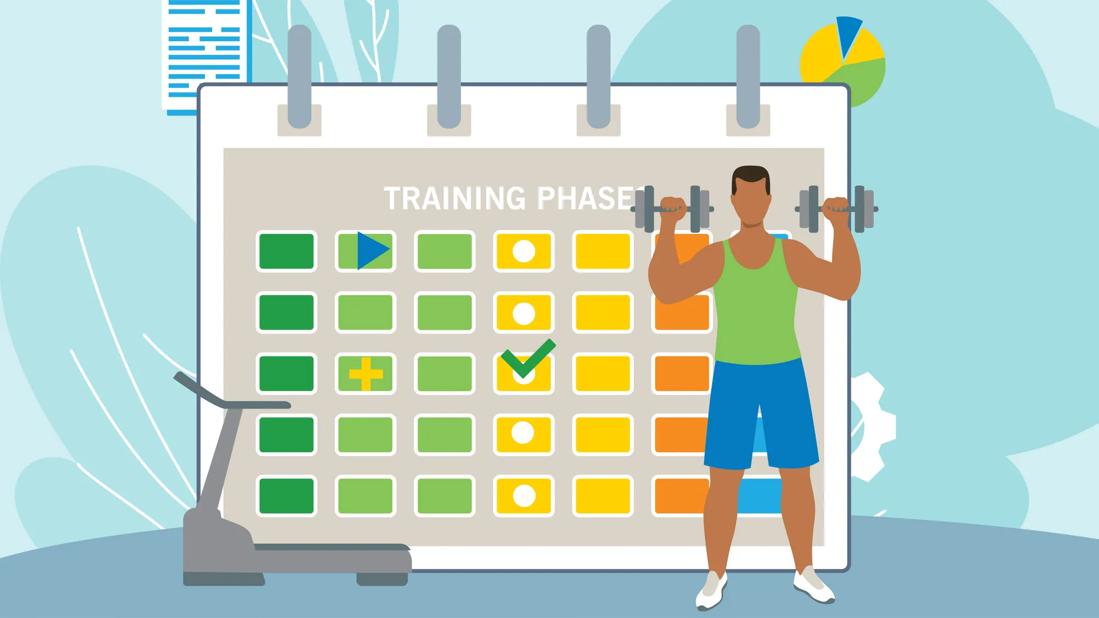
Image content: This image is available to view online.
View image online (https://assets.clevelandclinic.org/transform/e2e08cc3-83e7-429c-8f83-b2028b6bbeb8/training-plans-1437538937)
Person lifting weights, standing in front of oversized periodization training phases chart
It takes a great amount of practice and determination to achieve peak athletic performance. But even some of the best athletes can plateau if they’re not intentionally organizing their workouts with specific goals in mind.
Advertisement
Cleveland Clinic is a non-profit academic medical center. Advertising on our site helps support our mission. We do not endorse non-Cleveland Clinic products or services. Policy
Sports medicine physician Michael Dakkak, DO, explains how periodization training provides a path toward continuous improvement and the different ways it works.
Periodization is the process of organizing training programs and workout routines in a strategic way so you can reach peak athletic performance. Instead of exercising in general, with no clear goals in mind, you plan out days, weeks, months or even years in advance to create a training schedule designed specifically to help you compete or perform better.
“Think of periodization like gardening. You don’t water a plant nonstop. You have to give it sunlight, water, rest and cultivation,” illustrates Dr. Dakkak. “Your body is the same way. You need to stress it and give it the opportunity to recover so it can grow and eventually adapt to have a stronger baseline.”
As a result, a periodization program helps you:
With this strategic approach to training, you can focus more clearly on different areas, like strength, endurance, power and speed. Periodization also better supports progressive overloading and your ability to switch up variables, like intensity, volume, frequency and the types of exercises you do.
Advertisement
Periodization training breaks up your workout routines and specific focus areas across three distinct cycles. This process can help you achieve those larger, long-term goals related to peak athletic performance, while also achieving smaller, short-term goals for physical fitness.
Here’s what goes in to each of the three cycles.
The macrocycle takes a look at the big picture. It’s not well defined, but it can last several months or years, depending on your overarching long-term goals. If you’re an Olympian, for example, you might have a four-year macrocycle of training leading up to your final competition.
Within a macrocycle, there are several mesocycles, or phases. Each phase lasts a few weeks to a few months and targets your training on one specific focus area, like:
By the end of the macrocycle, each individual mesocycle will have given you an opportunity to improve on specific characteristics so you’re better prepared for future competitions and performance opportunities as a whole.
Microcycles are the smallest measurement in periodization. There are several microcycles within a mesocycle, and these typically involve a one-week training period of specific workouts, exercises and activities geared toward your short-term fitness goals.
“If your mesocycle is focused on improving strength, you might have a microcycle within that where you’re focusing on lighter weights with higher reps followed by a week of heavier weights and fewer reps,” notes Dr. Dakkak. “Over the course of that entire mesocycle, you continue to build strength because you’ve narrowed your focus across several microcycles that build off each other.”
“Periodization is about optimizing an athlete’s performance and tailoring their goals so they peak at the right time,” says Dr. Dakkak.
You can do this in several different ways, but the four main approaches to periodization involve:
Advertisement
Periodization will look different based on your individual goals and focus areas.
If you’re a weightlifter, examples of periodization might look like:
In comparison, if you’re a basketball player, you might:
“During each training block, you’re often using linear training to build up a skill or attribute,” explains Dr. Dakkak. “So, if you’re a marathon runner working on endurance, you’re going to gradually increase your mileage over the course of a three- or four-week block.”
Periodization training can help you optimize your athletic performance with continuous growth. As a result, you can:
Advertisement
“To be a world-class athlete or the best in your domain, you have to be adaptive in a lot of different things,” says Dr. Dakkak. “In order to be your best, you have to continue growing and continue to push your boundaries and limits.”
If you’re an off-season athlete gearing up for a competition or sport, periodization is key to hitting peak athletic performance. But anyone can benefit from this concept if they’re trying to improve or maintain their physical fitness.
“Variety is good, and being able to perform in multiple ways is ultimately better for your overall performance,” says Dr. Dakkak. “Everyone can benefit from an individualized training program that’s focused on their personal goals.”
If you’re looking to enhance your workouts or you’re interested in periodization training, consider working with an athletic trainer or sports medicine physician. They’ll help you identify your core strengths and other areas of improvement that could benefit from this kind of training.
Advertisement

Sign up for our Health Essentials emails for expert guidance on nutrition, fitness, sleep, skin care and more.
Learn more about our editorial process.
Advertisement
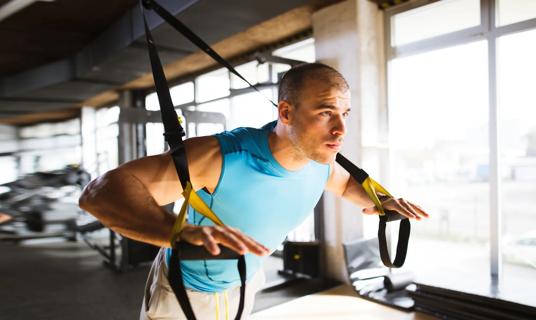
It helps to build up your strength and balance before tackling these more resistance-heavy TRX exercises
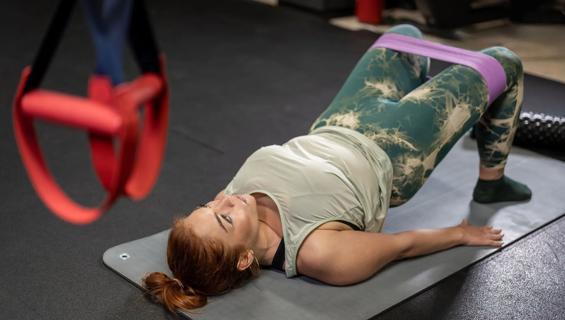
Glute bridges are simple bodyweight exercises worth adding to any workout

Stay afloat with bicycle kicks, alternating punches and water jogging

Plyometric training uses explosive movements to improve speed, power and agility
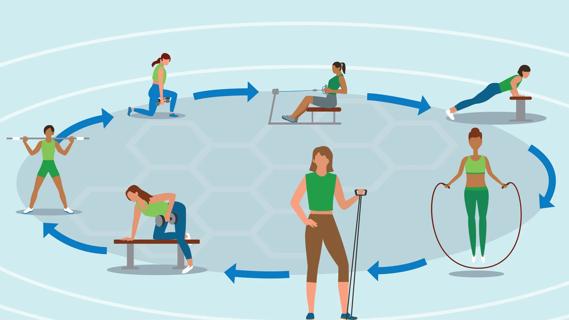
Circuit training combines strength and cardio exercises into one efficient workout

One helps with quick, intense bursts, while the other helps carry you for the long haul

It depends on your symptoms and where you feel them in your body, but you may want to sit this one out

This 75-day challenge provides a balanced approach to physical fitness, mental health and healthy habits

Hormonal changes, a slower metabolism and muscle loss can make weight gain more common around menopause — healthy habits can help you manage it

Life-threatening complications include sepsis, stroke, pneumonia and more

Fruity-smelling breath can happen when your body burns fat for energy, and in some cases, can signal a medical emergency
 Search










