Locations:





This phenomenon is when your high expectations can influence how well a medication or procedure works
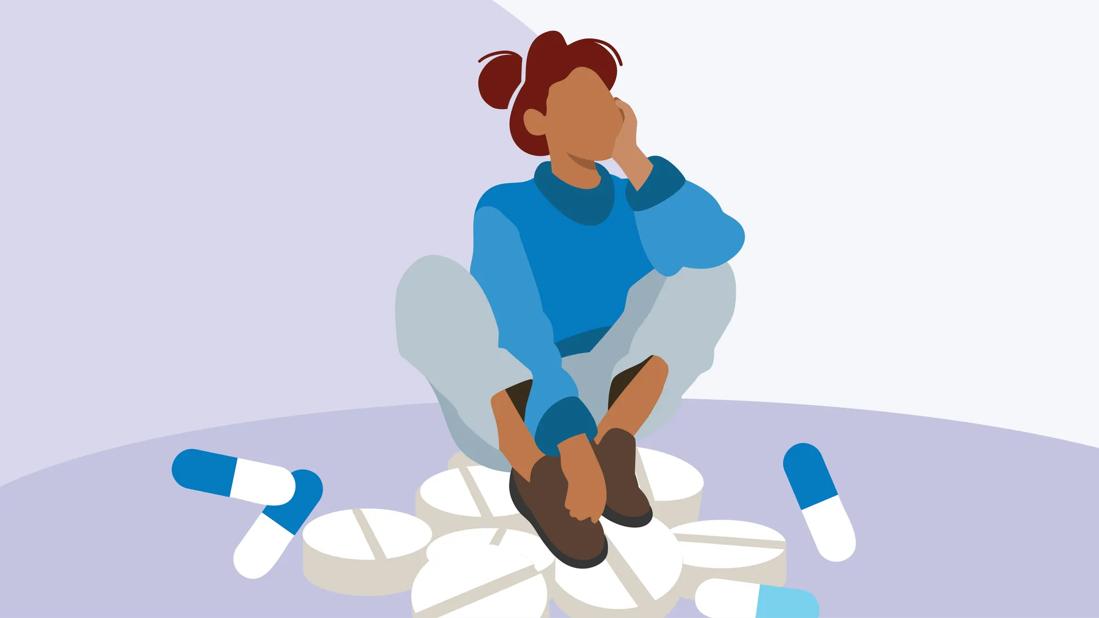
Image content: This image is available to view online.
View image online (https://assets.clevelandclinic.org/transform/9a0269e5-99f3-486f-a9a4-65d3f54bdcf7/person-sitting-pills-pile-1460648282)
Person with their chin resting on hand sitting on oversized pills and capsules
It might be easy to shrug your shoulders when you hear someone say, “It’s all about mind over matter.” But sometimes, that really is the case.
Advertisement
Cleveland Clinic is a non-profit academic medical center. Advertising on our site helps support our mission. We do not endorse non-Cleveland Clinic products or services. Policy
The mind-body connection can be a powerful thing. It can even be powerful enough that your thoughts and expectations can help you feel better when you’re hurting — what’s known as the placebo effect.
Family medicine physician Teresa Myers, MD, shares the psychology at play when high hopes influence your reality.
The placebo effect is a phenomenon where people experience benefits from a medical intervention, like a pill or procedure, if they expect that it will work. The intervention itself is neutral — there’s no reason for it to cause any effect, for better or worse. But the expectation that it will work makes it ... well, work.
“Placebos don’t do anything, physiologically speaking. But by giving them to someone, they can sometimes cause improvement, solely because of a person’s state of mind,” Dr. Myers explains.
Medical researchers use the placebo effect to test the effectiveness of medical interventions. In clinical trials, one group of participants will get the medication being studied. The other will get a placebo, like a sugar pill or saline injection.
The effects of the medication group and placebo group are then studied and compared.
Often, both groups will see improvement. The act of taking a pill or getting a shot makes people feel better, even when it shouldn’t. That’s the placebo effect in action.
Advertisement
The intervention being studied is only considered successful if the group taking the medication improves significantly more than those who take the placebo.
The exact reasons for the placebo effect are still being researched, but it may all boil down to your expectations.
“The stronger you build up a person’s expectations and belief in their treatment, the more it can actually influence the outcome,” Dr. Myers notes.
Think about it: If a trusted healthcare provider hypes up the medication they’re prescribing and is overly positive about how you’ll react to it, chances are, you’re going to buy into it working. You’re invested in its success. And those good vibes can be a powerful lens through which you see the outcomes.
You think it’ll work. You want it to work. So, in a way, you (subconsciously) talk yourself into believing it’s working.
If every time you take acetaminophen (Tylenol®), you tend to feel better, you might find that you start to get relief faster than normal. Your brain associates taking medication with feeling relief.
“That repetitiveness can become a self-fulfilling prophecy,” Dr. Myers explains. “Just the ritual of taking medication can have a healing effect.”
What’s more, your body can react to keep the benefits rolling.
Say you take a placebo that you’re told will help you relax and sleep. You truly believe it’ll work. In response, your brain may slow down production of stress hormones. It might release feel-good endorphins that help you relax. That’s a recipe for better sleep. And it’s all thanks to your belief in that placebo.
It’s worth pointing out that there’s an opposite phenomenon that can come into play as well. It’s called the nocebo effect. It’s what happens when you have negative expectations leading up to a medical intervention — bad vibes manifest in a worse outcome than expected.
As Dr. Myers says, “The brain is a powerful tool. What you think about, you bring about — good, bad or indifferent.”
There’s no risk in taking a placebo as part of a scientific study. The placebos used in research are purposefully designed not to cause harm. The only risk is the lost opportunity of not getting a potentially effective experimental treatment.
And there can be real upside to the placebo effect for some people. If you’re facing a potentially life-changing diagnosis but have confidence in the care you’re receiving, the placebo effect can be an advantage that can make your treatments work incrementally better.
Advertisement
At other times, understanding the placebo effect can help you better scrutinize some questionable and risky over-the-counter products. Things like unregulated supplements, oils, tinctures and herbal remedies.
“Even if they have nothing in them, there’s going to be a certain percentage of people who are going to feel better even if — scientifically speaking — they don’t do anything beneficial,” Dr. Myers says.
The believers tell their friends about their “miracle cures.” They spread the word to their followers on social media. Soon, products gain traction for lowering anxiety, improving digestion, boosting energy and just about any other health improvement imaginable. Except ... they’re not proven by research, and are likely nothing more than a placebo effect.
Again, those products aren’t well-regulated either. And unlike sugar pills and saline solution, some of them can cause real risks, like side effects, interference with medications and long-term damage to your health. They can also get costly.
That’s why you should always talk with a healthcare provider before starting supplements.
Placebo-based benefits can still feel good. And if they work for you and don’t cause harm, maybe they’re worth it. But it’s important to know and weigh any risks, too.
Advertisement

Sign up for our Health Essentials emails for expert guidance on nutrition, fitness, sleep, skin care and more.
Learn more about our editorial process.
Advertisement

This modern twist on a traditional sauna may help support heart health, soothe sore muscles, manage pain and more

That unnerving sense that something terrible is about to happen can be a sign of serious distress — trust your gut

From hydration to meditation, little changes can yield big benefits
Practices range from simple lifestyle changes to extreme experiments — and not all approaches come with the same level of risk

Cold-water immersion offers benefits like sore muscle relief, but the therapy comes with risks, too
These wearable devices can help you understand your body and stay active — but how you use them matters most
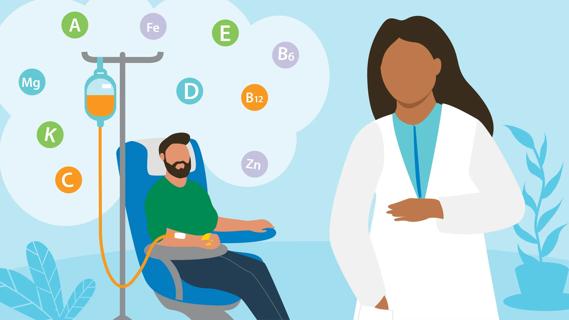
The process delivers nutrients quickly and efficiently, but research is limited on many claimed benefits

Hot tub sessions can help relieve stress, soothe sore muscles and improve heart health

Managing your weight through physical activity may lower your chances of getting this common cancer

It typically starts in October and winds down in early spring, with cases at their highest in the middle of winter

Anxiety disorders, health conditions and past trauma can make driving nerve-wracking — help is available
 Search










