Locations:





Your pulse and heart rate measure different body processes, but in most cases, they’re the same number

Image content: This image is available to view online.
View image online (https://assets.clevelandclinic.org/transform/16eac92e-e013-4d57-af20-b5df27ac0544/heart-rate-2229537289)
Healthcare provider listening to patient's heart with stethoscope
“Pulse rate” and “heart rate” are two medical terms that are often used to mean the same thing: The number of times your heart beats in a minute. But are they really the same? What exactly is each one measuring anyway?
Advertisement
Cleveland Clinic is a non-profit academic medical center. Advertising on our site helps support our mission. We do not endorse non-Cleveland Clinic products or services. Policy
Let’s get to the heart of this issue with the help of cardiac electrophysiologist Ayman Hussein, MD.
“The short answer to this question is no, they’re not the same,” Dr. Hussein clarifies. Sure, they’re both numbers that we calculate in beats per minute (bpm). But your pulse and heart rate each measure a different body process.
“Your heart rate is the number of times your heart squeezes per minute. Your pulse is the number of times your arteries expand and contract in response to your heart’s activity,” he explains.
Your heart is a powerful pump. Each squeeze sends blood into your aorta — the largest artery — and then out to the rest of your body. These arteries briefly widen (expand) and then narrow again (contract) to accommodate the flow. As a result, you can feel your pulse at various points in your body, like your wrist, neck and groin.
So, technically, when you check your pulse, you’re not feeling your heart squeezing. Rather, the “beats” you’re feeling are the sensations of your arteries getting a little wider each time blood pushes through.
Even though they measure two different processes, your pulse rate and heart rate should be the same number. That’s because each heart squeeze normally pushes out blood with enough oomph to create a pulse.
Advertisement
This is why a quick pulse check can often give you a good sense of how fast or slow your heart is beating. For example, if your pulse is 70 bpm, you can typically trust that your heart rate is 70 bpm, too.
But there’s a catch. Sometimes, your heart doesn’t pump with enough force to create a detectable pulse. That means your heart rate and pulse may not always match. This can happen if you have a condition like:
In these situations, your pulse can occasionally be lower than your actual heart rate. But you might not realize it unless you’re using devices to track one or both numbers.
“I’ve had patients express concern that their heart rate is 30 bpm, according to their watch,” shares Dr. Hussein. “So, we investigate further. And we find out that the problem isn’t that they have a low heart rate. Rather, it’s that they’re having extra beats, and those beats aren’t generating a strong enough pulse for their watch to detect.”
The best and most accurate way to know your numbers is to see a healthcare provider. They can listen to your heart, feel your pulse and run simple tests, like an EKG, to evaluate your pulse and heart rate.
But if you want more frequent checks, there are plenty of gadgets you can use on your own. Dr. Hussein notes that some devices measure your heart rate directly, while others measure your pulse, but present that info as your heart rate. It can get a bit confusing. Here’s a quick rundown.
When it comes to your pulse, there are both high-tech and low-tech ways to go. Most smartwatches can detect your pulse, which can be super handy whether you’re working out or at rest.
But unless your device has EKG technology, it’s reading pressure changes in your arteries, not your heart’s electrical signals. That distinction may matter if you’re living with certain health conditions, like heart failure or an arrhythmia.
You can also go old-school and check your pulse manually. Dr. Hussein explains that your wrist is the standard location for doing this. He recommends the following steps:
Advertisement
In general, the rule of thumb is that to directly measure your heart rate, a device needs EKG technology. This means it’s equipped to detect and interpret the electrical impulses that control your heartbeat and tell your heart when to squeeze.
From watches to credit card-sized devices, there are plenty of EKG options available for home use. Your healthcare provider can help you find the one that’s right for you.
Pulse and heart rate are two numbers that capture two very different body processes. Usually, the numbers should match. But if there’s a mismatch, a healthcare provider can find out why.
And if you choose to track your pulse or heart rate at home, talk to a provider about methods that are right for you. Still, Dr. Hussein cautions that while gadgets can be useful, they also have their drawbacks, especially if we find ourselves worrying about each readout.
“Home devices can be helpful screening tools. But they’re not perfect. And sometimes, they can cause more anxiety than benefit,” he notes.
So, while it’s great to stay informed, don’t let numbers from your watch replace real conversations with a care team.
Advertisement

Sign up for our Health Essentials emails for expert guidance on nutrition, fitness, sleep, skin care and more.
Learn more about our editorial process.
Advertisement

Nine ‘pulse points’ around your body offer key information about your heart and blood flow

Exercising at about 70% of your maximum heart rate can help you burn fat

Deep breathing, yoga and meditation are just some ways to bring your heart rate down right away

Lifestyle changes can help strengthen your heart so it doesn’t have to work as hard when your body is at rest

A resting heart rate below 35–40 beats per minute or over 100 beats per minute may be cause for concern
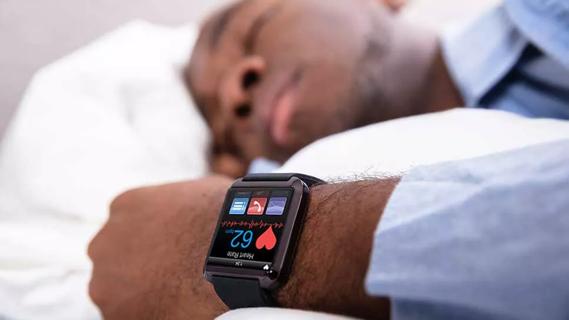
Your heart rate naturally slows down while you sleep, but lower numbers aren’t always concerning
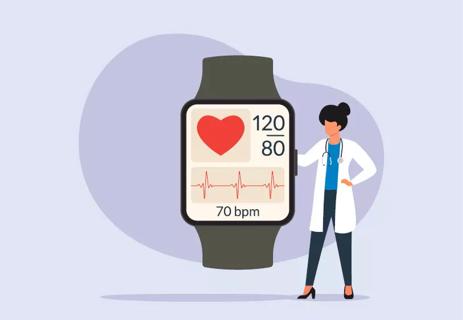
Both are related to your cardiovascular system, and both can impact the other
Bradycardia, or a low heart rate, is more likely as you age — and could be a sign of health issues

Managing your weight through physical activity may lower your chances of getting this common cancer

It typically starts in October and winds down in early spring, with cases at their highest in the middle of winter

Anxiety disorders, health conditions and past trauma can make driving nerve-wracking — help is available
 Search










