Locations:





 Search
Extraction isn’t always necessary, but getting the ‘extra’ teeth out may limit future issues
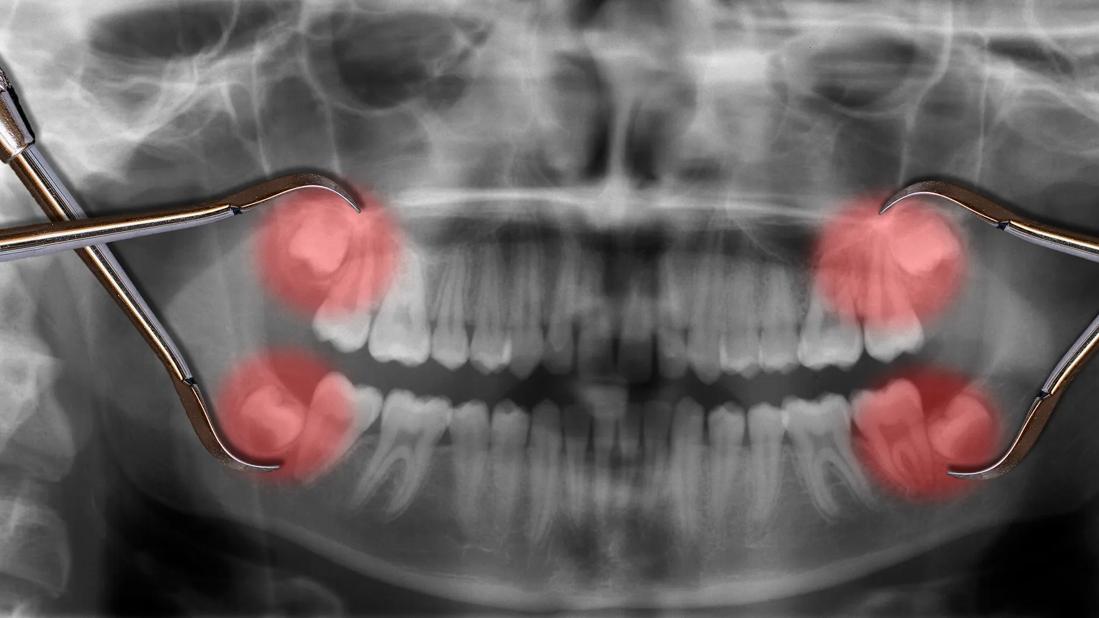
Our ancestors needed their wisdom teeth far more than we do. Those molars in the back of the mouth offer extra chewing power, after all, which was ideal for ancient meals of raw plants, hard nuts and tough meat.
Advertisement
Cleveland Clinic is a non-profit academic medical center. Advertising on our site helps support our mission. We do not endorse non-Cleveland Clinic products or services. Policy
Today’s menu options are a bit more refined. We don’t typically need extra chompers to grind down our grub.
Yet many of us still have wisdom teeth. So, if you’re among the crowd with these evolutionary leftovers in your mouth, should you get them removed? Let’s talk it over with dentist Nathan Janowicz, DMD.
Wisdom teeth pop up through your gums behind your second molars, usually between the ages of 17 and 25. If you have a full set of four, each wisdom tooth resides in a different quadrant of your jaw. (That’s upper left, lower left, upper right and lower right, if you’re mapping it out.)
Some people may have less than a full set of wisdom teeth. Others may not have any erupt. One study estimated that between 5% and 37% of people are missing one or more wisdom teeth.
“Wisdom teeth are the most common congenitally missing teeth,” notes Dr. Janowicz.
So, what happens if they do appear? Well, wisdom teeth that fall in line with the rest of your pearly whites might not require any attention. Just let them be and take advantage of that extra chewing ability. (Your ancestors would certainly approve.)
But sometimes, wisdom teeth don’t emerge correctly or fit in quite right — and that’s typically when extraction talk begins.
Advertisement
Pain in your upper or lower jaw often serves as the first and most obvious sign that your wisdom teeth are causing problems. You may feel a sensation of pressure in the back of your mouth, too.
Gum tissue often becomes sensitive, swollen and inflamed around impacted wisdom teeth. Impacted wisdom teeth are essentially trapped in your gums or jawbone. Teeth that are partially or completely buried instead of fully erupted often lead to oral health problems.
“You can’t clean impacted wisdom teeth properly, so they can start to decay and you can develop cavities and gum disease,” says Dr. Janowicz. “Cysts or tumors can also develop around impacted teeth, too.”
Impacted wisdom teeth are common and affect about 90% of people with wisdom teeth. Dentists generally evaluate impacted teeth on a case-by-case basis to determine whether to recommend removal.
But know this: Wisdom teeth issues don’t always announce themselves with discomfort.
“A lot of folks don’t have any symptoms,” he adds. “That’s why you should have your wisdom teeth examined by a dentist to determine if extraction is appropriate.”
Wisdom teeth are extracted through a common oral surgery procedure that can take about an hour. Every year, it’s estimated that approximately 5 million people in the United States have one or more wisdom teeth surgically removed.
The procedure can lead to some short-term pain, bleeding and swelling. (It’s a surgery, after all.) Most people can return to normal activities within three to five days after the surgery. Full recovery takes about two weeks.
In general, complications such as an infection or dry sockets (a blood clot issue in the now vacant wisdom tooth spot) are unusual.
Those extra teeth sometimes bring extra trouble. Even if your wisdom teeth come in correctly, they can become problematic over time given that they’re so far back in the mouth and difficult to clean.
Leaving wisdom teeth in elevates your risk of cavities and gum disease, among other issues, says Dr. Janowicz.
That’s why extraction is sometimes recommended as a precaution against future problems.
So, if you keep your wisdom teeth, pay special attention to them while brushing and flossing. See your dentist regularly, too, to ensure that all is well with those extra teeth — plus all of your other ones, of course.
Advertisement

Sign up for our Health Essentials emails for expert guidance on nutrition, fitness, sleep, skin care and more.
Learn more about our editorial process.
Advertisement

Wisdom teeth can cause headaches when they emerge or if they become impacted
Tooth gems may be safe when your dentist applies them, but there are still risks

Your gums may need a closer look by a dentist if they’re bleeding, feeling extra tender or becoming red

Daily oral hygiene goes a long way to keeping your mouth healthy and your smile bright

Most kids start losing baby teeth around age 6 — but there’s some wiggle room in the timeline

Start weaning your toddler off daytime pacifier use by 12 months old to help prevent dental issues and speech delays

This oral health practice doesn’t have proven benefits, and it’s not a substitute for brushing and flossing

The soreness could be from the way you sleep, teeth grinding, bite misalignment or other issues

Even small moments of time outdoors can help reduce stress, boost mood and restore a sense of calm

A correct prescription helps your eyes see clearly — but as natural changes occur, you may need stronger or different eyeglasses

Both are medical emergencies, but they are very distinct events with different causes











