Locations:





Both procedures offer a look inside the large intestine, but a colonoscopy is more thorough

Image content: This image is available to view online.
View image online (https://assets.clevelandclinic.org/transform/c0ea7e1c-82f1-4a31-8813-f6205975dfd4/sigmoidoscopy-1681436759)
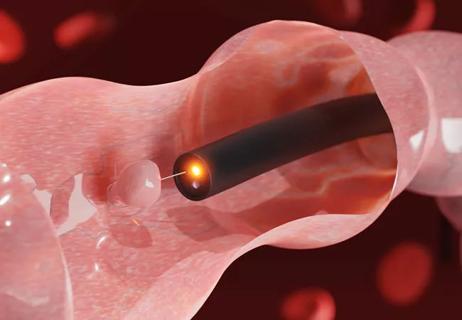
Sigmoidoscopy, with scope inside rectum
A colonoscopy and sigmoidoscopy explore the same sensitive region of your body. But while these common procedures in your colon share a starting line, they have different endpoints and purposes.
Advertisement
Cleveland Clinic is a non-profit academic medical center. Advertising on our site helps support our mission. We do not endorse non-Cleveland Clinic products or services. Policy
We asked colorectal surgeon Scott Steele, MD, for the long and short of what sets these exams apart.
Both a colonoscopy and a sigmoidoscopy help doctors spot potential problems inside the large intestine before they become more serious issues, says Dr. Steele. The procedures are routinely used to check for signs of:
Each type of endoscopy is done in a similar way, too: A doctor inserts a thin, flexible tube with a light and a camera through your anus to look inside your large intestine. This offers a peek at your bowel lining to check for polyps and other issues.
But doctors can do more than look around during either exam, too. They may also remove polyps and take biopsies of suspicious-looking tissue.
Dr. Steele says both procedures are valuable cancer-screening tools, although a colonoscopy is the gold standard. (More on why in a moment.) Statistics show that colorectal cancer is the third-leading cause of cancer-related deaths in the world.
“Our goal is to identify polyps early, before they become cancerous,” says Dr. Steele. “Using endoscopy, we can also remove them — so it’s diagnosis and treatment in one procedure.”
Advertisement
A colonoscopy covers far more ground than a sigmoidoscopy by inspecting your entire colon, explains Dr. Steele. A sigmoidoscopy, on the other hand, looks at just the lower third of your colon (at most).
Think of it this way: If your colon were a long hallway, a colonoscopy would walk all the way through. A sigmoidoscopy just hangs out near the door.
As you might expect, a sigmoidoscopy is less invasive than a colonoscopy because it doesn’t go as far. (In fact, one type of sigmoidoscopy — a proctoscopy — doesn’t even go past your rectum.)
The type of endoscopy that reaches into your lower intestine is known as a flexible sigmoidoscopy. This exam focuses mostly on your anus, rectum and descending colon, which is located on your left side. It doesn’t go farther.
“A flexible sigmoidoscopy offers limited focus of the colon and rectum,” notes Dr. Steele. “We often use them in people who’ve had prior cancers or lesions in the lower colon and we want to look at it in isolation.”
So, when it comes to a colonoscopy vs. a sigmoidoscopy, is one better than the other?
If you want a full picture of what’s going on in your colon, particularly when it comes to cancer screening, the choice is clear: Get a colonoscopy. A sigmoidoscopy is not as thorough, given its limited reach and should not be used as a general cancer screening tool.
“A colonoscopy is the standard for colorectal cancer screening because it goes all the way around,” explains Dr. Steel. “A sigmoidoscopy would need to be followed up with a full colonoscopy to make sure we’re able to evaluate the entire colon so nothing is missed.”
It’s generally recommended that people begin screening for colon cancer at age 45. If you’re considered high risk for colon cancer or experience concerning symptoms, you may want to talk to a healthcare provider about starting earlier.
While there are multiple colon cancer screening methods, a colonoscopy is considered the most thorough and effective. Don’t be scared away from it by worries about the procedure or bowel prep, says Dr. Steele.
“A colonoscopy is our gold standard for screening,” he reiterates.
But there are times when a sigmoidoscopy might be a good option. It could be recommended if you’re experiencing issues like rectal bleeding or hemorrhoids or need a follow-up related to a lower bowel issue.
Health factors that make sedation, anesthesia or colonoscopies difficult also could make a sigmoidoscopy a better choice for you.
Bottom line for examining your bottom? Talk to your healthcare provider about your options.
Advertisement
“Don’t ignore any symptoms that might point to a potential problem,” stresses Dr. Steele. “And if you’re at the age for screening, even if you are asymptomatic, get a colonoscopy. It may save your life.”
Advertisement

Sign up for our Health Essentials emails for expert guidance on nutrition, fitness, sleep, skin care and more.
Learn more about our editorial process.
Advertisement

Aim for soft, bland foods and extra hydration in the first 24 hours after the procedure

They might not be fun, but colonoscopies are low-risk, high-reward procedures

If you’re at average risk, it’s recommended that you get your first colonoscopy at age 45

It’s not an enema or bowel prep, and this colonic hydrotherapy can harm proper colon function

It can be hard to get used to the bags, but the freedom they provide is worth the challenge
Larger polyps can be difficult to remove, but there are options

Consider the severity and location of your arthritis to decide on the right support
Eyes typically increase to full size during two growth spurts in childhood

Managing your weight through physical activity may lower your chances of getting this common cancer

It typically starts in October and winds down in early spring, with cases at their highest in the middle of winter

Anxiety disorders, health conditions and past trauma can make driving nerve-wracking — help is available
 Search










