Locations:





In its early stages, the disease rarely causes symptoms — but as it progresses, it can cause jaundice, stomach pain, mid-back pain, vomiting and more
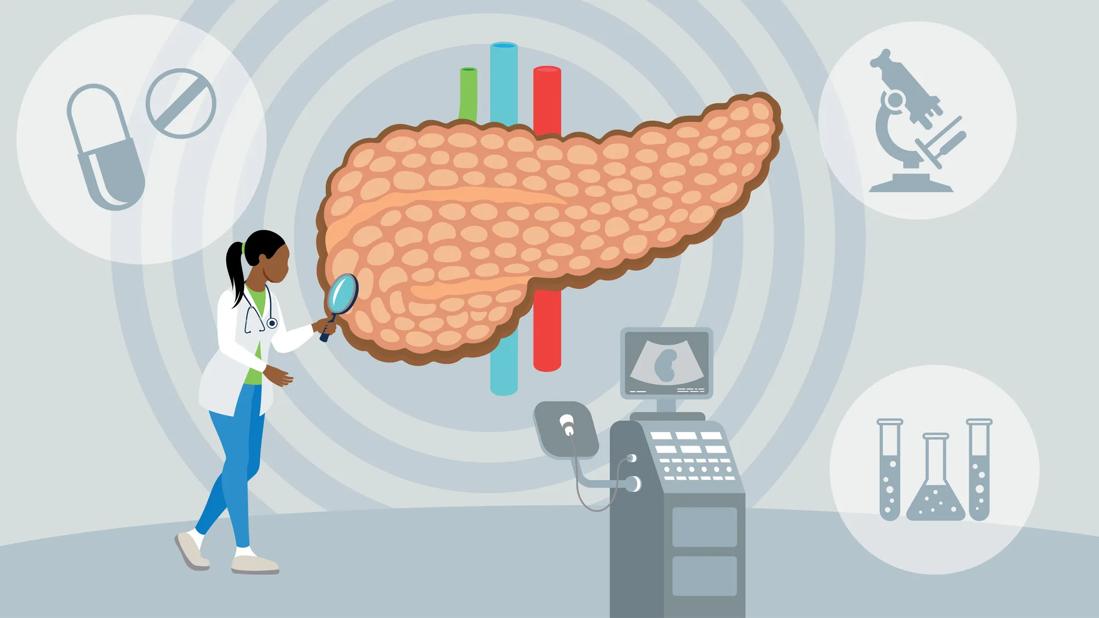
Image content: This image is available to view online.
View image online (https://assets.clevelandclinic.org/transform/ce7c1315-4676-4b31-812c-afe81dbc4e1f/doc-checks-pancreas-1407232007)
Healthcare provider looking at oversized pancreas with magnifying glass
Pancreatic cancer is difficult to detect. And it’s usually found at advanced stages. That’s why it’s important to know the signs and to talk to your healthcare provider as soon as you notice changes in your health.
Advertisement
Cleveland Clinic is a non-profit academic medical center. Advertising on our site helps support our mission. We do not endorse non-Cleveland Clinic products or services. Policy
Oncologist Suneel Kamath, MD, shares what you need to know about the possible symptoms of pancreatic cancer.
Video content: This video is available to watch online.
View video online (https://cdnapisec.kaltura.com/p/2207941/sp/220794100/playManifest/entryId/1_hk0ofhgx/flavorId/1_5f3sgelj/format/url/protocol/https/a.mp4)
Some cancers bring symptoms from the start, making them more likely to be caught and treated early. But unfortunately, there are rarely any symptoms of early-stage pancreatic cancer.
“The symptoms that we associate with pancreatic cancer can be very vague and typically don’t develop until the disease is more advanced,” Dr. Kamath says.
That makes it especially important to know what to look for — and to talk to a healthcare provider ASAP to figure out the cause of any concerning symptoms.
Dr. Kamath shares the most common symptoms of pancreatic cancer.
“Jaundice is when your skin and the whites of your eyes turn yellow,” Dr. Kamath explains, “and it’s often one of the first symptoms of pancreatic cancer that people experience.”
But why, exactly, does it happen?
Your liver makes a dark, yellow-brown substance called bilirubin, which your bile ducts carry to your small intestine. If a pancreatic tumor blocks your bile duct, bilirubin can’t reach its destination, and it builds up. And that buildup of bilirubin leads to jaundice.
Jaundice can also cause urine that’s darker than usual and poop that looks greasy or light in color. It may also make your skin feel extremely itchy — a symptom we’ll talk more about in a moment.
Advertisement
Large pancreatic tumors can cause pain.
“This type of cancer can also affect the nerves around the pancreas, which can cause pain in the mid-upper area of the back,” Dr. Kamath says.
Back pain and stomach pain can have all sorts of causes, and they’re certainly not always a sign of cancer. But if your pain is new or getting worse, tell your healthcare provider about it, especially if you’re having other symptoms, too.
Cancers that affect the digestive system can cause you to lose weight and strength, even before you know you have them. One study found that nearly 75% of people had significant weight loss the year before being diagnosed with pancreatic cancer.
“People with pancreatic cancer will often have little to no appetite,” Dr. Kamath reports. “That can lead to unintentional weight loss, which is always worth discussing with a provider.”
Some forms of pancreatic cancer destroy cells that make insulin.
In people over 50, a new diabetes diagnosis may be a sign of pancreatic cancer — because damage to the pancreas causes Type 3c diabetes.
“If you suddenly develop diabetes in an older age, it’s important that your provider does some further investigation,” Dr. Kamath states, “because it can be one of the hallmarks of pancreatic cancer.”
Blood sugar can cause you to pee a lot and feel extremely thirsty and hungry. But other times, they don’t trigger any symptoms at all and can only be detected with a blood test.
New gastrointestinal (GI) issues like nausea and vomiting may be signs of pancreatic cancer.
“When cancer tumors block the stomach, food can’t get through,” Dr. Kamath explains. “This leads to severe nausea, stomach pain and vomiting after meals.”
Other GI symptoms may include:
If bilirubin builds up in your liver because of a blocked bile duct, it can trigger severely itchy skin all over your body. And unlike some other types of itchy skin, it’s not accompanied by a rash.
This itchiness is a sign of jaundice — but it can happen before you notice the telltale yellowing of your skin and eyes.
“Pancreatic cancer can block the bile duct and cause the gallbladder to get bigger,” Dr. Kamath says. “If it spreads, it can also increase the size of the liver.”
Your healthcare provider may be able to feel these changes during an exam, or they can spot them with imaging tests.
You’ve heard the phrase before: If you see something, say something. If you start having symptoms, make an appointment to discuss them with a healthcare provider.
Advertisement
They’ll likely want to do an exam and may run imaging tests, like a CT scan or an MRI, to try to identify the source of your symptoms. They may also refer you to a specialist so you can get an accurate diagnosis and start getting the help you need.
It’s understandable to be nervous or afraid. But don’t put off talking to your provider.
“Right now, there’s no reliable way to screen or test for pancreatic cancer,” Dr. Kamath says. “So, it’s very important that you flag these symptoms for a doctor as soon as you notice them.”
Advertisement

Sign up for our Health Essentials emails for expert guidance on nutrition, fitness, sleep, skin care and more.
Learn more about our editorial process.
Advertisement
Most of the risk factors aren’t things you can control, but making healthy lifestyle changes and managing other health conditions may help

Eat foods that are high in protein and low in animal fat and simple sugar

How to know when a stomachache is something more serious
Hint: smoking, drinking and diet play a role

Your skeleton has a lot of moving parts, jobs and abilities!

Ear drops and ear flushing can help, but avoid cotton swabs and ear candling, which can cause serious injuries

That unnerving sense that something terrible is about to happen can be a sign of serious distress — trust your gut

Mood stabilizers promote long-term mood stability, while antipsychotic medications work faster to manage acute episodes

Managing your weight through physical activity may lower your chances of getting this common cancer

It typically starts in October and winds down in early spring, with cases at their highest in the middle of winter

Anxiety disorders, health conditions and past trauma can make driving nerve-wracking — help is available
 Search










