Locations:





How to stay informed and in charge
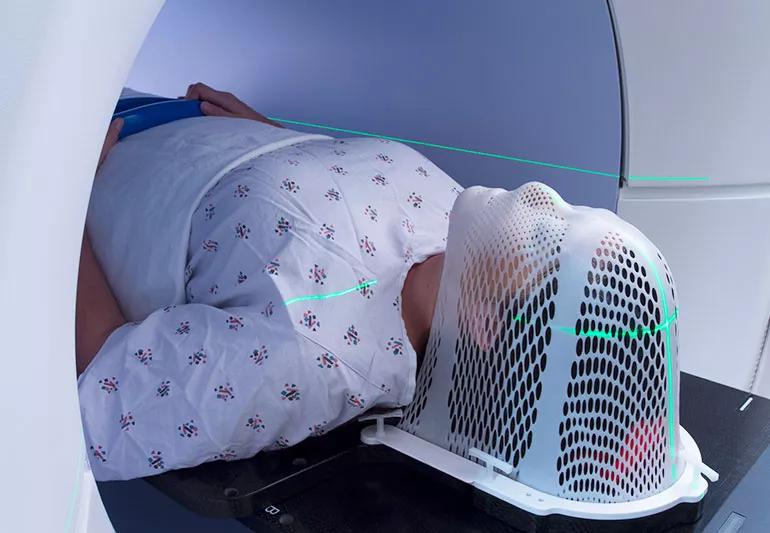
Image content: This image is available to view online.
View image online (https://assets.clevelandclinic.org/transform/75fe657a-810d-407a-8fbc-1da2a12ed306/RadiationTherapy-533196047-770x533-1_jpg)
Person lies in radiation machine with face covered by protective netting as lasers scan body
When you’re going through cancer treatment, it’s important to ask any and all questions you have. It will help you prepare yourself while also allowing your family to understand how to best support you.
Advertisement
Cleveland Clinic is a non-profit academic medical center. Advertising on our site helps support our mission. We do not endorse non-Cleveland Clinic products or services. Policy
In particular, you want to be sure you understand any cancer treatment you’ll receive, including its benefits, drawbacks and side effects. You also want to prepare for the day-to-day impact on your schedule and life.
Has your doctor recommended radiation therapy? This treatment uses high-energy radiation to shrink tumors and kill cancer cells.
There are three main categories of radiation therapy: external beam, internal radiation, and systemic radiation. About half of patients receive some type of radiation therapy during treatment. Find out more about each type of radiation therapy.
Not sure what to ask your doctor about radiation? Find some suggestions below. You can bring a notebook with you to write down answers, or even enlist a loved one to come along and take notes.
Advertisement
In general, keeping a line of communication with your doctor and healthcare team will help you through the treatments. It’s also important to understand the overall goal of each treatment.
From the book The Complete Cancer Organizer by Jamie L. Schwachter, BSN, MSN, CNP and Josette M.Snyder, BSN, MSN, AOCN
Advertisement

Sign up for our Health Essentials emails for expert guidance on nutrition, fitness, sleep, skin care and more.
Learn more about our editorial process.
Advertisement

Research on whether glyphosate increases cancer risk is mixed, but you can take steps to limit your exposure

While there’s no 100% guarantee, you can help limit cancer risk by adopting healthier lifestyle habits

Exercise is safe and beneficial for most people with cancer, but listen to your body and your healthcare team
Smoking can make symptoms from cancer treatment worse, and can even make treatments less effective

Prioritize protein and fresh produce, but be extra careful to avoid bacteria that could cause foodborne illnesses

Here’s how (and why) to ask your doctor about treatment goals, second opinions, clinical trials and more

Rates of early-onset breast, colorectal and GI cancers are increasing, but preventive care and a healthy lifestyle can help reduce your risk

The side effects of cancer and treatment can impact desire, sexual function and intimacy, but there are ways you can keep the flame going

Hormonal changes, a slower metabolism and muscle loss can make weight gain more common around menopause — healthy habits can help you manage it

Life-threatening complications include sepsis, stroke, pneumonia and more

Fruity-smelling breath can happen when your body burns fat for energy, and in some cases, can signal a medical emergency
 Search










