Locations:





Skip the butters, creams and oils and instead try tretinoin — or just let time work its magic
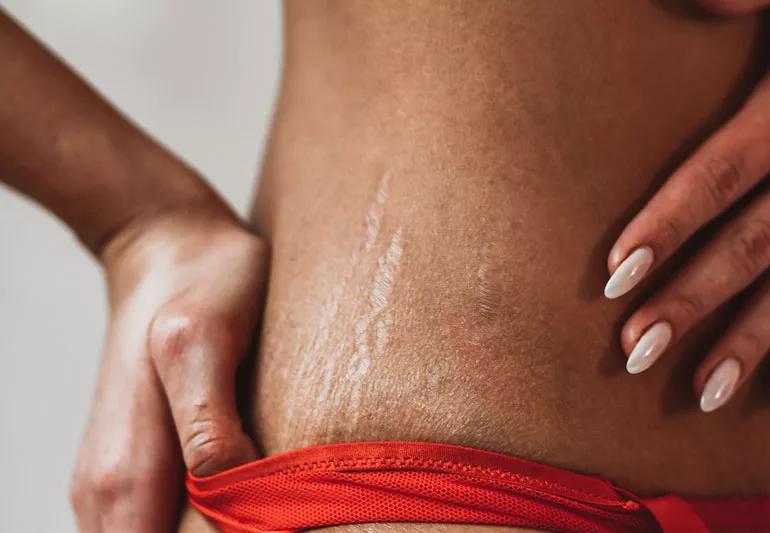
Image content: This image is available to view online.
View image online (https://assets.clevelandclinic.org/transform/1f50104a-7cbb-43a2-95ac-4bbdf7b1a0d2/stretch-Marks-1456026197-770x533-1_jpg)
Person showing stretch marks on hip.
It turns out that the tips and tricks you might’ve heard about how to treat stretch marks are … well, a bit of a stretch.
Advertisement
Cleveland Clinic is a non-profit academic medical center. Advertising on our site helps support our mission. We do not endorse non-Cleveland Clinic products or services. Policy
Stretch marks, or striae, are actually a form of scarring. They happen when your skin shrinks or stretches quickly, which causes the elastin and collagen in your skin to break. And although beauty buffs have long claimed that cocoa butter in particular can help lessen and even prevent stretch marks, dermatologist John Anthony, MD, says the evidence just isn’t there.
Here’s why cocoa butter isn’t the anti-stretch mark savior you’ve been told it is and what to try instead.
“Despite popular belief, cocoa butter has not been shown to prevent stretch marks or even reduce their overall appearance,” Dr. Anthony says.
Also known as theobroma oil, cocoa butter is a yellowish fat that comes from roasted cacao beans (cocoa). It’s long been touted as a popular, natural option for lessening the appearance of stretch marks — but it doesn’t work. In studies, cocoa butter hasn’t been found to work any better (or worse) than placeboes.
Unless you’re allergic to it, cocoa butter is thought to be largely risk-free, which means that you can use it on your skin without worry. It’s high in fatty acids and can help keep your skin moisturized, along with just generally feeling a little luxurious. Just don’t count on it to conquer those stretch marks.
Advertisement
In addition to cocoa butter, many people think other natural products can help with stretch marks, like coconut oil, olive oil, shea butter, etc. Alas, none of them actually works on stretch marks (though shea butter has lots of other benefits for your skin and hair).
Almond oil was once thought to fight stretch marks during pregnancy, but later research showed that it may cause premature birth.
“Some of these products are not well studied for use during pregnancy,” states Dr. Anthony. “Be cautious about using botanical creams without talking to your doctor first.”
Only one topical product has been shown to truly help with stretch marks: tretinoin.
“A retinol like Retin-A® is typically the standard treatment for stretch marks, especially when they’re in the early stages,” Dr. Anthony says, “but they’re not safe for use while you’re pregnant.”
Other treatments may help lessen the appearance of stretch marks, too:
Here’s one thing you definitely shouldn’t do to try to get rid of your stretch marks: tanning.
Dr. Anthony says some people try to make their stretch marks less visible by getting a tan, which doctors don’t advise — in the case of stretch marks or ever, really. Sun exposure is harmful to your skin, and it can also negatively affect scars.
“With normal scars, you run the risk of pigmentary problems if they are exposed to sun,” he explains. “It’s not clear whether this can happen with stretch marks, but they do compromise the skin, so I always recommend sun protection.”
And importantly, scars don’t tan, so spending time in the sun could actually make your stretch more noticeable, not less. If you really want to cover them up, sunless self-tanner can provide temporary camouflage — and it’s much, much safer for your skin than a real tan.
If stretch marks have left their mark on you, just know that it’s a normal bodily process. There’s not much you can do to prevent them, aside from keeping your skin well-moisturized (which is a good tip, period, regardless of whether you’re worried about stretch marks).
There’s also no real way to predict whether or not you’re prone to stretch marks. They’re most likely to appear during a rapid gain or loss of weight, like during pregnancy, a growth spurt or bodybuilding.
Advertisement
“We don’t really understand why some women get stretch marks during pregnancy and others don’t,” Dr. Anthony says, “but we know that younger people are more prone to get them, as well as those who have significant weight gain during pregnancy.”
But while you may not be able to prevent stretch marks, you won’t necessarily have to look at them forever.
“Stretch marks have a life of their own,” Dr. Anthony says. “I recommend the tincture of time. As time goes on, stretch marks become less prominent. They start out red or purple, but they fade on their own over time.”
Advertisement

Sign up for our Health Essentials emails for expert guidance on nutrition, fitness, sleep, skin care and more.
Learn more about our editorial process.
Advertisement
Early attention to skin wounds can help minimize their appearance later
Moisturizing, running a humidifier and adjusting your shower routine may help keep itchiness and irritation at bay

Excessive exposure to saltwater can dehydrate skin and hair, despite having a few benefits
Look for emollients, humectants and occlusives to hydrate, soothe and protect your skin
This multitasker can help keep your skin clear, support wound healing and disinfect surfaces around your home
This gentle facial cleanser removes dirt, oil and most makeup without drying out your skin

At-home remedies may help calm symptoms and make it easier to relax at bedtime
The safety risks outweigh any potential benefits these products may offer

Managing your weight through physical activity may lower your chances of getting this common cancer

It typically starts in October and winds down in early spring, with cases at their highest in the middle of winter

Anxiety disorders, health conditions and past trauma can make driving nerve-wracking — help is available
 Search










