Locations:





Massage, teething rings, chilled items and pain relievers can help dull the discomfort when baby teeth erupt

Image content: This image is available to view online.
View image online (https://assets.clevelandclinic.org/transform/aeb198cf-b3ab-49fc-b011-f32cd9b18b90/baby-uses-teething-ring-2207387911)
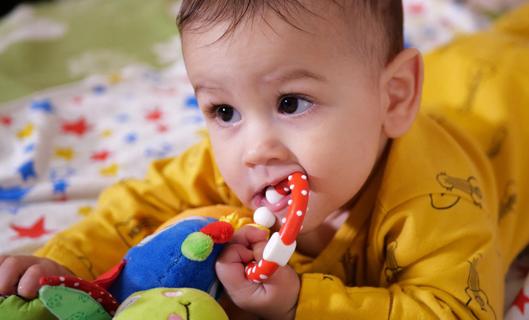
Baby chewing on teething ring
The phrase “cutting teeth” doesn’t sound enjoyable — and if you have an infant or toddler in the house, you’ve probably had that verified.
Advertisement
Cleveland Clinic is a non-profit academic medical center. Advertising on our site helps support our mission. We do not endorse non-Cleveland Clinic products or services. Policy
So, what can you do to make your little one’s teething experience a little less unpleasant as they go from toothless to a mouthful of chompers?
Pediatrician Lisa Diard, MD, offers tips to give them some relief.
Most children begin cutting teeth by the time they’re 6 months old. Over the next two years or so, a total of 20 baby teeth will develop in their jawbones before erupting and breaking through their gums.
Every baby is different, but teething can bring fussiness and irritability as each tooth pops up.
“Discomfort from teething should be pretty mild,” says Dr. Diard. “And any symptoms your baby shows — like swollen gums or even a slight temperature — should only last a few days as each tooth erupts.”
But nobody wants to see their baby uncomfortable, especially if it unlocks another level of crabbiness. Here’s how you can help your little tyke feel their best as they’re filling their mouth with teeth.
Give your baby a literal helping hand by massaging their tender gums with your fingers.
Gently pressing on their gums with your fingers can bring relief by applying counter-pressure against any teeth pushing up. (That’s also why babies naturally feel the urge to chew on anything in sight while teething.)
Advertisement
Massaging the gums may also distract nerves in your child’s mouth from the pain, which can lessen that “owie” feeling. And light rubbing can increase blood flow to the gums to help out.
“You can try this frequently throughout the day if your baby seems to like it,” says Dr. Diard.
Make sure to wash your hands with soap and water before and after sticking them in your baby’s mouth. You don’t want to deal with a baby with a cold when they’re also in the midst of teething.
Giving your baby a teething ring or toy can offer the same soothing effect as a massage. (But in this case, your fingers don’t get gummed.)
Biting down on a teething toy provides that counter-pressure against erupting teeth to help ease soreness. Chewing can also be a welcome distraction from any discomfort your infant may be feeling.
“They can help teach your baby to self-soothe, too,” notes Dr. Diard.
Choose teethers specially designed with no small parts that can bring choking worries. Most have handles for little fingers to grasp, which can also help your child develop their grip, coordination and fine motor skills.
Chewing on something cool can numb inflamed gums and reduce swelling, which can make teething pain less intense. A clean washcloth that’s been dampened and chilled in the refrigerator can get the job done.
Many teething rings or toys (like those mentioned above) are designed to be chilled, too — but don’t put them in the freezer.
“Freezing teething toys can make them so hard and cold that they hurt your baby’s gums,” cautions Dr. Diard. “The fridge will get them cool enough to provide relief.”
If you’re introducing solid foods while your baby is cutting teeth, certain cold and easy-to-eat yum-yums — like chilled applesauce, yogurt or mashed-up bananas — can be doubly good choices.
“These foods can deliver nutrition while also helping to soothe irritated gums,” says Dr. Diard.
If other measures aren’t doing the trick, a dose of pain relief medication may help.
“A day or two of Tylenol® (acetaminophen) is OK for babies if they’re old enough and need a little extra pain relief,” states Dr. Diard. “You don’t want to use it longer than that without speaking to a children’s pediatrician or healthcare provider.”
Tylenol also shouldn’t be given to babies younger than 3 months old unless recommended by a healthcare professional. Always follow the dosing amounts and timeframes recommended for age and weight.
If your baby is at least 6 months old, children’s ibuprofen (children’s Advil®) may be an option. Again, make sure to follow the instructions on the medication.
Advertisement
Dr. Diard adds that if your baby seems to need a pain reliever for more than a day or two, something other than teething may be causing their pain. Connect with a healthcare provider for answers.
You may be tempted to try anything to help your fussy baby feel better while teething, but some products can do more harm than good. Dr. Diard cautions against using these items.
While teething may feel like a long journey of drool, chewing and crankiness, it’s a normal part of your child’s development — and one that typically doesn’t require anything fancy to help them through.
Advertisement
“The best teething remedies are usually the simplest ones,” reinforces Dr. Diard. “If your baby seems especially uncomfortable or has symptoms that last longer than a few days, check in with their pediatrician to make sure nothing else is going on.”
Advertisement

Sign up for our Health Essentials emails for expert guidance on nutrition, fitness, sleep, skin care and more.
Learn more about our editorial process.
Advertisement

Clean their bottom using plain water and a soft washcloth, then apply an ointment — and let them go diaperless when possible

Stay calm and validate your child’s feelings, but don’t give in to their demands

Big feelings, growing independence and lots of meltdowns are all typical parts of toddlerhood

Check for common causes, try soothing strategies and know when it’s time to take a break

Thumb sucking is a normal part of early development, but over time, it can affect teeth, speech and habits

From coos and babbles to first words and short sentences, there’s a wide range of what’s considered ‘normal’
Most teething symptoms are mild — fevers and other major symptoms are likely something else

This common sitting position for kids can cause problems with joint health, muscle development and motor coordination

Managing your weight through physical activity may lower your chances of getting this common cancer

It typically starts in October and winds down in early spring, with cases at their highest in the middle of winter

Anxiety disorders, health conditions and past trauma can make driving nerve-wracking — help is available
 Search










