Locations:





 Search
Using proper form and the right equipment can help keep you injury-free while gathering up that colorful foliage
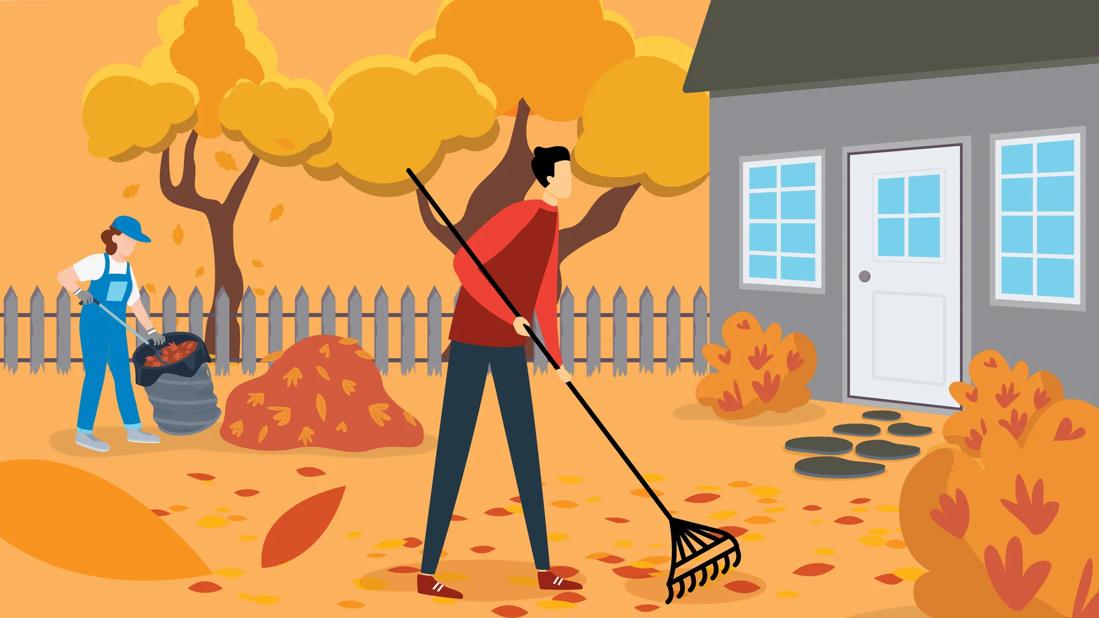
Image content: This image is available to view online.
View image online (https://assets.clevelandclinic.org/transform/4ebe5583-514d-4893-ab76-105781797b47/raking-leaves-1272957442)
Couple raking leaves in their front yard by their house
Autumn paints the landscape in enough brilliant hues to make “leaf peeping” an annual event. But that visual delight can become a physical pain when those leaves hit the ground and fall cleanup begins.
Advertisement
Cleveland Clinic is a non-profit academic medical center. Advertising on our site helps support our mission. We do not endorse non-Cleveland Clinic products or services. Policy
Raking-related injuries send thousands of people a year to the doctor’s office. Back pain is the most common complaint, but the chore can also take a toll on shoulders, necks, hands … well, you get the not-so-pretty picture.
But if you use proper form while raking, you may feel spry enough afterward to jump in that giant leaf pile to celebrate the season.
Here’s how to get the job done pain-free, courtesy of chiropractor Andrew Bang, DC.
Few of us are in “raking” shape when it comes to fall yard work, says Dr. Bang. The chore asks more out of your back, shoulder and arm muscles than what most typical day-to-day activities demand.
Proper technique and a smart approach — like stretching and warming up before raking — are important if you want to avoid injuries or being so sore that you can barely move the next day.
“Raking is a physical activity, just like a workout,” he explains. “You wouldn’t go to the gym and just start randomly lifting things without any idea of what you’re doing, right? Working in the yard is no different.”
From posture to movement, it’s important to maintain good form while raking leaves to keep from tweaking muscles in your back. Dr. Bang offers these suggestions for when you hit the yard.
Advertisement
Use caution when moving bags of leaves or dragging leaf-filled tarps, too. Whatever you’re grabbing is probably heavier than you think and has the potential to wrench your back and cause injury.
To correctly pick up leaves:
Consider using a wheelbarrow or wagon, too. “It’s a lot easier to roll heavier bags where you need to take them than to lug them there,” says Dr. Bang.
Now that your raking form is all set, let’s address a few other ways you can limit wear and tear from working in the yard this fall.
Advertisement
It’s estimated that up to 84% of adults experience some sort of back pain during their lives. And once your back is injured, it’s more prone to future aches and even the development of arthritis, shares Dr. Bang.
Using proper mechanics while doing yard work or other activities that work your back muscles can help keep you from joining that group.
“It doesn’t take much to tweak your back and create a problem,” he cautions. “Don’t put yourself in a bad position. It’s always better to take precautions to avoid the pain in the first place rather than to try and treat it once it’s there.”
Advertisement

Sign up for our Health Essentials emails for expert guidance on nutrition, fitness, sleep, skin care and more.
Learn more about our editorial process.
Advertisement

Kettlebells are versatile, space-friendly weights that can help you build strength from head to toe

Get ready to squeeze your glutes, lift your quads and reverse some crunches

This outdoor activity can boost your mood, strengthen your body and support your long-term health

Stay slow and controlled as you work your way up past the bar

Following a few simple gym rules can help you feel confident, avoid awkward moments and stay safe

Functional fitness encourages real-life actions to help you move more easily, safely and confidently

Clamshells, Pallof presses and Romanian deadlifts can help strengthen and build core muscles

This popular game is a great, high-quality workout that can improve heart health, muscle strength, balance and coordination

Fill your plate with lean proteins, non-starchy vegetables and complex carbohydrates
With time and patience and trial and error, you may be able to find relief from keratosis pilaris (KP) symptoms

Thumb sucking is a normal part of early development, but over time, it can affect teeth, speech and habits











