Locations:





This intoxicating cannabinoid may be marketed as mild, but it can still carry risks
You may have seen delta-8 THC on gas station shelves or heard about it in news reports tied to hemp legislation. But what is it — and is it safe?
Advertisement
Cleveland Clinic is a non-profit academic medical center. Advertising on our site helps support our mission. We do not endorse non-Cleveland Clinic products or services. Policy
Psychiatrist and addiction specialist David Streem, MD, explains what delta-8 is, how it affects your body and why experts urge caution.
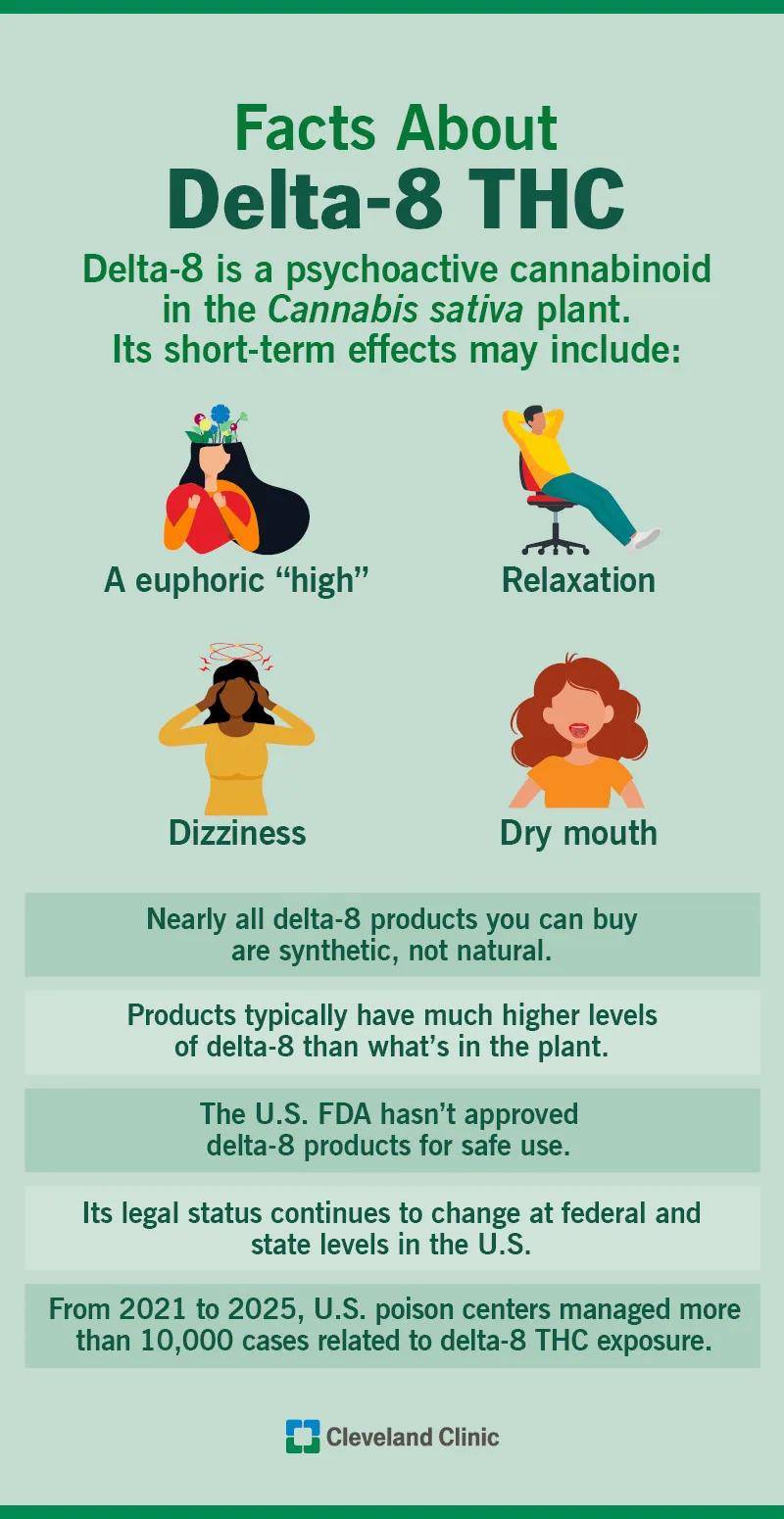
Image content: This image is available to view online.
View image online (https://assets.clevelandclinic.org/transform/915cb389-34e7-4748-b7a0-7e6558d6bf3f/delta-8-infographic)
Delta-8 THC (tetrahydrocannabinol) is one of more than 100 chemicals in the Cannabis sativa plant (marijuana). It’s part of a group of compounds called cannabinoids, alongside CBD and delta-9 THC — the form of THC most people think of.
These compounds affect your mind and body in different ways.
“Delta-8 is intoxicating, which means it gives you a ‘high,’” explains Dr. Streem. “It may have a milder effect than delta-9 THC.”
But there’s an important distinction. Nearly all delta-8 products you see on store shelves are synthetic, not natural.
“They typically have much higher levels of delta-8 than what occurs in the plant,” he adds.
In most cases, delta-8 is made in a lab.
With the help of acidic chemicals and heat, manufacturers change hemp-derived CBD oil into delta-8 THC. This approach became popular for a reason.
The U.S. 2018 Farm Bill specified delta-9 THC as a controlled substance — a legal loophole that enabled retailers to sell delta-8 THC. But using natural forms of delta-8 wasn’t efficient because the cannabis plant has very low levels of it. So, businesses turned to concentrated synthetic forms instead.
Advertisement
In the United States, the legal status of delta-8 continues to change at both the federal and state levels.
If you’re unsure about the cannabis and hemp laws where you live, check with your local or state government for the most up-to-date information.
Like other cannabinoids, delta-8 interacts with receptors in your brain that are part of your endocannabinoid system, which helps regulate things like mood, sleep and memory.
Research on delta-8 is still very limited, so there’s a lot we don’t yet know about its full effects.
A small study suggests short-term effects may include:
But take this list with a grain of salt, Dr. Streem cautions. “Research is very limited on the range of delta-8’s side effects, especially long-term effects.”
Another important factor is the dose. Existing research looks at the effects of small, controlled amounts of delta-8. But manufactured forms of it can contain much higher — or inconsistent — concentrations.
Because of how it’s made and sold, delta-8 may carry several risks. Key concerns include:
There are also risks linked to intoxication itself. For example, delta-8 can impair judgment and coordination.
And yes, delta-8 is likely to show up in drug tests. That’s because your body breaks it down into THC compounds, which is what the tests often check for. And there’s not yet any medical research to determine how long delta-8 stays in your system.
Bottom line? “Delta-8 products are very risky — and dangerous,” stresses Dr. Streem.
The FDA hasn’t approved delta-8 THC for any medical use.
Though some people say it helps with stress, anxiety, pain or depression, these are personal anecdotes without strong scientific evidence.
A few research studies suggest delta-8 may:
But there’s a major limitation: Very little of this research involves humans.
“Medical researchers understand the value of using the endocannabinoid system to treat a range of conditions,” says Dr. Streem. “But we need more studies to know how to use cannabinoids in a reliable and safe way.”
If you’re considering delta-8 THC for symptoms like pain or anxiety, talk with a healthcare provider first. They can help you find safer, more reliable options based on your specific needs.
Advertisement

Sign up for our Health Essentials emails for expert guidance on nutrition, fitness, sleep, skin care and more.
Learn more about our editorial process.
Advertisement
They have similar effects, but differ in how they’re made, used and understood

Synthetic weed may seem like a safer alternative to natural marijuana, but it can have serious — and sometimes life-threatening — effects
Sellers call it ‘light weed,’ but the health effects and safety are largely unknown
Because of a lack of research and possible side effects, cannabis isn’t recommended to treat mental health disorders

These recently popular drinks claim to relieve anxiety and stress, but more research is needed
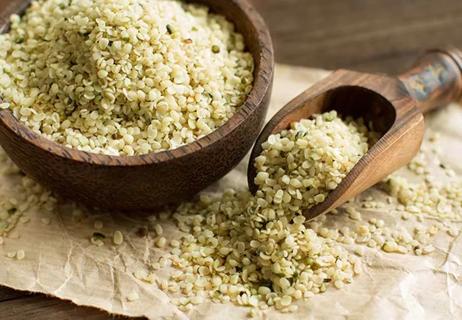
Try this slightly sweet seed for hunger-fighting protein and disease-fighting fatty acids
Changing habits takes time and commitment

Studies suggest CBD has wide-ranging benefits, but there’s a catch or two

Managing your weight through physical activity may lower your chances of getting this common cancer

It typically starts in October and winds down in early spring, with cases at their highest in the middle of winter

Anxiety disorders, health conditions and past trauma can make driving nerve-wracking — help is available
 Search










