Locations:





 Search
Compression stockings help promote better blood circulation in your legs, and they’re safe for most people to wear
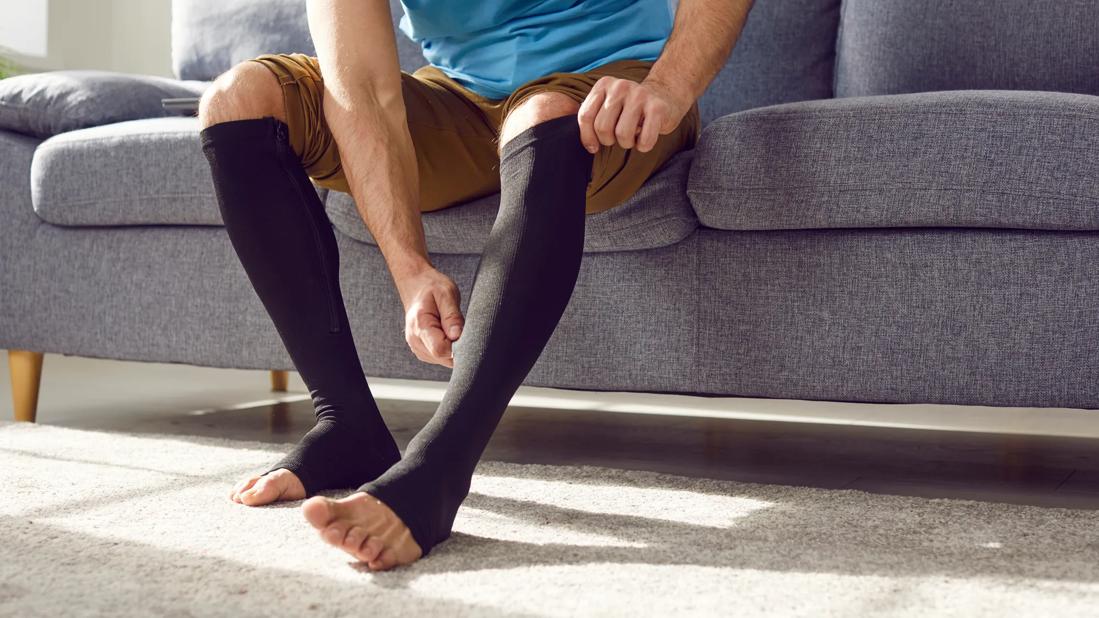
Image content: This image is available to view online.
View image online (https://assets.clevelandclinic.org/transform/ccc99d2f-04bb-479d-a382-e182998315e1/compression-socks-2254973924)
Person sitting on couch, adjusting their compression socks
In the abstract, it may sound ridiculous: Specially engineered socks and stockings can make a big difference in your vascular health.
Advertisement
Cleveland Clinic is a non-profit academic medical center. Advertising on our site helps support our mission. We do not endorse non-Cleveland Clinic products or services. Policy
But it’s true!
So, how do compression socks work, and could you benefit from wearing them? Cardiovascular specialist Douglas Joseph, DO, shares what you need to know.
Compression socks (or compression stockings) are socks of varying lengths that are designed to squeeze your legs and prevent blood from pooling. They vary in tightness from mild to extra-firm, medical-grade compression.
“We use compression socks to promote better blood circulation in your legs,” Dr. Joseph explains. “Nearly 90% of leg disorders originate within the veins. Compression socks are a practical but underutilized fix for a common problem.”
Compression socks gently squeeze your calves to increase the pressure in the tissue beneath your skin and reduce fluid buildup. This improves blood flow to your heart, which can both reduce and help prevent swelling.
“When blood pools in your lower body, the veins in your legs can become so congested that blood flows backward through weakened valves,” Dr. Joseph explains. “This increases swelling and decreases the return of blood to your heart.”
When blood is pooling in your legs, you’ll probably notice that they feel tired, heavy or achy. Over time, poor circulation can contribute to:
Advertisement
Compression stockings may not keep these conditions from developing, but they can reduce your risk. And if you already have vein issues, they can help ease your symptoms and help protect against complications.
While they’re a crucial part of treatment for people living with chronic venous insufficiency and other vein problems, the benefits of compression socks can extend to many people who wear them from time to time.
Pulling on a pair may:
Wearing compression stockings can also be helpful for folks at both ends of the physical activity spectrum.
When you’re sitting for long periods of time — like on a long flight — your legs tend to retain more blood, which raises your risk for clots. For the same reason, your healthcare provider may suggest wearing compression socks if you’re pregnant or on bed rest (like after a surgery).
“On the other hand, if you’re an athlete or you’re on your feet all day long for work, compression socks may help your muscles recover from all that exercise,” Dr. Joseph says.
Another plus? To many people, they just feel good.
“To get the most out of your compression stockings, put them on in the morning, before your feet, legs and ankles start swelling and take them off before bed or after you’ve finished exercising,” Dr. Joseph advises.
Besides the occasional catnap, you shouldn’t sleep in them. What’s more, wearing compression socks nonstop isn’t great for your skin.
Some people find compression garments uncomfortable at first. If they start bothering you, it’s OK to shed them.
“Sometimes, you need to adjust to them,” he notes. “Kind of like when you break in a new pair of shoes.”
Compression stockings are safe for most people to wear, but there are some exceptions and important safety considerations to keep in mind.
Dr. Joseph warns against wearing compression socks or stockings if you have:
You should also ask your provider before wearing compression socks if you have:
Advertisement
Your compression socks should provide a decent squeeze, but take them off if they feel uncomfortably tight. Also, remove them if you notice:
These are all reasons to call your provider. They’ll help you figure out whether the symptoms point to a medical concern, or if you simply need a different sock size.
There are two different types of compression socks on the market: graduated compression socks and anti-embolism stockings.
Compression socks generally come in two basic lengths — knee-high and thigh-high. But Dr. Joseph says that compression tights and leggings are growing more common, especially among athletes and people living with medical conditions, like postural orthostatic tachycardia syndrome (POTS).
Advertisement
“If you’re wearing compression clothing to address a medical concern, don’t just grab a random pair off the rack at the drug store or sporting goods shop,” he urges. “Get measured to be sure you’re getting the right size, and have your provider recommend a specific pressure level.”
Compression is measured in millimeters of mercury (mmHg). Common levels include:
Extra-firm products (30-40 mmHg) provide medical-grade compression. They are usually only available by prescription and should only be used under a doctor’s supervision.
Talk to your provider about what compression level will best fit your needs. If you’re not comfortable taking your own measurements, see a pharmacist or medical supply store specialist. They’ll help make sure you buy the right size.
They aren’t a magic bullet, but a good pair of compression socks just might help put a spring back in your step.
Advertisement

Sign up for our Health Essentials emails for expert guidance on nutrition, fitness, sleep, skin care and more.
Learn more about our editorial process.
Advertisement
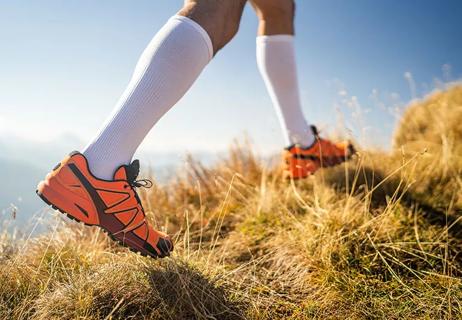
Find out if you can benefit from a 24/7 squeeze.
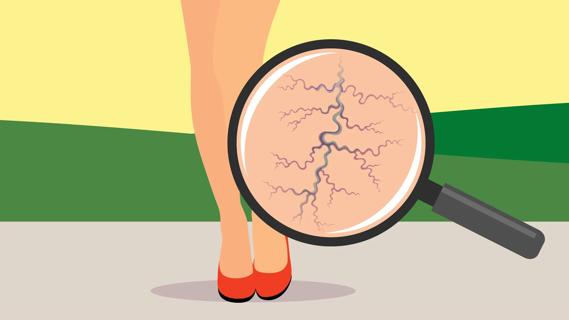
At-home treatments and lifestyle changes may help ease the symptoms and improve the appearance of varicose veins — but they aren’t a cure

Regular exercise, an iron-rich diet, adequate sleep and bedtime routines that include a warm bath or massage may help with your kid’s RLS
Depending on the type of hernia, complications like pain and infection may arise in the months and years following treatment
Hernias don’t go away on their own, but they don’t always require surgery either
Unlike varicose veins, spider veins don't necessarily indicate poor circulation

Cardio can reduce the appearance of varicose veins, but only temporarily
It could be your feet need a rest, but swollen legs may also be a sign of a serious condition
Skin cancer can sometimes itch, but it’s not usually the most common symptom — a persistent itch still warrants a visit to a healthcare provider
The first symptoms of schizophrenia can be subtle, but recognizing them may help you get treatment sooner
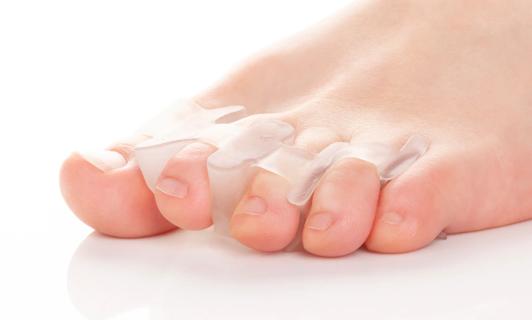
Toe separators can help create space between crowded toes, but they’re not a permanent fix











