Locations:





Heat therapy, light exercise and anti-inflammatory medications can bring relief
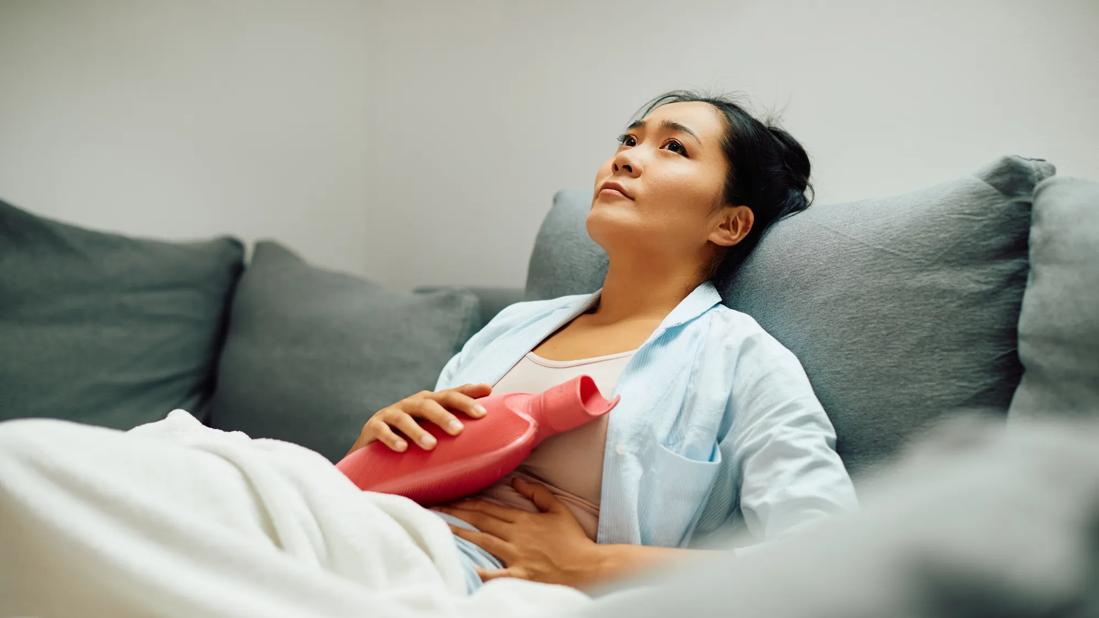
Image content: This image is available to view online.
View image online (https://assets.clevelandclinic.org/transform/f66bae8f-2cff-41a7-8977-2b42c5083b11/heating-pad-stomach-1422144811)
Woman reclining onwith hot water bag on abdomen
It’s not just you. Getting your period can come with a host of discomforts, from bloating and irritability to the all-too-common period cramps.
Advertisement
Cleveland Clinic is a non-profit academic medical center. Advertising on our site helps support our mission. We do not endorse non-Cleveland Clinic products or services. Policy
Relief is on the way.
Ob/Gyn Alison Stalzer, MD, shares advice for how to stop period cramps.
Period cramps are never a welcome visitor. But when they do arrive, there are some remedies you can rely on to manage pain and discomfort.
Dr. Stalzer recommends these strategies to help with period cramps.
When you have an aching muscle, you might turn to heat to loosen up the knots and ease your soreness. The same idea holds true for period cramps. A heating pad or stick-on heating wrap can provide pain relief.
Here’s how it works.
When you get your period, you shed your endometrium, or the lining of your uterus. That causes your body to release prostaglandins, chemicals that work like hormones.
“This release of prostaglandins causes your uterus to cramp and contract,” Dr. Stalzer explains. “The pain associated with period cramps is literally your uterus contracting.”
Your uterus is a muscle. So, just like heat therapy helps relieve overused muscles after a day in the weight room, it also helps relieve cramping around your period.
When you have your period, hitting the gym might be the last thing you want to do. But working out can help with pain from cramps.
“Heat and exercise are our two first-line options for nonmedical treatment,” Dr. Stalzer advises. “We’ve found that people who exercise during their periods tend to have less pain.”
Advertisement
Why? When you exercise, your body releases chemicals called endorphins, which are natural pain relievers. Endorphins can also help relieve stress and improve mood.
The good news is that any exercise can help boost your endorphins and relieve period cramps. If you’re not up for a full sweat session, try:
When you’re not feeling great, warm beverages, such as decaf tea, coffee or hot water with honey, can be soothing.
Dr. Stalzer notes that such remedies aren’t based on scientific research, “but if they make you feel better, these are perfectly acceptable to drink.”
What you eat can cause inflammation and raise estrogen levels in your body, both of which can contribute to period cramps.
Antioxidants can help lower inflammation by fighting off free radicals. And fiber helps your body to remove excess estrogen.
Reap the benefits by focusing on eating more natural, whole foods and fewer processed ones. Choose foods like:
And don’t be stingy with the water: Dehydration can make cramps worse. Keep your water bottle handy and refill it often.
Nonsteroidal anti-inflammatory drugs (NSAIDs), like Advil® or Motrin®, are medications that treat pain and inflammation — and they can do the trick when period cramps get you down.
“NSAIDs block the release of those prostaglandins, which can mean fewer contractions and less pain,” Dr. Stalzer shares.
Most people can safely take up to 600 milligrams of ibuprofen every six hours. For those who can’t take ibuprofen, acetaminophen (Tylenol®) might do the trick.
A quick search online or a trip down the supplement aisle can leave you thinking that there are dozens of pills, oils, powders and gummies that can bring relief pronto.
But it’s important to recognize that those products aren’t well-regulated. And they can cause more problems than they solve.
Supplements can cause bad interactions with other medications you take, and the side effects can make things worse.
“We tend to advise staying away from over-the-counter supplements,” Dr. Stalzer cautions. “Certain ones, like St. John’s Wort, for example, can increase bleeding.”
Talk with a healthcare provider before taking any supplements, including vitamins and herbal remedies.
Period cramps may be common, but sometimes, cramps can signal something more significant, like endometriosis and other conditions. Dr. Stalzer recommends talking with a healthcare provider if:
Advertisement
Minor aches and discomforts are an unfortunate part of having periods. But there are ways to make them more bearable. If home remedies and medications aren’t cutting it, talk with a healthcare provider about your options.
Advertisement

Sign up for our Health Essentials emails for expert guidance on nutrition, fitness, sleep, skin care and more.
Learn more about our editorial process.
Advertisement
Very light bleeding halfway through your cycle is common and usually harmless
Stress, PMOS, perimenopause or hyperthyroidism may cause a low flow
The research isn’t clear, but it’s safe to try this essential mineral for relief
From medications and hormone imbalances to STIs, there’s a wide range of reasons Aunt Flo may overstay her welcome
Although it can be alarming, it’s normal to experience blood clots during menstruation
Reasons for spotting can include menopause, uterine fibroids, PMOS and birth control
Options for relief at any age
Managing your weight through physical activity may lower your chances of getting this common cancer
Managing your weight through physical activity may lower your chances of getting this common cancer
It typically starts in October and winds down in early spring, with cases at their highest in the middle of winter
Anxiety disorders, health conditions and past trauma can make driving nerve-wracking — help is available
 Search










