Locations:





Fat exits your body in your breath, pee and sweat

Image content: This image is available to view online.
View image online (https://assets.clevelandclinic.org/transform/3af62a6f-e5cd-425b-9c06-e65ce15c3709/fitness-plan-1988003585)
Fitness trainer with client, going over notes on clipboard in gym
How does fat leave your body when you lose weight? Do you sweat it out, pee it out or breathe it out?
Advertisement
Cleveland Clinic is a non-profit academic medical center. Advertising on our site helps support our mission. We do not endorse non-Cleveland Clinic products or services. Policy
The answers are yes, yes and especially yes, respectively.
Fat is a carbon-based fuel. And just like a car burning carbon-based fuel, we burn fat into carbon dioxide and water.
That’s the simple explanation. But — as metabolic nutrition specialist Tom Rifai, MD, explains — there’s a bit more to that process.
Fat leaves your body in several different ways:
If you really want to understand where fat goes when you lose weight, it helps to know that our bodies are designed to store excess energy.
“We store energy in our liver and muscles, in the form of carbs and fat cells,” Dr. Rifai explains. “Those fat cells are largely composed of hydrogen, carbon and oxygen. The energy we get from fat cells lives in the bonds between these molecules.”
When we “burn fat,” what we’re actually doing is using the oxygen we breathe in — and some of the many hormones our body naturally produces — to kick off a series of complicated chemical processes. We metabolize fat by breaking the bonds between the hydrogen, carbon and oxygen that make up a fat cell, setting the stored-up energy free.
Advertisement
“Breaking down fat liberates energy for all sorts of biological functions and physical activity,” he continues. “It also generates heat, which keeps your body temperature normal.”
How else does your body use all that energy? In more ways than you might think.
When the fat-burning process is complete, you’re left with cellular waste in the form of water (H2O) and carbon dioxide (CO2). These byproducts of fat metabolism then leave your body as carbon dioxide and water.
This process is happening all the time, without us having to think about it. We lose weight by (safely) limiting the energy we take in and speeding up the fat-burning process.
One way we limit the energy we take in is by adjusting our eating habits. When you take in fewer calories than you “burn” in a day, your body turns to its fat reserves — in the form of triglycerides — for energy.
“The extra energy, the triglycerides, are stored in adipose tissue all around your body,” explains Dr. Rifai.
If you have overweight or obesity, it means you’re taking in more energy, in the form of calories, than you’re burning. To change that, you have to adjust the amount you’re taking in by changing your eating habits.
To permanently shed weight, Dr. Rifai says you have to up your physical activity levels, too.
“Data consistently shows nutrition is weight loss royalty, but for weight maintenance, physical activity wears a crown as well,” he elaborates. “It’s usually best to engage in physical activity during weight loss as well, in order to minimize muscle loss.
Exercise speeds up the fat-burning process because it pushes you to take more frequent, deeper breaths — and you need oxygen to burn fat. When your respiratory rate goes up, it also helps more carbon dioxide (one of the two byproducts of fat metabolism) to leave your body.
And in case you’re wondering: No, you can’t lose weight just by breathing really hard and fast. That’s called hyperventilation. You want more carbon dioxide to leave your body. But hyperventilation reduces the concentration in your blood way too fast. The result is a wide range of unpleasant symptoms, including — if it continues long enough — a fainting spell.
Advertisement
Dr. Rifai recommends:
When you exercise, your muscles start by mainly burning through stored glycogen for energy.
“After about 30 to 60 minutes of aerobic exercise, your body starts burning mainly fat,” Dr. Rifai explains. (If you’re exercising moderately, this takes about an hour.)
If all that exercise feels out of reach for you, start slow and build your way up. Every minute you spend being physically active counts! Dr. Rifai recommends using a pedometer and slowly building up your step count.
Advertisement
“Food and physical activity are both key to weight loss and maintenance,” emphasizes Dr. Rifai. “Generally, people who successfully lose weight and keep it off eat a low-calorie, plant-rich diet and are physically active throughout the day.”
The process of losing weight may be the same for all of us physiologically. But that doesn’t mean it always looks the same. It may take more time to move the number on your scale than you expect.
Everyone’s body responds a bit differently to food and physical activity changes. Some lose weight immediately, which is wonderful, if you don’t lose too much too fast. Others maintain their starting weight for a while. And, yes, some of us actually gain a few pounds.
It can be disheartening to be in that third group. But try to be patient. That weight gain is temporary. All that hard work you’re doing is still improving your health. It’s just going to take a bit longer to see those benefits in the mirror.
Advertisement

Sign up for our Health Essentials emails for expert guidance on nutrition, fitness, sleep, skin care and more.
Learn more about our editorial process.
Advertisement
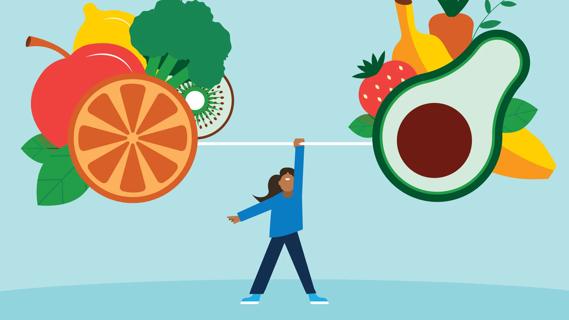
Some still turn to a 500-calorie deficit to lose weight, but that approach isn’t always effective or healthy
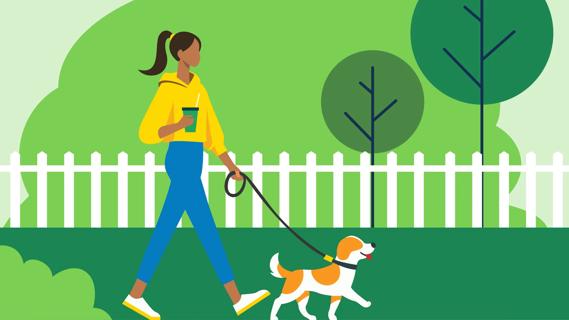
A consistent walking program is an effective way to drop pounds and lose body fat
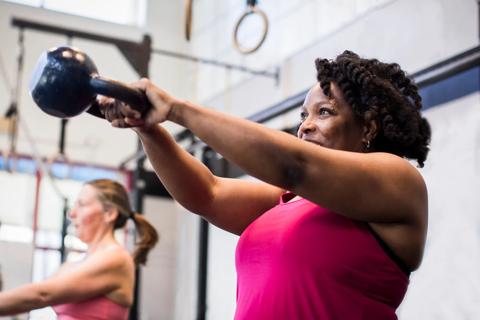
Successful weight loss takes a long-term commitment — build a healthy lifestyle you can stick with
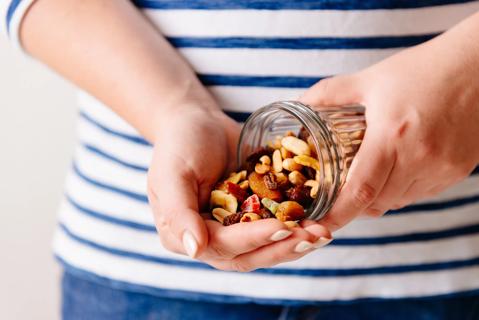
Opt for snacks that have protein, fiber and healthy fats to help prevent cravings and keep you feeling full and satisfied

It can, but it isn’t sustainable, lacks nutritional balance and you’ll likely regain weight as soon as you start eating adult foods again

Consuming all of your calories in an eight- to 12-hour timeframe may help you drop pounds

Foods high in protein and fiber can help suppress your appetite, as can exercise, sleep and other healthy habits
Rapid weight loss isn’t realistic or healthy — for weight loss success, focus on long-term solutions

Managing your weight through physical activity may lower your chances of getting this common cancer

It typically starts in October and winds down in early spring, with cases at their highest in the middle of winter
Anxiety disorders, health conditions and past trauma can make driving nerve-wracking — help is available
 Search










