Locations:





These moisture sensors can help kids’ brains and bladders make the connection needed to end overnight accidents
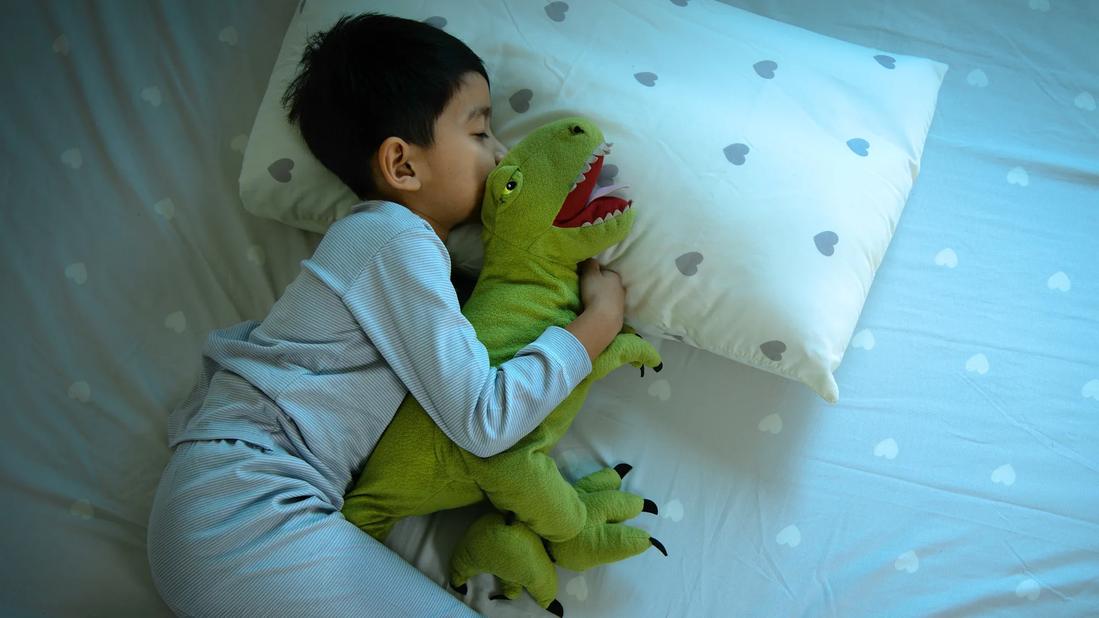
Image content: This image is available to view online.
View image online (https://assets.clevelandclinic.org/transform/545d6019-05b0-498e-9df8-dd68aa52f98c/child-sleeps-night-1456489036)
Young child sleeping with stuffed dinosour in their arms
If your child is having trouble with bedwetting overnight, you may be feeling frustrated and unsure how to help. Every time it happens, you may wonder, “Is there an end in sight?”
Advertisement
Cleveland Clinic is a non-profit academic medical center. Advertising on our site helps support our mission. We do not endorse non-Cleveland Clinic products or services. Policy
First, know this: They’re not alone. An estimated 15% of children in the U.S. still wet the bed at age 5, known as nocturnal enuresis. And most kids outgrow bedwetting on their own, says pediatric urologist Jessica Hannick, MD.
But some lifestyle and behavioral habits may help — including using a device called a bedwetting alarm, which works wonders for some families.
Dr. Hannick explains what bedwetting alarms are, how they work and when they may be worth trying.
Bedwetting alarms (aka enuresis alarms or moisture alarms) are devices with moisture sensors. They go under a mattress pad or clip to your child’s underwear overnight. If your child wets the bed, the moisture from their urine triggers a loud alarm to wake you both.
In the beginning, though, the alarm often only wakes the parent, while the child continues to sleep deeply. So, you may have to get up and rouse them.
“I encourage parents to wake the child up and take them to the bathroom to sit on the toilet and try to pee again, and then wash their face or brush their teeth to make sure they’re truly awake,” Dr. Hannick explains. “This encourages their brain to gain alertness to the messages their bladder is trying to send.”
In other words, continually waking up after they pee actually trains their brain to wake them up before they pee.
Advertisement
The goal is that, over time, all of those post-accident wakeups will eventually help your child’s brain and bladder start to make the connection to wake them up before an accident — ultimately, putting an end to bedwetting.
To reiterate, bedwetting alarms are triggered by moisture after your child has an overnight accident. “This can be confusing to parents, who commonly think the alarm will go off before an accident occurs,” Dr. Hannick notes.
Once you start using a bedwetting alarm, it can take about three months for your child to learn to wake up on their own to the sensation of a recent accident — and later, of a full bladder.
But it doesn’t work for everyone. Bedwetting alarms aren’t usually helpful for kids who don’t yet have any interest in being dry.
“In my experience, bedwetting alarms work best for children ages 7 and up who are independently motivated to get dry and whose parents can stay on a consistent routine with the alarm,” Dr. Hannick shares.
They may also not be a good fit if you have other kids in the house who may wake up when the alarm goes off.
“It’s not always logistically feasible, and it can be exhausting for the parents,” she acknowledges.
So, why try a bedwetting alarm at all? Why not just use a regular alarm clock to wake up your child in the middle of the night to pee?
“Setting a random alarm doesn’t correlate with what’s going on in your child's bladder,” Dr. Hannick explains. “They may have had an accident minutes or hours ago or not even need to pee. So, it’s not really training the brain properly.”
It’s the same reason she encourages parents not to wake their kids up in the middle of the night to use the bathroom: You may think you’re safeguarding them from an overnight accident, but it doesn’t help their bladder and brain learn how to communicate properly.
Try lifestyle and habit tweaks first before you turn to a bedwetting alarm.
“Most of the time, healthcare providers recommend starting with behavioral changes,” Dr. Hannick says. “If those don’t work, depending on your child’s age and motivation to get dry, you might move on to discussing a bed alarm or medication.”
These tips can also help your child outgrow bedwetting.
Advertisement
If your child is struggling with bedwetting, it’s always OK to talk to their doctor about it. They can talk you through lifestyle strategies that may help — and they may also want to check your child for any underlying medical issues.
Conditions that can contribute to bedwetting include:
You should also always talk to your child’s provider if they:
All of these can be signs of an underlying medical condition.
“Most of the time, bedwetting is developmental,” Dr. Hannick reiterates. “But if it’s due to something else, diagnosis and treatment are key.”
Advertisement

Sign up for our Health Essentials emails for expert guidance on nutrition, fitness, sleep, skin care and more.
Learn more about our editorial process.
Advertisement

The color and shade of your urine offer a window to your health

Most kids grow out of bedwetting over time, but certain strategies can help — including having them evaluated for other medical conditions

Unless you have other symptoms, green urine is probably a souvenir from food, dyes or medicine
Dehydration, diet and diabetes are a few possible reasons

Urine can contain bacteria, viruses and more — don’t drink it or use it to clean wounds

Don’t ‘go with the flow’ if you have issues with urge incontinence or a contagious infection

Going seven times a day is average, but more or less can be OK, too, as long as you’re not experiencing drastic changes

An enlarged prostate, diuretics and bladder irritants can all contribute

Managing your weight through physical activity may lower your chances of getting this common cancer

It typically starts in October and winds down in early spring, with cases at their highest in the middle of winter

Anxiety disorders, health conditions and past trauma can make driving nerve-wracking — help is available
 Search










