Locations:





Most kids grow out of bedwetting over time, but certain strategies can help — including having them evaluated for other medical conditions
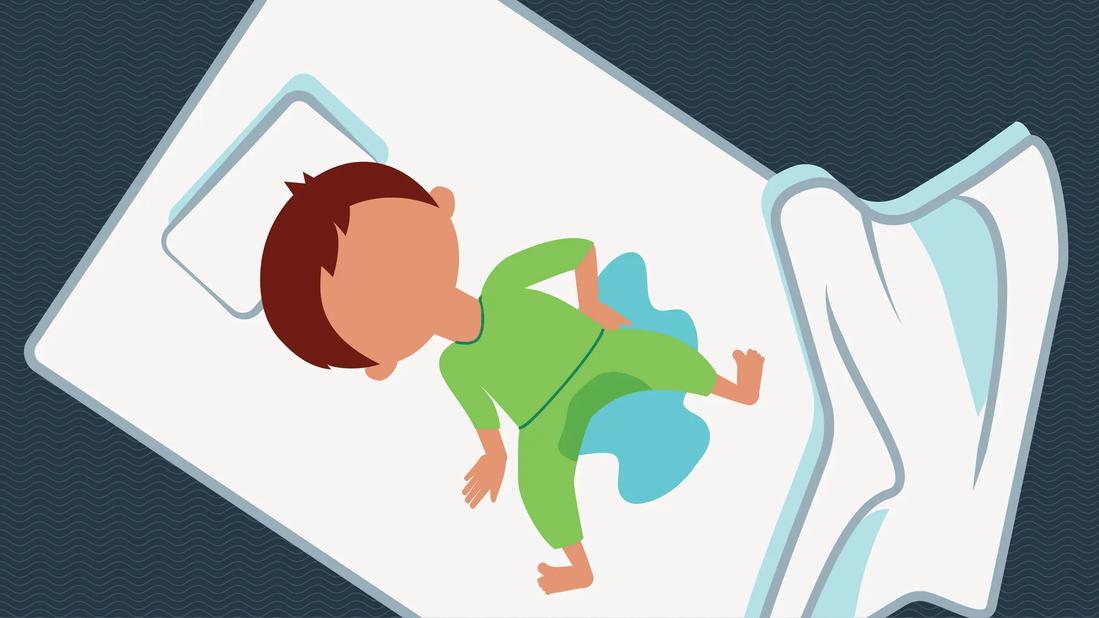
Image content: This image is available to view online.
View image online (https://assets.clevelandclinic.org/transform/d43ad2aa-0dfc-4e3f-be22-22767c877622/Child-sleeping-bedwetting-1453684709)
Child sleeping and wetting the bed, with wet sheets and pajamas
You’ve tried limiting their liquids after dinner. You’ve woken them up in the middle of the night to use the bathroom. But your child is still wetting the bed at night. What gives?
Advertisement
Cleveland Clinic is a non-profit academic medical center. Advertising on our site helps support our mission. We do not endorse non-Cleveland Clinic products or services. Policy
“Most of the time, bedwetting is a developmental issue,” says pediatric urologist Jessica Hannick, MD. “But sometimes, it can be due to underlying medical causes.”
Dr. Hannick explains why bedwetting happens, how to help your child stop and when to check in with their healthcare provider.
Bedwetting (nocturnal enuresis) is the accidental release of pee during sleep in children 5 years of age or older. About 15% of children in the U.S. still wet the bed at age 5.
But if your child is still wetting the bed at age 7 or older, speak with their primary care provider. They may refer you to a specialist, like a pediatric nephrologist or urologist, if your child:
Bedwetting is usually related to a child’s development, so it can take time for kids to grow out of it — and that can take longer than expected.
“Often, the neurological connections between a child’s brain and bladder have to mature,” Dr. Hannick explains. “They’ll eventually outgrow bedwetting, but there’s no way to know when.”
Other times, she says, bedwetting is related to underlying medical causes — like urinary tract infections, diabetes or sleep apnea — so identifying and treating those causes is key. (More on that shortly!)
Advertisement
Most kids stop wetting the bed on their own, but certain strategies can help them get there faster.
Bedwetting can be frustrating and exhausting for you and your child. But it’s important to be encouraging and positive, and to make them feel good about any progress they make.
“Avoid directing any guilt or shame toward your child for bedwetting,” Dr. Hannick advises. “Kids need to understand that bedwetting isn’t their fault, and they didn’t do anything wrong to cause it to happen.”
She cautions that punishing your child for wetting the bed will only make stress and self-esteem issues worse, which could lead to even more bedwetting.
Even adults with great bladder control are better off not drinking a bunch of water right before bed — and kids shouldn’t either.
“Kids should stop drinking one to two hours before bed,” Dr. Hannick recommends. “Anything that goes in has to come out. You have to give them a chance to pee out most of that liquid before bed.”
But that’s not to say your child should avoid drinking during the rest of the day to avoid bedwetting, as that can lead to other health concerns, like dehydration.
Going to bed with a partially full bladder raises the chances of an overnight accident. So, make sure your child uses the bathroom as part of their usual bedtime routine.
“Encourage them to pee every night right before they go to bed, even if they don’t feel like they have to,” Dr. Hannick advises. “They’ve got to empty the tank so it has room to fill overnight.”
Constipation is a common cause of bedwetting because of the nerve connections in the pelvis that are shared by the bladder and bowels.
“Having poops that are firm, large and/or infrequent can lead to painful bowel movements,” Dr. Hannick notes. “That can cause kids to receive messages from their bladder about having to pee more often than they actually need to.”
Address constipation in kids by encouraging a healthy, fiber-forward diet and staying hydrated. But if it continues, ask your pediatrician for help.
Kids who are very deep sleepers are more prone to bedwetting.
“Their bodies may not wake them up to the messages of fullness their bladder is trying to send to their brain,” Dr. Hannick says.
And it can become a vicious cycle: Bedwetting interrupts their sleep, causing exhaustion that leads them to sleep deeply at night. And that raises the risk they’ll wet the bed again.
Focus on healthy sleep habits, like powering down screens at least half an hour before bedtime and going to bed at a reasonable, consistent time. Dr. Hannick also cautions that kids shouldn’t stay up late in the hopes of avoiding bedwetting.
Advertisement
“Kids sometimes think they can trick their body not to wet the bed by staying up super late,” she explains. “But that affects the quality and duration of their sleep, which leads to issues during the day.”
You might’ve considered rousing your child awake to use the bathroom in the middle of the night to try to get them to use the bathroom. You’re hoping you can safeguard them from an overnight accident — but Dr. Hannick advises against it.
“Waking kids up on a schedule of the parent’s choosing doesn’t factor in the child’s bladder’s ‘schedule,’ which may be variable,” she clarifies. “So, it doesn’t help the bladder and the brain learn how to communicate properly.”
In other words, don’t waste time with random nighttime awakenings. It won’t stop their bedwetting, but it will get in the way of a good night’s sleep (for both of you!).
A bedwetting alarm is a device that attaches to your child’s underwear or goes under their mattress pad. If your child has an accident overnight, the moisture triggers an alarm.
Ultimately, the goal is to help kids’ bodies make the brain/bladder connection that encourages them to wake up on their own before they have to pee.
But Dr. Hannick also cautions that bedwetting alarms can take a while to work, and they don’t work for every child. Talk to your child’s healthcare provider to learn more and determine whether a bedwetting alarm is worth trying.
Advertisement
Some parents or caregivers hesitate to put their kids in pull-ups overnight, worrying that it will encourage bedwetting. But Dr. Hannick says the opposite is true.
“If anything, wearing a pull-up overnight allows children to stay dry in case of an accident — and that lets them get the sleep they need,” she points out. “It helps keep them comfortable, which can give them confidence.”
Older kids who struggle with bedwetting may feel self-conscious or embarrassed, especially at sleepovers and summer camp. In these cases, their provider may recommend desmopressin (DDAVP®), a synthetic form of the hormone vasopressin.
“Vasopressin regulates how much urine the kidneys produce. So, taking it encourages the kidneys to temporarily keep more fluids inside the body rather than making as much pee,” Dr. Hannick explains. “That means less urine passes to the bladder overnight.”
When taken properly, desmopressin is estimated to be 65% to 75% effective. That can give kids the confidence that they’ll have a dry night, especially when they’re sleeping away from home.
Sometimes, bedwetting has an underlying cause, like:
Advertisement
“In these cases, properly diagnosing and treating or managing these conditions is fundamental to successfully treating bedwetting,” Dr. Hannick says.
Some children start bedwetting again after they haven’t done it for a while. This is called secondary nocturnal enuresis — wetting the bed after six months of staying dry overnight. It’s often related to psychological stressors, like:
It’s also important to know that children who have experienced child abuse often regress to earlier childhood behaviors, including bedwetting. If you’re concerned that your child may be a victim of abuse, contact someone who can help — like their pediatrician or your local child protective agency. In the U.S., the Childhelp National Child Abuse Hotline (1.800.422.4453) is available 24/7.
If your child struggles with bedwetting, ask their provider for guidance. It’s often a standard part of child development as their bodies and brains mature — but not always.
“Because there can be medical causes for bedwetting that require additional evaluation, it’s important to rule those out before we assign a developmental cause,” Dr. Hannick says.
Talk to their provider if they:
These can all be signs of underlying conditions. And whether your child is dealing with a developmental or medical cause, their provider is there to help.
“There are many options and strategies we can offer,” Dr. Hannick reassures. “I just want kids and parents to know they’re not alone in this.”

Sign up for our Health Essentials emails for expert guidance on nutrition, fitness, sleep, skin care and more.
Learn more about our editorial process.
Advertisement

The color and shade of your urine offer a window to your health
These moisture sensors can help kids’ brains and bladders make the connection needed to end overnight accidents

Unless you have other symptoms, green urine is probably a souvenir from food, dyes or medicine
Dehydration, diet and diabetes are a few possible reasons

Urine can contain bacteria, viruses and more — don’t drink it or use it to clean wounds

Don’t ‘go with the flow’ if you have issues with urge incontinence or a contagious infection

Going seven times a day is average, but more or less can be OK, too, as long as you’re not experiencing drastic changes

An enlarged prostate, diuretics and bladder irritants can all contribute

Managing your weight through physical activity may lower your chances of getting this common cancer

It typically starts in October and winds down in early spring, with cases at their highest in the middle of winter

Anxiety disorders, health conditions and past trauma can make driving nerve-wracking — help is available
 Search










