Locations:





Taking your probiotics in the morning with food is a great strategy — but consistency is key
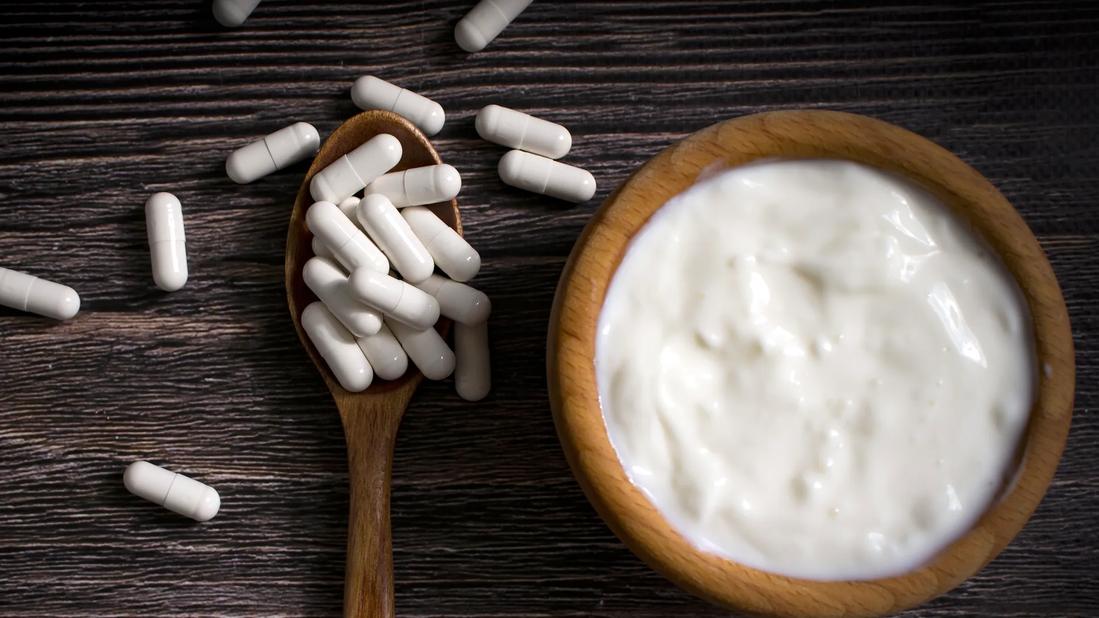
Image content: This image is available to view online.
View image online (https://assets.clevelandclinic.org/transform/348d4b89-864a-4964-84af-9240aa6a0f81/probiotic-pill-yogurt-1451879793)
Wooden bowl of white yogurt next to wooden spoon of white capsules
You’ve decided to give probiotics a try. But you quickly learned choosing one of these supplements wasn’t as simple as you thought. But after wading through all the different types, you’ve found what feels like a good match.
Advertisement
Cleveland Clinic is a non-profit academic medical center. Advertising on our site helps support our mission. We do not endorse non-Cleveland Clinic products or services. Policy
Now, you’re wondering about how to take your new probiotics. Is there a best time of day to take them? Is it OK to take one on an empty stomach? Or should probiotics be taken with food?
All good questions, says digestive disease researcher and registered dietitian Gail Cresci, PhD, RD, LD. And yes, there are even things you can do to boost your probiotic’s effectiveness once you find one that works for you.
You’ve likely decided to start taking a probiotic because you want to support a strong gut microbiome. A healthy gut can:
And a probiotic supplement can help increase the beneficial microbes in your body. This happens when they reach the farthest part of your colon, known as the distal gut. Probiotics help your good microbes build stronger colonies.
Most of the friendly yeast and bacteria in probiotic supplements are the same as those in your body. Many probiotics are made up of live cultures. Others, including the popular Bacillus coagulans strain, have dormant spores that wake up once they hit your digestive tract.
So, is there a best time or way to take probiotics to improve that colonization? Studies have shown it depends on:
Advertisement
Probiotic supplements have a rough journey through your digestive system. Once you swallow them, they enter your stomach’s harsh, acidic environment, which isn’t very probiotic-friendly.
"Your stomach’s low pH can destroy most of the good bacteria in probiotics before they get to your distal gut,” Dr. Cresci explains.
If this happens, the probiotics won’t colonize. They’ll keep moving through your body until you poop them out. Live strains like the popular Lactobacillus or Bifidobacteria struggle with this the most. Dormant strains like Bacillus bacteria or yeast called Saccharomyces boulardii have a greater chance of surviving a trip through the stomach.
To combat this, try taking your probiotics with pH-balancing foods that are low in acid and high in vital nutrients.
While you can take probiotics with water on an empty stomach, that doesn’t neutralize your stomach’s acid. But food does — and some types of food help more than others.
Dr. Cresci says combining your supplement with all three macronutrients gives probiotics the best chance of colonizing. The macronutrients are:
Milk and yogurt are great choices, as they have all three macronutrients, unless they’re fat-free. Another plus? Fermented foods like yogurt contain gut-friendly probiotics that can further boost colonization efforts.
One important thing to remember — avoid taking probiotics with acidic foods like:
Those foods add extra acid to your stomach, so it’s best to wait to take your supplement until you’ve had a more pH-neutral meal.
If you’re an early bird, you may wonder if it’s best to take a probiotic first thing in the morning. Or if you’re more of a night owl, bedtime might work better for you. Does it matter?
Morning is a great time to add a probiotic to your routine, Dr. Cresci says.
“You’re trying to get the probiotic to move from your stomach to your colon to colonize,” she explains. “And your bowels are more active when you’re active. So, taking a probiotic with breakfast is a great way to help them along this journey.”
If breakfast or mornings aren’t your thing, that’s OK. You can take probiotics at any time of day and still get good results.
“The one important thing to remember is that you take them,” Dr. Cresci states. “Whatever works best so you don’t forget. You’ll get the most benefits if you do it daily.”
Other factors can also make or break your probiotic supplement’s success.
No matter what kind of probiotic you take, a portion of its microbes will wind up passing through your body, ending up in your poop. Only a small amount stays in the distal gut and gets to work.
Advertisement
That’s why you want to avoid taking your supplement sporadically. Taking one only once or twice a week, and then skipping a few weeks means you’re missing out on the benefits, Dr. Cresci points out.
“You aren’t going to say, ‘I just ate really badly, so I’m going to take a probiotic,’” she illustrates. “It’s not like you have a headache and need an aspirin. Probiotics don’t work that way.”
Regular use is the key to colonization success. It increases the chance that some of the microbes in your probiotic supplement stick around to grow and thrive. A routine is important to building better gut health.
“A researcher I have spoken to, Ami Bhatt, PhD, from Stanford, says that you don’t even have to take one daily. Even three to five times a week is still adequate to support colonization. It’s a preventive thing you’re doing to support your gut health on a regular basis,” Dr. Cresci shares.
Antibiotics aren’t smart drugs. They work hard to kill bad bacteria, but they can also destroy your gut’s good microbes, causing diarrhea and other belly problems. If you’re taking an antibiotic for a bacterial infection, your healthcare provider may recommend a probiotic. Probiotics can help those unwanted side effects by recolonizing your gut.
Advertisement
You can take some types at the same time as your antibiotic. Saccharomyces boulardii and Lactobacillus rhamnosus are two that have been effective choices. Other Lactobacillus and bacillus strains fare better when taken an hour or two before or after the antibiotic. It’s also good to keep taking probiotics for at least two weeks after you finish your medication.
If you want to keep taking probiotics after those two weeks, you may want to switch things up, Dr. Cresci says. It may be better to try a different kind based on your needs. Your healthcare provider can help you make this decision.
There are many reasons you may want to start taking probiotics — and you have a lot to choose from when you do. But once you start, you’ll want to pay attention to how to take them. The key is consistency. Find a time of day that works for you and stick to that routine. Your gut microbiome will thank you.
Advertisement

Sign up for our Health Essentials emails for expert guidance on nutrition, fitness, sleep, skin care and more.
Learn more about our editorial process.
Advertisement
Eating a healthy diet, reducing stress, and focusing on exercise and sleep can help keep your digestive system in top form

Yogurt, sauerkraut, kimchi and other fermented foods are a good way to get those beneficial microbes
Probiotics are ‘good’ bacteria that help your gut, while prebiotics are foods that fuel the bacteria
There’s little evidence that probiotics cause weight loss, but having a healthy gut microbiome may set the stage for it

You don’t need a strenuous or expensive fitness routine to keep your digestive tract in shape
A healthy gut benefits your entire digestive system — and more

Here’s why prebiotics matter

This prebiotic is found in a lot of foods that you probably already eat

Managing your weight through physical activity may lower your chances of getting this common cancer

It typically starts in October and winds down in early spring, with cases at their highest in the middle of winter

Anxiety disorders, health conditions and past trauma can make driving nerve-wracking — help is available
 Search










