Locations:





It’s not an enema or bowel prep, and this colonic hydrotherapy can harm proper colon function

Image content: This image is available to view online.
View image online (https://assets.clevelandclinic.org/transform/222548a4-67af-4fff-a4ac-0adabe426d21/doctor-patient-1365582880)
Healthcare provider holding a tablet, talking to patient in medical setting
A colon cleanse (sometimes referred to as a colonic, colonic irrigation or colonic hydrotherapy) is promoted to help detox the colon and improve health. It’s also touted as a way to address issues like bloating, colitis, constipation and indigestion.
Advertisement
Cleveland Clinic is a non-profit academic medical center. Advertising on our site helps support our mission. We do not endorse non-Cleveland Clinic products or services. Policy
But colon cleansings aren’t a medically safe solution for your digestive issues, and shouldn’t be done regularly or recreationally.
“It’s not something that you need to do to maintain the health of your colon,” says colorectal surgeon Anuradha Bhama, MD. “For some people, colonic hydrotherapy can actually be dangerous.”
A colon cleanse is a procedure where a tube is inserted into your rectum. Large amounts of water (or other substances like coffee or herbal solutions) are then used to flush out your colon and remove waste. It’s based on the concept of hydrotherapy, in which water is used to treat various health systems.
Colon cleanses evolved from an ancient theory that the body poisons itself by retaining waste products. Removing fecal waste was believed to improve your overall health. Other alleged benefits include weight loss, increased energy and improved digestion.
But there’s no scientific evidence to back up this theory. And at wellness centers, colonic hygienists conducting colon cleanses aren’t typically medical doctors.
It can be easy to get colon cleanses confused with enemas or bowel prep before a colonoscopy. But they’re all different. With an enema, you use liquid to clean out your rectum and the lower part of your colon. The goal of an enema is to help stimulate your digestive system so you poop.
Advertisement
Bowel prep is when you take something orally (by mouth) to induce diarrhea.
“This helps clean out the entire colon from beginning to end,” explains Dr. Bhama. “An example of bowel prep is drinking a laxative solution as part of colonoscopy preparation or before you have colon surgery.”
No. Dr. Bhama warns that colon cleanses aren’t considered safe and aren’t recommended by healthcare professionals.
You shouldn’t need to have your colon cleansed. The idea that the average person’s colon needs to be cleansed — or that having colonic hydrotherapy offers health benefits — isn’t proven.
“Our bodies are equipped to cleanse themselves,” she stresses.
Dr. Bhama says there are several major reasons why you should avoid colon cleansing.
Your colon absorbs water and stores stool (poop). If you start to mess with your colon’s ability to do either of those things, it can impact your health.
“Maintaining your water balance is really important,” Dr. Bhama states. “If you interfere with your colon’s water absorption, that could throw off your fluid balance.”
This is especially important if you’re on dialysis or living with heart failure.
“A colon cleanse may exacerbate your condition,” she adds.
“In rare cases, colonic cleaning via hydrotherapy can result in perforation of the colon,” warns Dr. Bhama. “This risk increases if the procedure is performed by someone without proper training.”
Some herbal preparations used in hydrotherapy have also been associated with cases of aplastic anemia and liver toxicity. Rectal perforation and disseminated abscesses (an infection that spreads from the primary source to other parts of your body) have been reported as well.
And if you’ve had colon surgery before, or if you have any existing anatomic issues with your colon, a colon cleanse could cause further problems.
Constipation can be caused by multiple factors, including underlying medical conditions.
“For example, your doctor may run some bloodwork and find out that your constipation could be caused by hypothyroidism,” illustrates Dr. Bhama. “In this case, you wouldn’t want to go get a colonic to help relieve your constipation, when really what you need is treatment for hypothyroidism.”
If you’re experiencing severe, persistent constipation, Dr. Bhama says it’s important to schedule a visit with a primary care doctor or a gastroenterologist to determine what else might be going on with your bowels.
For those with underlying conditions, the reliance on such treatments poses subsequent risks.
Avoid colonic irrigation especially if you have conditions like:
Advertisement
That’s because these conditions already increase the risks of dehydration, acute kidney failure, pancreatitis, bowel perforation, heart failure and infection.
“With Crohn’s disease or ischemic colitis, you can have a stricture in your colon that could be causing blockage of stool,” notes Dr. Bhama. “You’d want to make sure that you see your doctor for that.”
If you’re worried you have an unhealthy colon, Dr. Bhama advises not to explore potential solutions for colon health by yourself.
“Colon cleanses shouldn’t be used for routine problems,” she reiterates. “Any treatment you have done should be approved and supervised by a doctor.”
Advertisement

Sign up for our Health Essentials emails for expert guidance on nutrition, fitness, sleep, skin care and more.
Learn more about our editorial process.
Advertisement
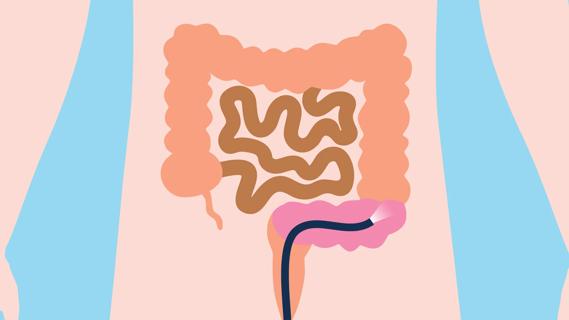
Both procedures offer a look inside the large intestine, but a colonoscopy is more thorough

Choose foods that are easily broken down in your digestive system, like fruits and vegetables without skins or seeds
Reducing inflammation is key when you’re in a flare-up, but so is having a preventive nutritional plan in place when you’re not

It can be hard to get used to the bags, but the freedom they provide is worth the challenge
TikTok trend encourages eating papaya seeds to ‘deworm’
The short answer from a colorectal surgeon
Consider the severity and location of your arthritis to decide on the right support
Eyes typically increase to full size during two growth spurts in childhood

Managing your weight through physical activity may lower your chances of getting this common cancer

It typically starts in October and winds down in early spring, with cases at their highest in the middle of winter

Anxiety disorders, health conditions and past trauma can make driving nerve-wracking — help is available
 Search










