Locations:





 Search
Silver fillings are perfectly safe
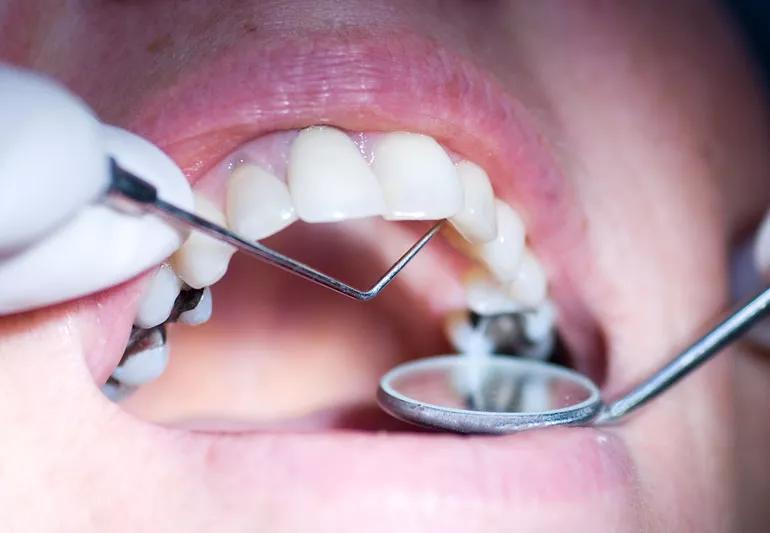
Getting fillings is a common dental procedure that many people have to get, sometimes multiple times. Once your dentist places a filling into your tooth, you probably just go about your day and don’t give it much thought. However, some people do question the safety of silver fillings, also known as dental amalgam.
Advertisement
Cleveland Clinic is a non-profit academic medical center. Advertising on our site helps support our mission. We do not endorse non-Cleveland Clinic products or services. Policy
Currently, there are millions of amalgam dental fillings in use and they continue to be placed in dental schools, clinics and hospitals all over the world. They are considered safe and stable, yet their use continues to be debated, says dentist Nathan Janowicz, DMD.
Dental amalgam is a mixture of liquid (elemental) mercury and a powdered alloy made up of silver, tin and copper. Elemental mercury makes up about 50% of dental amalgam by weight and reacts with and binds together the other metal particles to form the strong amalgam.
“Dentists have used these fillings for more than 150 years all over the world,” says Dr. Janowicz. “Dental amalgam has a proven track record as a safe, durable, low-cost material that dentists can place easily to fill cavities that tooth decay causes.”
There are instruments so sensitive that they can detect very minuscule amounts of mercury vapor in people’s mouths. However, the amount of mercury a person’s body absorbs is far below anything that could cause an adverse health effect.
One study compared 10 symptomatic patients and eight patients who reported no health complaints. The symptom group did not have a higher estimated daily uptake of inhaled mercury vapor, nor did this group have a higher mercury concentration in blood and urine than in the control group. The amounts of mercury detected by the tests were trivial.
Advertisement
Other research has shown that the problems patients believe are caused by amalgam restorations are related to their anxiety about them rather than to the fillings themselves. When researchers tested the blood, they found no signs of mercury intoxication. Still, they found that removing fillings in patients with such anxiety was important for people’s mental health.
There have been claims that mercury has been linked to Alzheimer’s disease. However, a host of organizations, including the American Dental Association, the FDA and the World Health Organization, cite evidence that finds no relationship between amalgam dental fillings and Alzheimer’s. The Alzheimer’s Association also reports that there is no relationship between silver dental fillings and Alzheimer’s.
“Currently, there is no scientific evidence that supports the removal of dental amalgams as curative and if you already have amalgam fillings, it can be more harmful to remove them,” says Dr. Janowicz. “This is because of the mercury vapor released upon removal.”
According to the U.S. Food and Drug Administration (FDA), removing amalgam fillings can also result in unnecessary loss of healthy tooth structure.
One study reported that the use of dental amalgam has not posed a health risk apart from a few allergic reactions in some patients. The American Dental Association also cites that silver fillings are a safe option for both children and adults.
“However, if the amalgam needs to be removed due to secondary caries or failure of the restorative material, you should not delay replacing that individual filling,” says Dr. Janowicz. “There are a wide variety of alternatives you can choose from, such as composites, ceramic or gold.”
If you’re concerned about amalgam fillings, it’s important to have an open dialogue with your dentist and to discuss alternatives, if possible.
Advertisement

Sign up for our Health Essentials emails for expert guidance on nutrition, fitness, sleep, skin care and more.
Learn more about our editorial process.
Advertisement
When baby teeth get damaged, these procedures can relieve pain and save space for adult teeth

Benefits typically include bi-annual screenings and lower payments on procedures like fillings and crowns
The short answer from a cardiologist
Daily oral hygiene goes a long way to keeping your mouth healthy and your smile bright

Most kids start losing baby teeth around age 6 — but there’s some wiggle room in the timeline

Start weaning your toddler off daytime pacifier use by 12 months old to help prevent dental issues and speech delays
This oral health practice doesn’t have proven benefits, and it’s not a substitute for brushing and flossing

Even small moments of time outdoors can help reduce stress, boost mood and restore a sense of calm

A correct prescription helps your eyes see clearly — but as natural changes occur, you may need stronger or different eyeglasses

Both are medical emergencies, but they are very distinct events with different causes











