Locations:





Address your nighttime itching with moisturizers, topical anti-inflammatories, and changes to your bedtime routine and environment
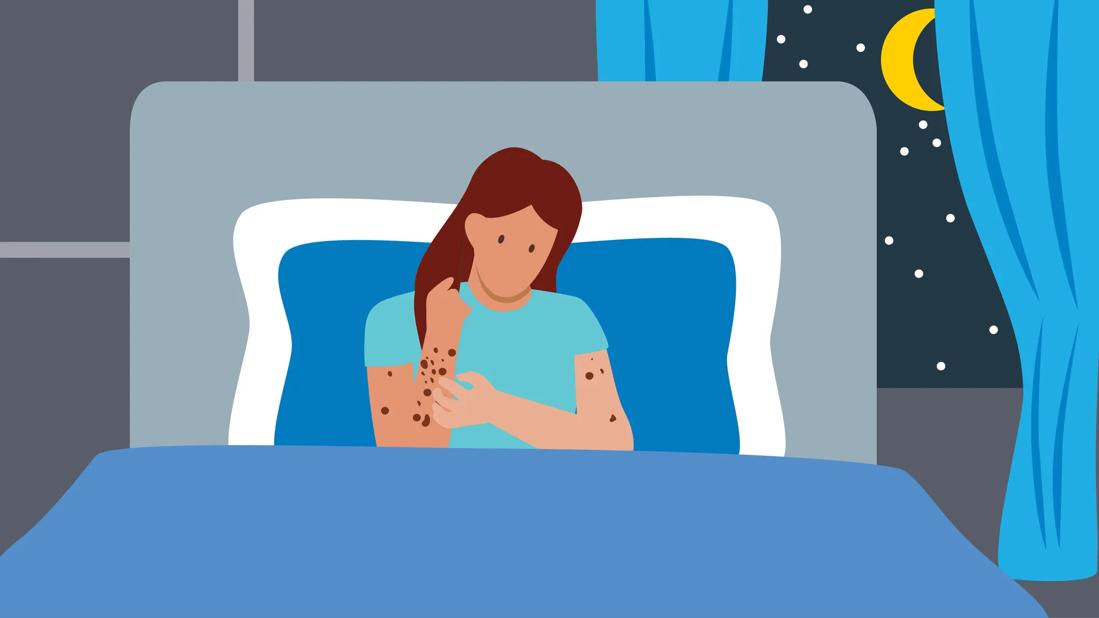
Image content: This image is available to view online.
View image online (https://assets.clevelandclinic.org/transform/240d133e-bcab-4428-87ed-24eb0e32e5da/person-dry-Skin-Itches-night-2156918980)
Person sitting up in bed at night scratching at eczema on their arm
Falling asleep can be hard enough on its own. But if you have eczema, bedtime can feel even more challenging.
Advertisement
Cleveland Clinic is a non-profit academic medical center. Advertising on our site helps support our mission. We do not endorse non-Cleveland Clinic products or services. Policy
As your body winds down, itching, irritation and dry skin can ramp up, making it tougher to fall asleep and easier to wake up scratching. And once you start losing sleep, that lack of rest can add stress and inflammation, which can make eczema symptoms even worse.
Dermatology resident Angela Wei, MD, shares what you can do when eczema keeps you up late at night.
There’s a two-sided relationship between eczema and sleep. On one hand, eczema can be really itchy — especially at night — so it can disrupt your ability to fall or stay asleep. But a lack of sleep or poor sleep quality can also worsen eczema inflammation and symptoms.
“It creates this cycle that feeds into itself,” says Dr. Wei. “Nighttime itch can make it hard to fall asleep, and sleep deprivation can increase stress levels and inflammation that can worsen eczema.”
When you have eczema, skin care and sleep hygiene go hand-in-hand.
“You have to take care of it from both angles to break that cycle of nighttime itch and poor sleep,” says Dr. Wei.
Not sure where to start? Here are several strategies that can help put you to bed and those eczema symptoms to rest.
Evening showers can help ease you into a restful slumber. But they also remove any irritants, allergens and bacteria you may have picked up on your skin during the day.
Advertisement
Eczema causes a breakdown in your skin barrier. So, keeping your skin clean and healthy helps you avoid irritation and infections that could worsen nighttime itching and other symptoms.
Just steer clear of hot water and longer showers. “Hot water will dry out your skin faster,” cautions Dr. Wei. “When you have eczema, lukewarm water and shorter showers are usually best.”
Dry skin can trigger or worsen an eczema flare. Your body also tends to lose moisture overnight. Use a gentle moisturizer right after you bathe to lock in much-needed water and help your skin stay healthy and strong.
Moisturizing before bed can also help reduce any overnight flaking that tends to happen when you toss or turn in your sleep.
Improving your bedtime routine can go a long way to helping you fall and stay asleep. And that pays off in the long term by reducing your eczema triggers and the severity of flares.
“If you can improve your overall sleep quality, that can benefit both stress levels and overall health,” says Dr. Wei. “Stress is a common trigger for eczema, so finding ways to wind down before bed is key.”
Set yourself up for success by adjusting your sleep environment and practicing healthy habits before bed, such as:
Other lifestyle changes — like limiting screentime, alcohol and caffeine before bed — can set you up for slumber, too.
Looking for eczema relief? Your healthcare provider might recommend the following:
If difficulty sleeping proves to be an ongoing issue, you can also make an appointment with a sleep specialist. They can help identify underlying conditions, like insomnia, and provide alternative treatments.
This should go without saying, but you want to avoid scratching that eczema itch. Not only will you cause more skin damage, but you’ll also increase your risk for infection, which can make itching and other symptoms even worse.
“Eczema itching tends to be more noticeable in the evening or overnight,” says Dr. Wei. “You may even scratch in your sleep without even realizing it, and that can be challenging if you’re not aware you’re doing it.”
Advertisement
To avoid scratching, trim your nails or wear cotton gloves to bed. You can also wear breathable cotton pajamas to help cover affected areas and reduce unconscious scratching at night.
“The nighttime itch-scratch cycle can make eczema harder to control,” says Dr. Wei. “The more your skin barrier breaks down, the longer it may take for a flare to resolve. That’s why we want to interrupt that cycle as early as possible.”
Advertisement

Sign up for our Health Essentials emails for expert guidance on nutrition, fitness, sleep, skin care and more.
Learn more about our editorial process.
Advertisement
Look for emollients, humectants and occlusives to hydrate, soothe and protect your skin

If you’re dealing with intense itching and red or swollen skin, it might be eczema
Eczema triggers are different for everyone, but there are some common ways to manage flare-ups, like using a humidifier and fragrance-free creams

There’s not one specific cure-all diet for eczema, but it helps to keep track of what you eat and when you experience symptoms
Both inflammatory conditions have varying triggers and symptoms
Colloidal oatmeal, petroleum jelly and other around-the-home products can help provide needed relief
Your body’s natural response to stress can lead to painful skin irritation

Hot or cold, your eczema can have flare-ups during multiple times of the year

Managing your weight through physical activity may lower your chances of getting this common cancer

It typically starts in October and winds down in early spring, with cases at their highest in the middle of winter

Anxiety disorders, health conditions and past trauma can make driving nerve-wracking — help is available
 Search










