Locations:





Hypertension strains your heart and blood vessels, causing damage that can contribute to heart attacks
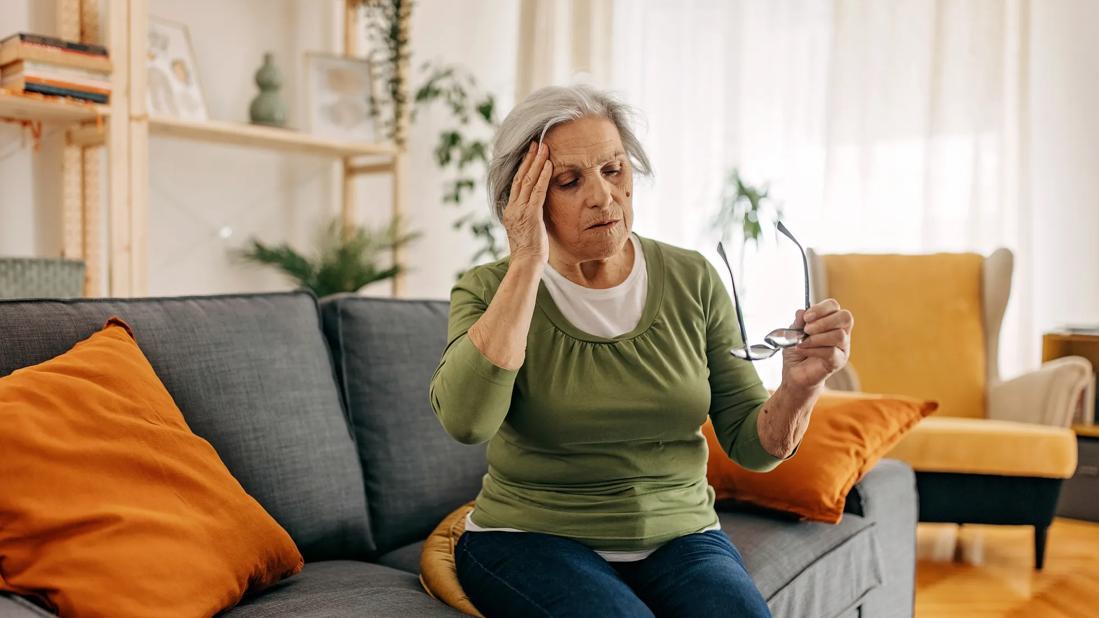
Image content: This image is available to view online.
View image online (https://assets.clevelandclinic.org/transform/21a5b37b-c419-4b71-9021-f23fd53213b1/dizzy-1388772359)
Older woman sitting on couch, with hand to head, feeling dizzy
If you’ve been diagnosed with high blood pressure (hypertension), you may be wondering: Can high blood pressure cause a heart attack?
Advertisement
Cleveland Clinic is a non-profit academic medical center. Advertising on our site helps support our mission. We do not endorse non-Cleveland Clinic products or services. Policy
The short answer is yes — high blood pressure (BP) can cause heart attacks, both directly and indirectly. Cardiologist Luke Laffin, MD, explains how.
Chronic high blood pressure raises your risk of heart attack by:
Advertisement
While high blood pressure raises your risk of a heart attack, that doesn’t mean your blood pressure has to be high while you’re having one. It can be high, low, in a healthy range or even bounce between all three.
“There isn’t one specific way that blood pressure behaves during a heart attack,” Dr. Laffin clarifies. “In fact, a heart attack itself doesn’t necessarily change your blood pressure at all. Your blood pressure can change throughout the course of a heart attack, but it can also stay the same.”
What happens to your blood pressure during a heart attack depends on:
In the long term, unmanaged high blood pressure significantly raises your risk of heart attacks and other conditions, like:
“Nobody wants any of those things, so it’s crucial that we get your blood pressure into a healthy range,” Dr. Laffin says.
Of course, that can be tough to do. Genetics, chronic health conditions, access to healthcare and a host of other factors can be a barrier to better BP. In fact, a recent study found that 71% of U.S. adults with high blood pressure who were on medication still weren’t in a healthy range.
The good news? Research shows that even a modest drop in blood pressure can reduce your risk of heart disease. So, start with small, achievable goals. In time, that 10-minute walk after dinner or salt-free snack break can add up to big progress.
It can be hard to know when high blood pressure is an emergency because the numbers on your blood pressure monitor don’t tell the whole story.
“There’s no specific threshold,” Dr. Laffin says. “You could have a blood pressure of 190/110 and not necessarily need to rush to the emergency department. New symptoms are the thing to look out for.”
Call 911 or local emergency services if your blood pressure is high and you:
Advertisement
What if your blood pressure is unusually high, but you don’t have any other symptoms? Dr. Laffin advises calling your primary care provider or cardiologist. They can help you decide next steps.
Advertisement

Sign up for our Health Essentials emails for expert guidance on nutrition, fitness, sleep, skin care and more.
Learn more about our editorial process.
Advertisement

The common household medication isn’t a solution for hypertension — and regular use comes with risks

Certain supplements, like licorice root and St. John’s wort, can raise your blood pressure or negatively interact with medication

Foods high in potassium, calcium and vitamins C and E can help lower your blood pressure
Making lifestyle changes can help reduce your blood pressure, but taking cinnamon supplements probably isn’t one of them

Daily stressors can increase BP in the moment, as well as contribute to habits that can feed long-term hypertension
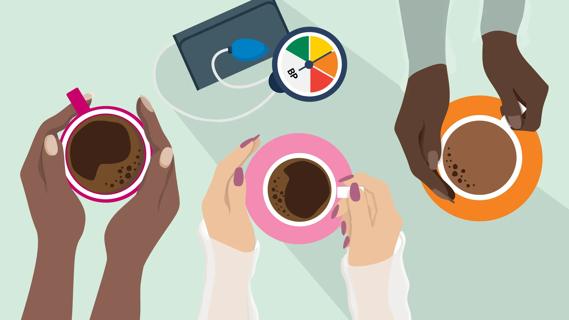
Moderation is best when consuming caffeinated drinks to avoid unhealthy spikes in BP
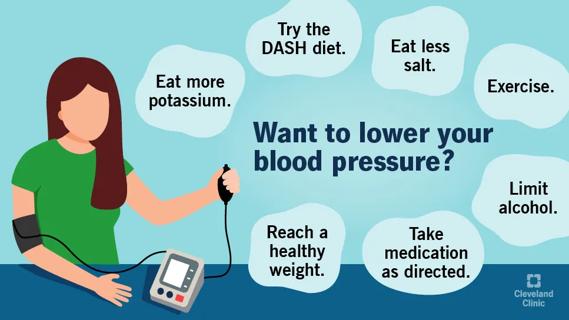
Medication, exercise and diet changes can all help

While not magic elixirs, some drinks like beet juice and skim milk may help keep numbers down

Managing your weight through physical activity may lower your chances of getting this common cancer

It typically starts in October and winds down in early spring, with cases at their highest in the middle of winter
Anxiety disorders, health conditions and past trauma can make driving nerve-wracking — help is available
 Search










