Locations:





It helps to build up your strength and balance before tackling these more resistance-heavy TRX exercises
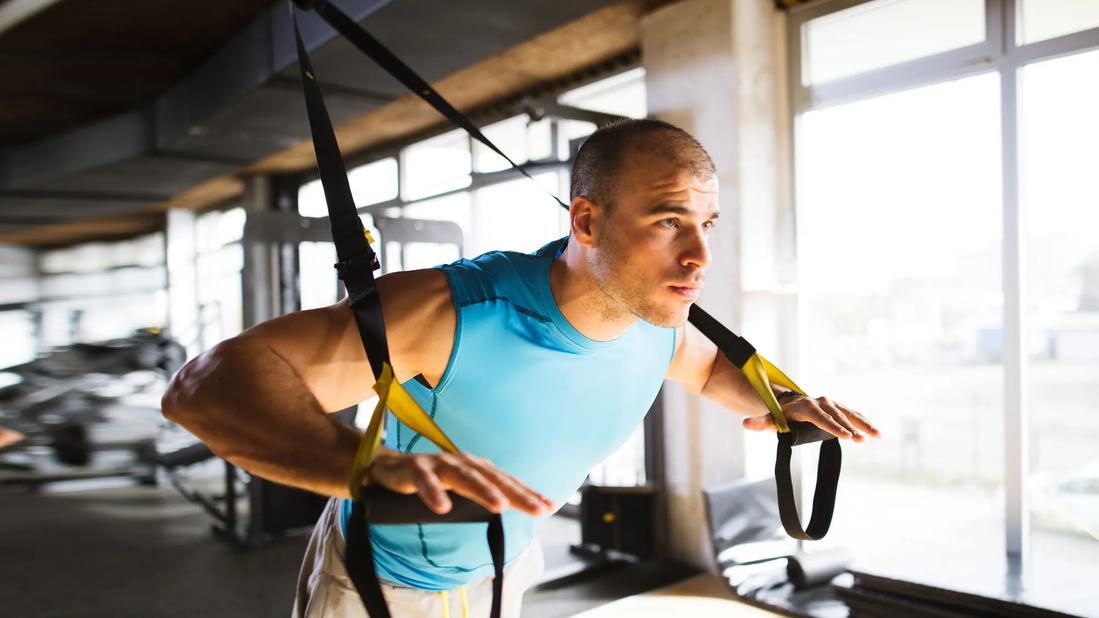
Image content: This image is available to view online.
View image online (https://assets.clevelandclinic.org/transform/5c54aa38-4a0c-4817-9bd5-2cc45896ad3d/suspension-trainers-TRX-Workout-627076604)
Person using TRX suspension trainer at gym
A TRX® workout, also called suspension training, uses your own body weight and gravity to make familiar exercises even more challenging. The result is a workout that can build strength, balance and core stability all at once.
Advertisement
Cleveland Clinic is a non-profit academic medical center. Advertising on our site helps support our mission. We do not endorse non-Cleveland Clinic products or services. Policy
Exercise physiologist Christopher Travers, MS, explains how TRX training works and why straps can turn up the heat on even a basic exercise.
TRX stands for “total resistance exercise.” This suspension training system uses adjustable straps anchored to a wall, specialized rack or properly secured doorway. The straps end in handles that you can hold with your hands or use to support your feet during exercises.
The concept is simple: You use your bodyweight and gravity as resistance through a single suspension point. Instead of lifting a dumbbell or pushing against a grounded weight machine, you’re using your own body weight and gravity to challenge your muscles. And because the straps move, your engagement is key.
“Suspension trainers allow you to use your body and limited space to get a full-body workout,” explains Travers.
Whether you’re using a suspension trainer at home or the gym, make sure the anchor point is secure and follow the manufacturer’s instructions carefully.
In general, there are six positions for your body during a TRX workout:
Advertisement
A TRX system looks simple, but small changes in these areas can increase or decrease the difficulty:
“You can use suspension systems for strength training, circuit workouts and other forms of exercise,” says Travers. “The straps also make it easy to adjust an exercise rather than jumping from one fixed weight to another.”
TRX isn’t just for your abs. Depending on the exercise, you can train your upper body, lower body and core — often all at once.
Here’s how each muscle group is targeted in a TRX workout.
Your core does a lot of work during suspension training because it has to keep your body stable while the straps are moving. Exercises like planks, mountain climbers and fallouts challenge your abdominal and trunk muscles:
TRX exercises can also target several areas of your upper body:
Advertisement
“The inverted row is a good replacement for a pullup, which can be harder to do,” says Travers. “Using the straps, with your feet on the ground, you’re not having to pull your whole bodyweight from a dead hang, but you’ll get similar benefits.”
TRX training can challenge your legs and glutes, too. Using suspension trainers for exercises like squats, hamstring curls and lunges adds resistance and improves your balance. The straps can also give you something to hold onto during squats or lunges, which may help you focus more on control and range of motion.
Glute bridges are a great starter exercise if you want to build lower-body strength. To do them:
A lot of traditional exercises move you forward and backward as you push or pull a weighted object. TRX also challenges side-to-side and rotational movement — which is great for day-to-day activities, like carrying groceries, turning, pivoting or looking behind you.
Advertisement
This resisted torso rotation exercise is a good example of how TRX can engage your obliques and side muscles:
When you’re trying TRX out for the first time, it always helps to work with a trained instructor or sports medicine provider who can be more hands-on during your first experience.
The TRX suspension trainer can be used for any fitness level because resistance is completely dictated by body positioning and foot placement relative to the anchor point. You don’t need to change out heavy plates or swap dumbbells — you simply shift your feet. This single portable tool allows for a full-body workout that builds strength, balance, flexibility and mobility all at once.
Advertisement

Sign up for our Health Essentials emails for expert guidance on nutrition, fitness, sleep, skin care and more.
Learn more about our editorial process.
Advertisement
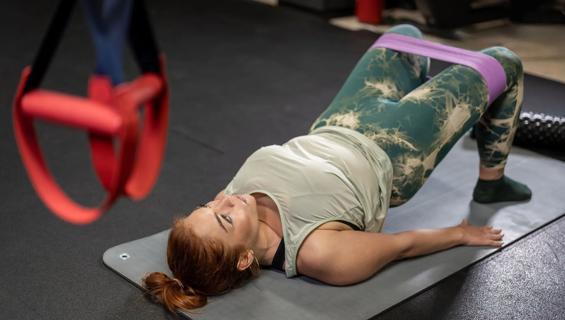
Glute bridges are simple bodyweight exercises worth adding to any workout
Stay afloat with bicycle kicks, alternating punches and water jogging
Plyometric training uses explosive movements to improve speed, power and agility
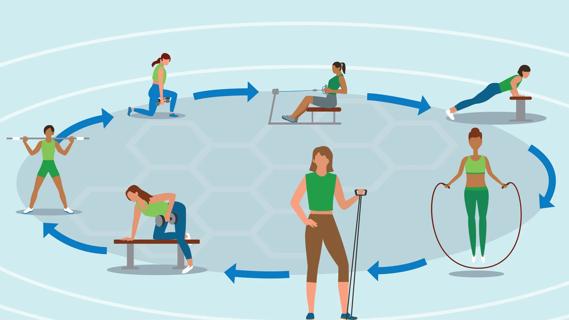
Circuit training combines strength and cardio exercises into one efficient workout

One helps with quick, intense bursts, while the other helps carry you for the long haul
It depends on your symptoms and where you feel them in your body, but you may want to sit this one out
This 75-day challenge provides a balanced approach to physical fitness, mental health and healthy habits
Kettlebells are versatile, space-friendly weights that can help you build strength from head to toe

Hormonal changes, a slower metabolism and muscle loss can make weight gain more common around menopause — healthy habits can help you manage it

Life-threatening complications include sepsis, stroke, pneumonia and more
Fruity-smelling breath can happen when your body burns fat for energy, and in some cases, can signal a medical emergency
 Search










