Locations:





 Search
Most adults aren’t getting enough of the essential nutrient
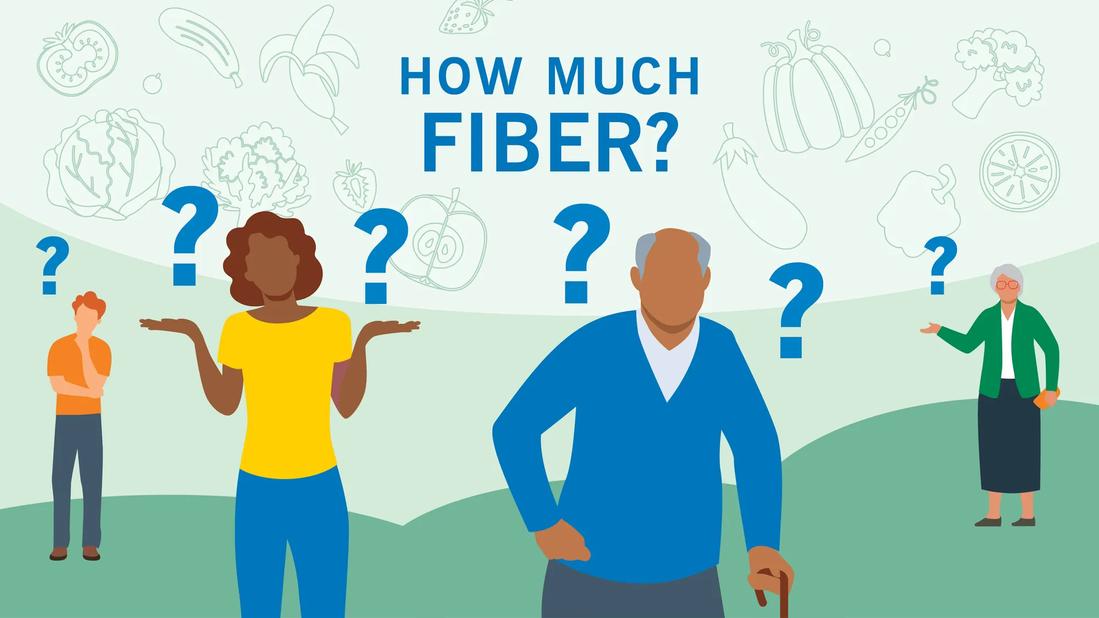
Image content: This image is available to view online.
View image online (https://assets.clevelandclinic.org/transform/effc4626-7836-4b73-94f0-2cae7148bd4c/fiber-how-much-2161234080)
Various people of ages and sexes, with question marks and fiber-rich foods around them
Fiber reigns supreme when it comes to keeping your gut and heart happy. It also helps you feel full longer. This small nutrient has a big impact on your health. But how much fiber per day should you be getting?
Advertisement
Cleveland Clinic is a non-profit academic medical center. Advertising on our site helps support our mission. We do not endorse non-Cleveland Clinic products or services. Policy
The U.S. Department of Agriculture and U.S. Department of Health and Human Services Dietary Guidelines for Americans, 2020-2025, breaks down its dietary fiber recommendations by sex. This includes a combination of both soluble and insoluble fiber.
| Age | Women | Men |
|---|---|---|
| 19-30 | 28 grams | 34 grams |
| 31-50 | 25 grams | 31 grams |
| 51 and older | 22 grams | 28 grams |
| Age | ||
| 19-30 | ||
| Women | ||
| 28 grams | ||
| Men | ||
| 34 grams | ||
| 31-50 | ||
| Women | ||
| 25 grams | ||
| Men | ||
| 31 grams | ||
| 51 and older | ||
| Women | ||
| 22 grams | ||
| Men | ||
| 28 grams |
While these guidelines provide some direction on how much fiber per day for a woman or a man, other factors can affect your daily fiber needs, too.
“Unfortunately, these official recommendations don’t account for bodily differences like weight, height and overall health,” notes registered dietitian Beth Czerwony, RD, LD. “If you’re not sure how much fiber daily you need, ask your healthcare provider for individualized guidance.”
You probably need more fiber than you’re currently getting. Studies show that only about 5% of U.S. adults get enough fiber in their diets, with most people consuming only about 16 grams (g) per day.
Czerwony shares some advice on the best ways to get more fiber.
It’s always best to try to get your vitamins, minerals and other nutrients through your diet — and fiber is no different.
“It’s important to get fiber sources from a variety of fruits, vegetables, whole grains, beans and legumes in order to have a healthy and balanced diet,” Czerwony says.
Advertisement
Try these four food groups that are high in fiber:
There are countless ways to add fiber into your diet. Here are a few tips to consider throughout the day:
“You can also sprinkle bran, ground flaxseed or chia seed into soups, cereals, spaghetti sauce, casseroles or yogurt,” Czerwony suggests. “They add a big hit of fiber without changing much in the way of taste.”
A key piece of advice when it comes to upping how much fiber you eat? Go slow, says Czerwony. Adding too much fiber all at once can cause bloating and cramping.
“To avoid bloating and gas, add in no more than 5 grams of fiber per week until you reach your individual goal,” she recommends.
Water is vital for many reasons, but when it comes to fiber, it’s essential to keep your bowel movements regular. If you’re adding fiber, make sure you drink plenty of water. If not, it can lead to constipation.
If you’re having a hard time getting enough fiber from the foods you eat, your healthcare provider may recommend a supplement.
“Food is your best source of fiber, but supplements can help if you’re not able to get adequate amounts through diet,” Czerwony reiterates.
Just be sure to speak with a healthcare professional before taking any supplement, fiber included.
“How much fiber do I need a day?” It’s one of the most common questions Czerwony and other dietitians hear. And while dietary fiber guidelines can give you a good starting point, in many cases, you’ll need to increase your fiber intake.
Remember, “Fiber is crucial for overall health by aiding in blood sugar management, its positive impact on digestion and heart health,” says Czerwony.
Advertisement

Sign up for our Health Essentials emails for expert guidance on nutrition, fitness, sleep, skin care and more.
Learn more about our editorial process.
Advertisement

This amino acid is touted for relaxation and mental clarity, but current research remains inconclusive
This nutrient-rich fruit offers a surprisingly long list of potential health benefits, like lowering blood sugar and boosting brain health
Packed with vitamins and nutrients, watermelon can be enjoyed all year ’round

With a sweet, tangy flavor, this tropical fruit is versatile, nutrient-rich and full of antioxidants

These versatile little fruits are full of powerful antioxidants that can help fight cell damage, manage cholesterol, boost body functions and more

These sweet red berries benefit your memory, boost your immune system and keep your heart healthy

These tasty little fruits can help fight inflammation, improve digestion and stabilize blood sugar

This legume is a good source of plant protein and fiber

These tiny saltwater larvae can get trapped under your swimsuit and trigger an itchy reaction called seabather’s eruption

Searching nature for edible items requires training and knowledge to avoid poisonous plants

Yes, but you can protect yourself with hats, scarves or even hair sunblock











