Locations:





This legume is a good source of plant protein and fiber
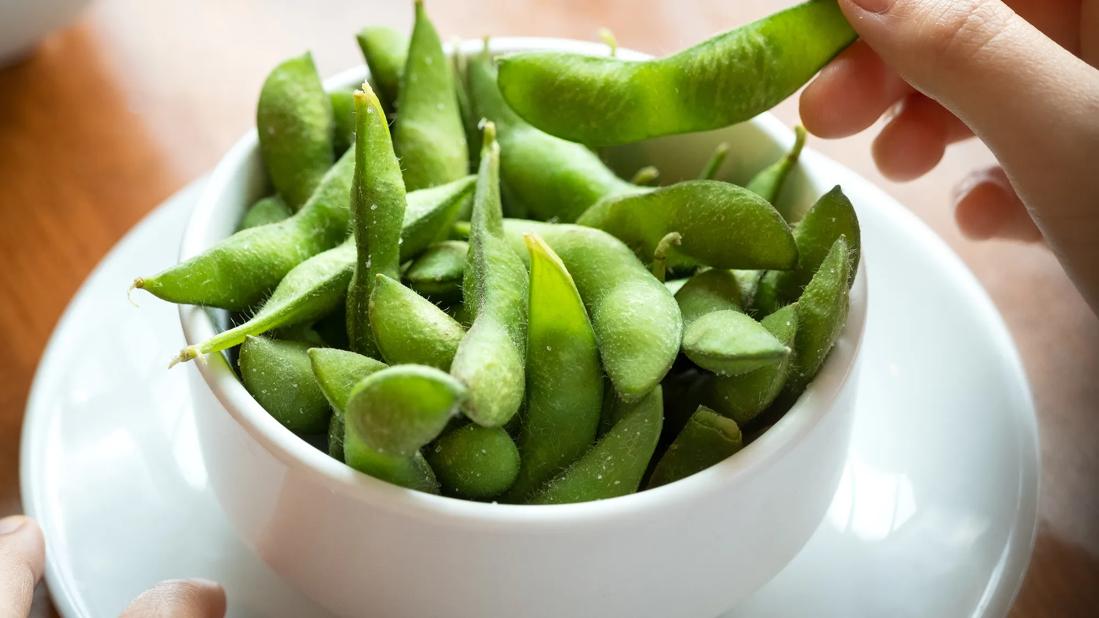
Image content: This image is available to view online.
View image online (https://assets.clevelandclinic.org/transform/80a8b59d-fce0-48a1-8a24-d6f8ab90a9ed/edamame-1162502703)
Hand picking up a steamed and lightly salted edamame pod from bowl
Edamame can be a great way to work fiber and protein into your diet. This green legume is also a good source of vitamins and minerals, like folate and vitamin K1.
Advertisement
Cleveland Clinic is a non-profit academic medical center. Advertising on our site helps support our mission. We do not endorse non-Cleveland Clinic products or services. Policy
Registered dietitian Julia Zumpano, RD, LD, shares what we know about the health benefits of edamame.
Edamame is a young type of soybean that’s commonly eaten in Asian culture. It’s often sold in grocery stores, frozen in their pods (which are inedible) or shelled. It needs to be cooked before eating.
One cup (or 160 grams) of cooked edamame has approximately:
It also provides these nutrients:
Yes. Edamame is full of nutrients. It also has antioxidant and anti-inflammatory properties. Zumpano outlines the potential health benefits of the legume.
Edamame is a great source of soluble fiber.
Fiber is essential for your gut health. It helps keep your bowel movements regular. It also feeds good bacteria into your gut microbiome. And, soluble fiber can help lower cholesterol and blood sugar levels.
If you’re looking for more ways to add plant protein to your meals, try edamame. It’s the highest protein legume.
It’s also considered a complete protein, meaning it provides all the amino acids your body needs but can’t make on its own. Protein is your body’s main building block used to make your muscles, tendons and skin tissues.
Advertisement
Research shows that edamame may help lower LDL (or “bad”) cholesterol.
“Edamame contains phytosterols, which are plant-based compounds that block the absorption of cholesterol from entering your bloodstream,” explains Zumpano. “Phytosterols mimic the way cholesterol looks.”
The fiber, antioxidants and vitamin K found in edamame may also contribute to supporting heart health.
Research shows that edamame may be a smart choice for people with Type 2 diabetes, as it’s a low glycemic index food.
“That means, when consumed, edamame is going to be less impactful on your blood sugar,” explains Zumpano. “Foods that are high in fiber and protein take longer to digest and can help keep your blood sugar from spiking.”
There’s been a lot of concern around if soy can cause breast cancer. But experts say the research consistently shows that soy-based foods don’t increase your risk of breast cancer.
In fact, research shows the isoflavones (a type of polyphenol that mimics estrogen) found in edamame may help protect against breast, lung and prostate cancers. But Zumpano stresses it’s worth a conversation with your healthcare provider if you’re concerned.
“If you have existing breast cancer, ask your oncologist how they feel about you having soy,” she advises. “Most of the time, they’re going to say it’s safe and protective.”
During menopause, your levels of estrogen drop. That can lead to symptoms like hot flashes, weight gain and mood swings.
“Research shows the phytoestrogens found in soy, edamame and tofu can naturally help your body’s own production of estrogen,” says Zumpano. “This may help reduce menopause symptoms.”
More research is needed, but some studies show that edamame and other soy foods may protect against bone loss in women who are in menopause or are postmenopausal.
“Isoflavones may have a beneficial effect on bone formation markers, but this requires more extensive research to fully understand the impact,” stresses Zumpano.
If you have a soy allergy, you should avoid edamame.
Additionally, the research is mixed on whether edamame may affect how your thyroid functions. That means it may interfere with certain thyroid medications, like levothyroxine.
“It’s recommended that you avoid consuming soy products close to the timing of taking this medication,” states Zumpano. “You don’t have to avoid it completely. Just be careful about timing.”
Edamame can be a great way to add more protein and fiber into your meals. To prepare edamame, you can steam, boil, microwave or fry them. They make a simple, healthy snack on their own, but you can also add them to stir-fries, salads and more.
Advertisement
“I love edamame. I often serve it as an appetizer for my family to snack on while I’m preparing dinner,” shares Zumpano. “It’s a quick and easy way to get plant-based protein in your meals and snacks.”
Advertisement

Sign up for our Health Essentials emails for expert guidance on nutrition, fitness, sleep, skin care and more.
Learn more about our editorial process.
Advertisement

From sauerkraut to kimchi, these foods can help keep your gut healthy

This East Asian and subtropical fruit is packed with delicious nutrition
Lean meats, fish, dairy and plant proteins can help you meet your protein needs without piling on saturated fat and sugar

Choosing snacks with protein can help curb hunger, support muscle health and keep your energy steady between meals

Fish packs plenty of protein, heart-healthy fats and other body-boosting nutrients into every bite

Both are healthy choices, but wild-caught salmon offers a few more benefits
These bright berries are packed with nutrients and antioxidants that may support your eyes, immune system and overall well-being

The general rule is 1.2 to 1.6 grams of protein per kilogram of body weight — but that may not be exactly right for you

Hormonal changes, a slower metabolism and muscle loss can make weight gain more common around menopause — healthy habits can help you manage it

Life-threatening complications include sepsis, stroke, pneumonia and more

Fruity-smelling breath can happen when your body burns fat for energy, and in some cases, can signal a medical emergency
 Search










