Locations:





Knowing where peanuts can hide — and making a habit of checking every package and reading every label — can help protect your child
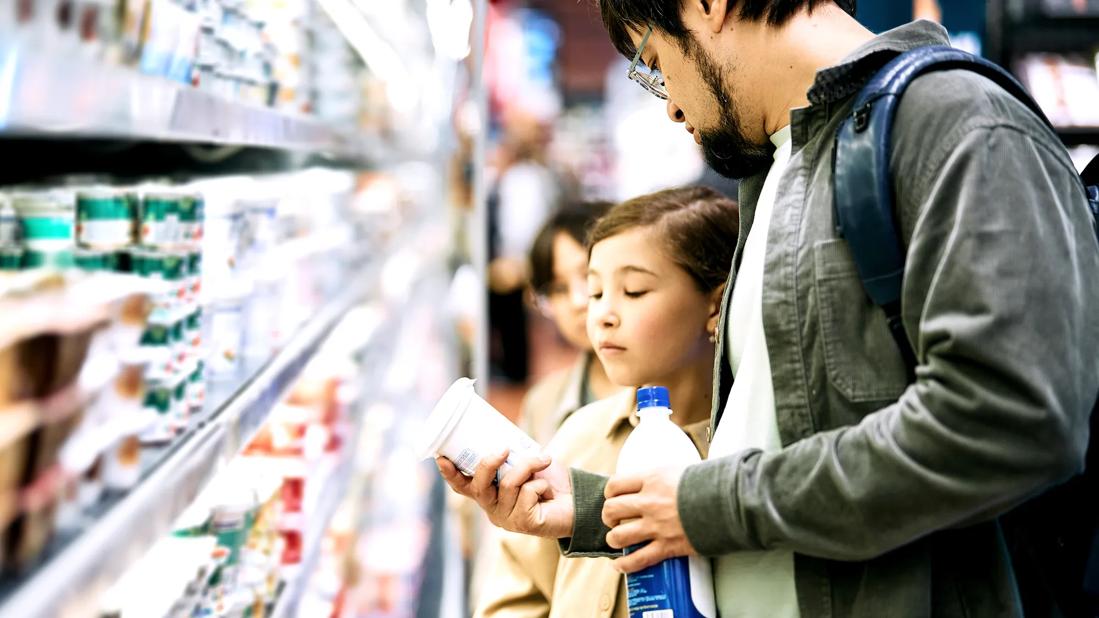
Image content: This image is available to view online.
View image online (https://assets.clevelandclinic.org/transform/a5319d39-3cbe-4d98-a1be-b1377b2d8141/parent-child-read-food-label-2278227136)
Child and caregiver read food labels in dairy case in grocery store
If you’re responsible for a kid with a peanut allergy, you know that reading a food label isn’t just a casual glance: It’s a vital safety check. Knowing exactly what to look for can help you shop with confidence — and eventually teach your child to do the same.
Advertisement
Cleveland Clinic is a non-profit academic medical center. Advertising on our site helps support our mission. We do not endorse non-Cleveland Clinic products or services. Policy
Allergist Jaclyn Bjelac, MD, shares advice on what to look for in your foods.
Peanuts are one of nine major food allergens that the United States requires to be declared on packaged food labels. That labeling makes it easier to suss out whether your food contains peanuts and peanut products. But it’s important to know where to look.
“Make a habit of reading the entire label, including the ingredients list and any allergen or cross-contact statements,” Dr. Bjelac advises.
And remember: Manufacturers can (and often do) change recipes and factories. That means the snack your child ate safely last month shouldn’t automatically get a pass today.
“Scrutinize the ingredients each and every time,” she emphasizes.
Here’s what you’re looking for.
Ingredient lists tell you everything that was purposely used to make a food product. And when you need to avoid peanuts, it’s a good place to start.
“You can’t reliably tell whether something contains peanuts based on what kind of food it is or what the front of the package says,” Dr. Bjelac clarifies. “It’s always best not to make any assumptions.”
Some peanut-containing foods are obvious. Peanut butter is a clear no-go, of course, but peanuts are also used in a wide range of foods you might not immediately associate with them. That may include:
Advertisement
When you’re reading labels, you’re not just looking for “peanuts.” There’s a long list of terms that can be an indication that something contains peanuts, peanut products (like peanut flour or peanut oil) or other substances that may cause a reaction if you have a peanut allergy. Among them:
Next, look for an allergen statement — a direct message on the package that makes it easier to spot allergens. This “Contains” statement should be immediately next to, or inside of, the ingredient list.
While the ingredient label can refer to peanuts by more technical names, the “Contains” statement is meant to make peanuts, peanut products and other allergens more obvious. It’s required by the U.S. Food and Drug Administration (FDA).
If you see the wording “CONTAINS: PEANUTS,” avoid it!
But a statement that says “CONTAINS: TREE NUTS” is different. Peanut and tree nuts are separate allergens. Tree nut warnings also cover other potential allergens, such as walnuts, cashews, pistachios, pecans, hazelnuts and Brazil nuts.
“A peanut allergy doesn’t automatically mean your child is allergic to tree nuts, although some people are allergic to both,” Dr. Bjelac states.
Follow your child’s allergist’s recommendations about which nuts they need to avoid.
This is where label reading can get even trickier: A food may not list peanuts as an ingredient, and it may not say that it contains peanuts. But it still may not be a safe choice for your kid.
That’s why some foods carry a warning that they could have come into contact with peanuts during manufacturing.
You may see phrases like:
These are called precautionary allergen labels — warnings meant to alert you about the possibility of cross-contact. You typically see them immediately below the ingredients list or next to the “Contains” statement.
“Foods that don’t normally contain peanuts can come into contact with peanut protein during manufacturing or preparation,” Dr. Bjelac explains. “That can make them unsafe for people with peanut allergies.”
Talk with your child’s allergist about how they recommend handling foods with precautionary warnings. They can help you decide if these foods are appropriate.
Advertisement
When your child is young, managing their peanut allergy falls largely on you and the other adults in their life. But your child won’t be little forever.
Starting early can help them gradually take a more active role in managing their allergy.
“Explain their allergy in terms they can understand,” Dr. Bjelac recommends. “Teach them that some foods can make them sick and that they should check with a trusted adult before eating something.”
As they get older and more independent, show them how you check packages, and do it together. You can also help them learn to take care of themselves by teaching them to:
The exact amount of responsibility you give them will depend on their age and maturity. But the long-term goal is to give kids the skills and confidence to advocate for themselves.
“There are so many layers of complexity when you have a food allergy,” she acknowledges. “In the end, it’s all about finding ways to keep them safe without them feeling isolated.”
Advertisement
When your child has a peanut allergy, making safe food choices can feel like detective work. You start studying every package and questioning foods you never gave a second thought to before.
Over time, reading labels may feel less daunting. But even when you know the drill, it’s important to keep your guard up.
“The most important principle of food allergy management is reading every label every time,” Dr. Bjelac emphasizes. “Never assume a product is safe, even if you’ve had it before.”
Advertisement

Sign up for our Health Essentials emails for expert guidance on nutrition, fitness, sleep, skin care and more.
Learn more about our editorial process.
Advertisement
Knowing the signs of anaphylaxis — and what to do — can help you act quickly when every minute matters
New treatment offers hope for outgrowing the life-threatening condition
More than 90% of allergic reactions can be linked to these foods

Be prepared, read up, team up, trust your gut and advocate

Try foods first to see if your child has a reaction
Symptoms can be similar, but affect your body in distinct ways

The short answer from a pediatric allergist/immunologist
Shellfish is the top food allergen in adults

Managing your weight through physical activity may lower your chances of getting this common cancer
It typically starts in October and winds down in early spring, with cases at their highest in the middle of winter

Anxiety disorders, health conditions and past trauma can make driving nerve-wracking — help is available
 Search










