Locations:


Maca root supplements claim benefits like sexual health, menopause symptom relief and more energy — but human research is limited
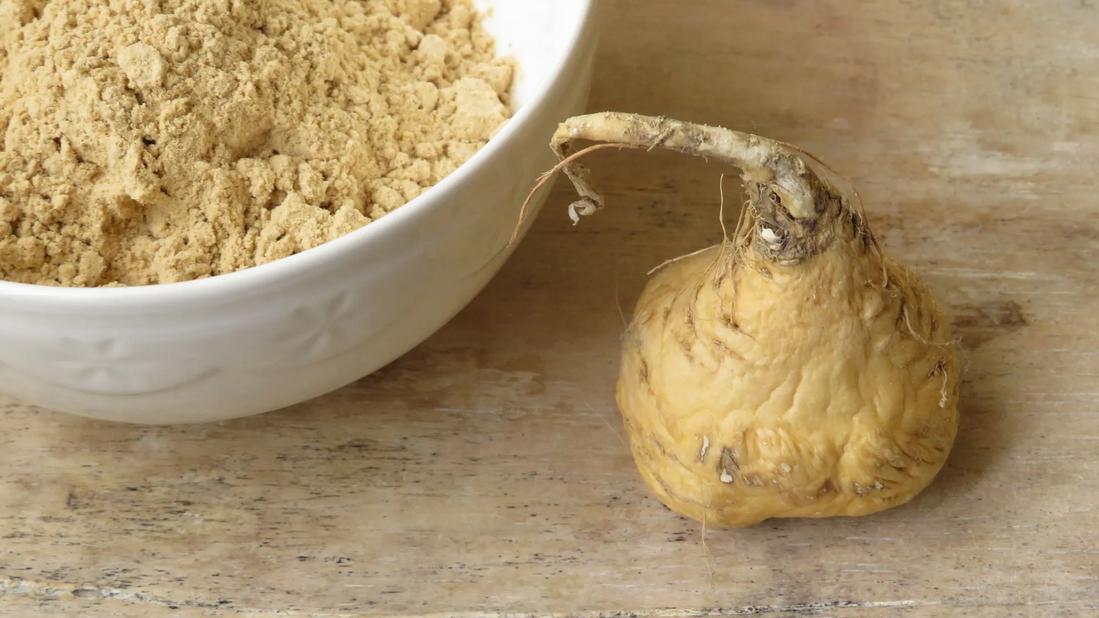
Image content: This image is available to view online.
View image online (https://assets.clevelandclinic.org/transform/cc8aaf21-0a8d-4fd5-b276-44e4e33584e9/maca-root-powder-2158108285)
A maca root next to a bowl of maca powder
If you’re in the market for a supplement that supposedly “does it all,” maca root can seem like just what the doctor ordered. After all, the bottles say it can do everything from balancing your hormones to improving your energy levels.
Advertisement
Cleveland Clinic is a non-profit academic medical center. Advertising on our site helps support our mission. We do not endorse non-Cleveland Clinic products or services. Policy
Except the science behind those claims isn’t very strong. So, healthcare providers tend to view maca root with a measured dose of caution.
“I categorize maca root as promising — but we don't have enough research yet to say it can treat specific health conditions,” says naturopathic medicine specialist Jacob Hill, ND.
Dr. Hill shares insight on this popular supplement.
Maca is a root vegetable that’s native to Peru. Like cabbage, kale and turnips, it’s a member of the mustard family.
“Maca root has been used for centuries as a medicinal food, often prepared via baking, boiling, roasting or fermentation,” Dr. Hill explains. “But in the United States and elsewhere around the world, it’s more often found in a powdered form or made into capsules.”
Maca root looks something like a turnip or radish, and it comes in a variety of colors, including black, yellow, red or a mix of the three.
“Those different colors might actually have different biological effects in the body,” he notes. “It may be that the different colors and varieties may have different levels of nutrients, which could potentially lead to different effects on the body.”
Maca root supplement packages make some big claims. You may have heard that maca root can:
Advertisement
But here’s the catch: Most of these claims and others have yet to be confirmed in human studies.
“There are interesting things coming from lab studies, but we can’t necessarily say that those results translate to benefitting humans,” Dr. Hill says.
In fact, a 2024 literature review found 57 preclinical (non-human) studies on maca root and just 22 human studies. While some of the studies involving humans appear promising, many had only a small number of participants. What’s more, the studies differed in design and rigor, as well as the dosages, treatment duration and types of maca used. More research is needed to understand if and how maca can help with specific health conditions.
Because clinical research on maca root is sparse, there’s no set recommendation for how much is safe or what dosage you’d need to get any health benefit.
The research that’s been done in people tends to use between 500 milligrams and 3 grams per day for capsules. For powder, that’s about 1.5 teaspoons per day.
“Some studies have found maca may have caused mild gastrointestinal upset, headache and/or irritability, but most studies using these dosages report it is well tolerated,” Dr. Hill reports.
“It’s good to remain cautious as more research is needed and there are still a lot of unknowns. It’s best to work with a healthcare professional if you’re interested in using maca.”
Maca root supplements are generally considered safe for most people. But there is some fine print to be aware of.
Here’s what Dr. Hill encourages you to keep in mind:
Advertisement
Bottom line: While maca root may seem promising and well-tolerated, more research is needed before we can confirm if it is safe and effective for most people. And it’s not recommended as a standard treatment for sexual health concerns, menopause symptoms, fatigue or any other concern.
Dr. Hill advises, “If you’re interested in trying maca root, keep in mind that there’s a lot to consider before starting a supplement. And you always want to work with a healthcare provider to make sure that you’re using it in the appropriate way.”
Advertisement

Sign up for our Health Essentials emails for expert guidance on nutrition, fitness, sleep, skin care and more.
Learn more about our editorial process.
Advertisement
Despite rumors, science hasn’t shown that creatine causes hair loss

This South Pacific plant is often promoted for stress relief and relaxation, but there are a few things you should know before trying it

The compound that gives chili peppers their kick may support your health — and even help relieve certain types of pain
Collagen peptide supplements may support your skin, joints and bones — but there’s no guarantee
This naturally occurring nutrient supports energy and heart health, but supplements aren’t necessary for everyone

They claim to boost energy and improve longevity, but there’s currently not enough research to confirm these benefits
Properly prepared, elderberries can be a safe and healthy part of a balanced diet — just steer clear of supplements
Science doesn’t support most claims about this bee byproduct, and supplements have potential risks
Eyes typically increase to full size during two growth spurts in childhood
To start, opt for calorie-dense foods that are rich in protein and healthy fats

Pre-birth injections and monoclonal antibodies can help prevent serious complications
 Search