Locations:





Knowing the signs of anaphylaxis — and what to do — can help you act quickly when every minute matters
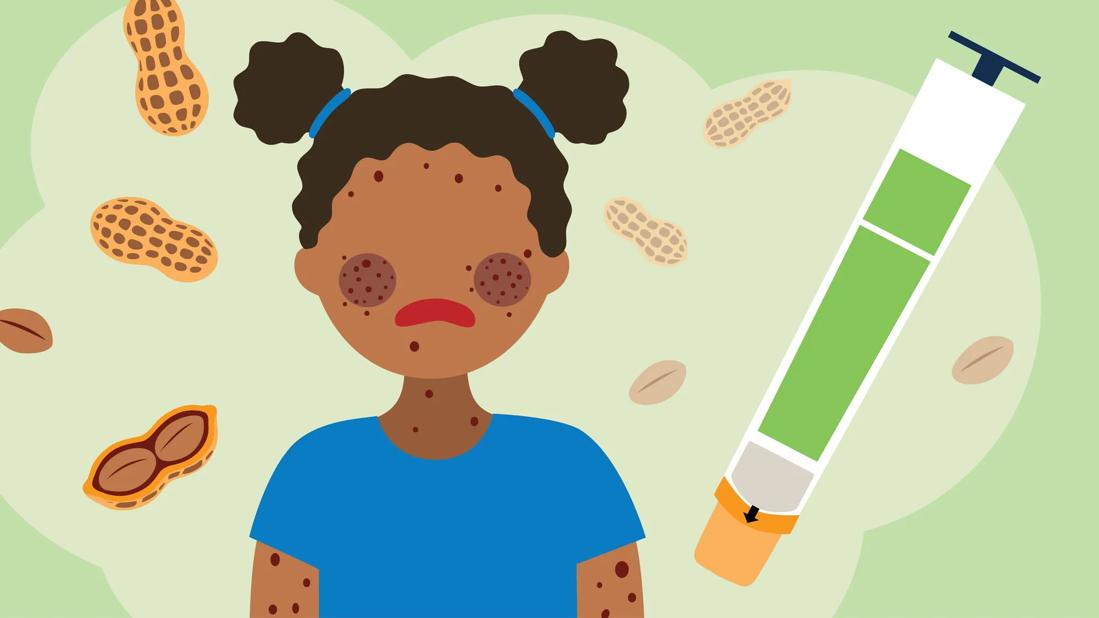
Image content: This image is available to view online.
View image online (https://assets.clevelandclinic.org/transform/890b798a-d5f7-4400-84f8-5e54ac9a016c/child-peanut-allergy-2169378011)
Child having allergic reaction, with peanuts and epinephrine pen nearby
If your child has a peanut allergy, you’re always on high alert to keep them safe.
Advertisement
Cleveland Clinic is a non-profit academic medical center. Advertising on our site helps support our mission. We do not endorse non-Cleveland Clinic products or services. Policy
But accidental exposure can still happen. And if it does, knowing what an emergency allergic reaction looks like can help you respond when every moment counts.
“Food allergy reactions are always something to take seriously,” says allergist Jaclyn Bjelac, MD. “Anyone caring for a child with a peanut allergy should know how to spot an allergic reaction and know what to do.”
Give your child their prescribed epinephrine immediately and call 911 or emergency services if they have severe symptoms — including trouble breathing, throat tightness, significant swelling, dizziness or fainting — or if their allergy symptoms are affecting more than one area of their body. Don’t wait to see if symptoms improve.
Allergic reactions to peanuts can range greatly.
A mild allergic reaction typically involves symptoms in just one area of the body. Symptoms may include:
Other times, an allergic reaction to peanuts can be an emergency. And scary as it is, there’s no reliable way to predict how serious your child’s allergic reaction will be.
“Many times, people who’ve had only very mild reactions to peanuts in the past can have a much more severe reaction on their next exposure,” Dr. Bjelac clarifies.
Advertisement
Anaphylaxis is an emergency-level allergic reaction. It can come on suddenly or start with mild symptoms that get worse.
“A seemingly mild allergic reaction can progress into life-threatening anaphylaxis,” Dr. Bjelac explains. “So, watch your child closely for changes.”
Signs of a peanut allergy emergency include:
Babies and young children having a severe allergic reaction may have these same symptoms. Or they may look a little different. Also look for signs like:
“If your child is having even just one of these symptoms after being exposed to peanuts — or if they’re having any symptoms that are affecting two or more areas of their bodies — treat it as a medical emergency,” Dr. Bjelac stresses.
Anaphylaxis from peanuts demands quick action. For your child’s safety, it’s critical to have an allergy emergency care plan in place.
Typically, a peanut allergy emergency action plan follows these steps:
Advertisement
Most importantly, don’t wait to see if severe symptoms get better on their own.
“You know your child better than anyone else in the world,” Dr. Bjelac says. “If you’re worried, engage their emergency allergy action plan as quickly as possible.”
Responding to a peanut allergy reaction emergency starts with planning ahead and making sure everyone in your child’s life knows what to do. Dr. Bjelac offers this advice:
Advertisement
Knowing your child could have a severe allergic reaction can be scary. You don’t need to live in fear of a reaction, but you do need to be ready to respond if one happens. Being prepared can help replace some of that uncertainty with a plan — so you and your child know exactly what to do to help keep them safe.
Advertisement

Sign up for our Health Essentials emails for expert guidance on nutrition, fitness, sleep, skin care and more.
Learn more about our editorial process.
Advertisement

Knowing where peanuts can hide — and making a habit of checking every package and reading every label — can help protect your child

New treatment offers hope for outgrowing the life-threatening condition

More than 90% of allergic reactions can be linked to these foods

Be prepared, read up, team up, trust your gut and advocate

Try foods first to see if your child has a reaction

Symptoms can be similar, but affect your body in distinct ways

The short answer from a pediatric allergist/immunologist

Shellfish is the top food allergen in adults

Managing your weight through physical activity may lower your chances of getting this common cancer
It typically starts in October and winds down in early spring, with cases at their highest in the middle of winter

Anxiety disorders, health conditions and past trauma can make driving nerve-wracking — help is available
 Search










