Locations:





The process delivers nutrients quickly and efficiently, but research is limited on many claimed benefits
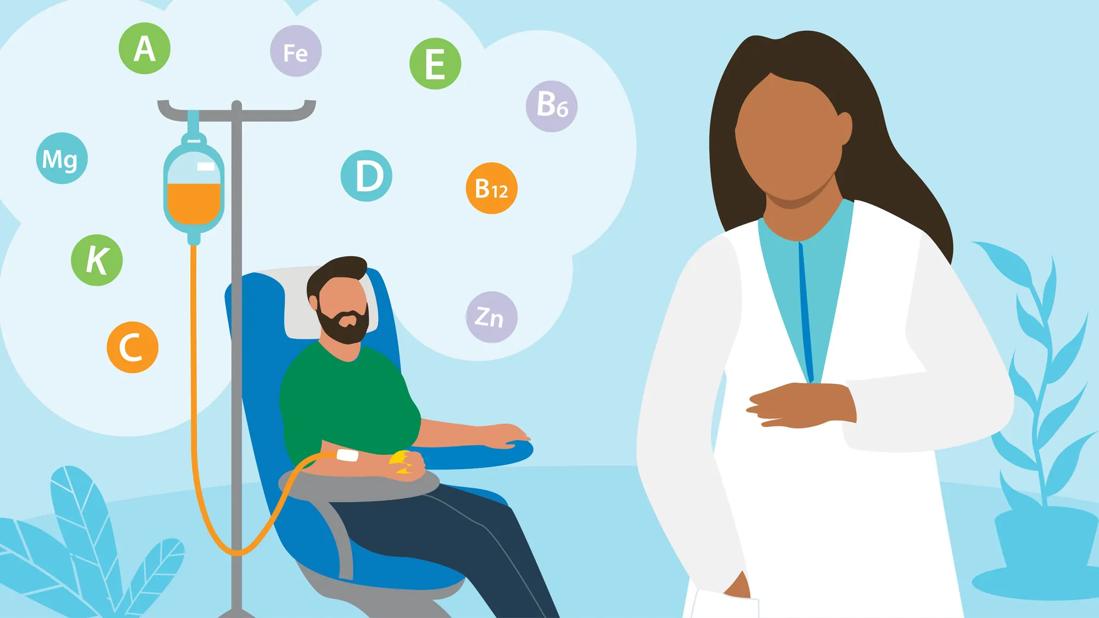
Image content: This image is available to view online.
View image online (https://assets.clevelandclinic.org/transform/2eb98312-a63e-4ca4-8d6d-0e2f2092bc63/IV-therapy-vitamins-1402924965)
Person seated, receiving IV vitamin therapy, with healthcare provider monitoring
IV vitamin therapy continues to grow as a wellness trend as people look for ways to feel healthier and more energetic. But can a needle prick and steady drip of a nutrient-rich cocktail really make that big of a difference?
Advertisement
Cleveland Clinic is a non-profit academic medical center. Advertising on our site helps support our mission. We do not endorse non-Cleveland Clinic products or services. Policy
Let’s take a closer look with functional medicine specialist Melissa Young, MD.
IV vitamin therapy delivers a liquid mixture of vitamins, minerals and antioxidants directly into your bloodstream through a vein, typically in your arm. It allows your body to swiftly absorb nutrients at measured doses.
“IV vitamin therapy is a more direct delivery of nutrients to your body’s cells,” explains Dr. Young. “The nutrients go right into your bloodstream, totally bypassing your gastrointestinal system.”
The growth in IV vitamin therapy has been fueled by a variety of wellness claims and testimonials linked to the potential body-boosting perks of essential nutrients. (More on that in a moment.)
But there’s limited scientific evidence that shows a direct general wellness benefit from getting IV vitamins. “We’re still looking for high-quality studies,” she adds.
Additionally, the U.S. Food and Drug Administration (FDA) has warned about the safety of IV mixtures flowing out of hydration clinics and spas. Various medical organizations (like the National Association of Boards of Pharmacy) have also expressed concerns.
The idea behind IV vitamin therapy as a wellness tool is to quickly and efficiently feed nutrients to your body. Done properly, bags can be formulated with precise amounts of vitamins and minerals to address goals. The process delivers almost 100% of the dosed nutrients, too.
Advertisement
“You eliminate the variability that comes with taking oral supplements, where your gut health and metabolism can affect what makes it into your system,” explains Dr. Young.
Reasons why people might seek out IV vitamin therapy include:
IV vitamin therapy may also be beneficial as an adjunctive treatment for chronic illnesses, says Dr. Young. “It might be something to look into if you’re not getting the relief or results you want.”
But again, researchers caution that the effectiveness of IV vitamin therapy as a “general wellness tool” remains uncertain. They note a distinction between IV therapy done for medical treatment (like to address nutritional deficiencies) versus self-care.
IV vitamin therapy can come with side effects, including:
Dr. Young also urges caution when seeking out IV vitamin therapy, given that hydration clinics and spas are largely unregulated. Ask how they formulate vitamin drips and whether there’s a licensed medical director providing oversight.
“If you see what looks like a red flag, walk away,” she advises.
You should talk with your regular healthcare provider before trying IV vitamin therapy to weigh any potential risks, recommends Dr. Young. It’s best to avoid IV vitamin therapy if you’re seeing a healthcare provider for:
Advertisement
Know this going in: IV vitamin therapy can put a dent in your pocketbook. A basic session typically costs more than $150, says Dr. Young. More specialized drips can run up to $1,000.
Video content: This video is available to watch online.
View video online (https://cdnapisec.kaltura.com/p/2207941/sp/220794100/playManifest/entryId/1_0tos41nq/flavorId/1_5f3sgelj/format/url/protocol/https/a.mp4)
IV vitamin therapy delivers nutrients into your bloodstream for quick absorption, which may boost energy and immunity. The treatment comes with risks.
In certain situations, for relatively healthy individuals, it might be OK, says Dr. Young — and limited research does show some promising results.
But there are risks to IV vitamin therapy, too, as well as questions about its overall effectiveness.
And Dr. Young stresses that IV vitamin therapy is NOT a substitute for prescribed medications and a healthy diet. It also can’t erase or undo poor lifestyle habits related to nutrition, exercise, sleep and stress management.
“It’s great to want to optimize your health, but don’t skip the basics and just turn to IV vitamin therapy,” she emphasizes. “It shouldn’t be viewed as a miracle cure.”
Advertisement

Sign up for our Health Essentials emails for expert guidance on nutrition, fitness, sleep, skin care and more.
Learn more about our editorial process.
Advertisement

This modern twist on a traditional sauna may help support heart health, soothe sore muscles, manage pain and more

That unnerving sense that something terrible is about to happen can be a sign of serious distress — trust your gut

From hydration to meditation, little changes can yield big benefits
Practices range from simple lifestyle changes to extreme experiments — and not all approaches come with the same level of risk

Cold-water immersion offers benefits like sore muscle relief, but the therapy comes with risks, too

These wearable devices can help you understand your body and stay active — but how you use them matters most

Hot tub sessions can help relieve stress, soothe sore muscles and improve heart health

Different types of yoga poses, meditation and breathwork may help you feel more emotionally balanced

Managing your weight through physical activity may lower your chances of getting this common cancer

It typically starts in October and winds down in early spring, with cases at their highest in the middle of winter

Anxiety disorders, health conditions and past trauma can make driving nerve-wracking — help is available
 Search










