Locations:





 Search
This group of symptoms, including irritability and nausea, can appear anywhere from two to seven days after you reach ketosis
The ketogenic diet is a therapeutic diet that can do a lot of good for people with diabetes, epilepsy and other conditions. But when you’re just starting out, a group of symptoms referred to as “keto flu” can make you feel pretty bad for a little while.
Advertisement
Cleveland Clinic is a non-profit academic medical center. Advertising on our site helps support our mission. We do not endorse non-Cleveland Clinic products or services. Policy
It’s important to understand that keto flu isn’t the real flu — or an actual illness at all. But it can still make you feel really crummy, which is how it got its name.
So, what exactly is keto flu, and how long does it last? Registered dietitian Beth Czerwony, RD, LD, weighs in.
The goal of the keto diet is to reach ketosis, a metabolic state where your body burns fat for energy instead of glucose. But when you first reach ketosis, you can experience some pretty unpleasant symptoms known as keto flu (also known as keto induction or keto adaptation).
“Keto flu is a group of symptoms that can appear anywhere from two to seven days after someone is in ketosis,” Czerwony explains. “They’re a sign that your body is adapting to the new diet.”
But not everyone who follows the keto diet experiences keto flu. And unfortunately, there’s really no telling whether it will affect you.
“There’s no explanation of why some people have these symptoms while others don’t,” she continues. “And you won’t necessarily be more successful at weight loss if you have (or don't have) these symptoms.”
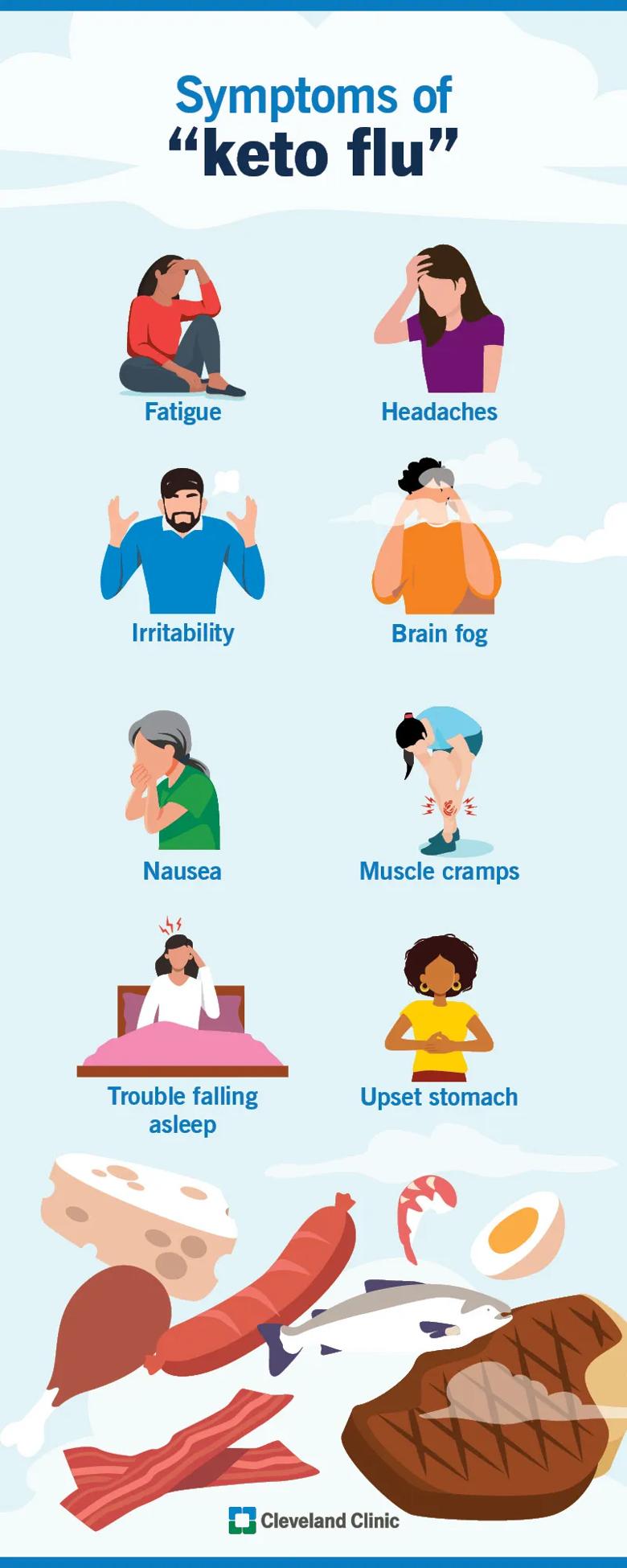
Image content: This image is available to view online.
View image online (https://assets.clevelandclinic.org/transform/4e6e2495-90d3-45af-9bc1-27a0fe9a03f8/keto-flu-infographic)
Symptoms of so-called keto flu may include:
Advertisement
Good news: Keto flu won’t last forever. Symptoms last for as little as two days or as long as a month, but usually somewhere in between.
“Symptoms typically occur for one to two weeks,” Czerwony says, “but they eventually lessen and resolve on their own.”
Some people report that when symptoms clear up, they feel like the clouds have parted and the fog has lifted — like they’re clearer-headed than ever.
But what should you do in the meantime? Let’s take a look.
While there’s no surefire way to prevent keto flu, there are ways you can take care of yourself while you’re going through it. Here’s what to try.
“Eliminating carbohydrates from your diet can lead to dehydration,” Czerwony reports. “To stay hydrated, drink plenty of plain water or sugar-free electrolyte options.”
There are a few reasons for that dehydration, all of them very scientific — but the bottom line is that upping your water intake can go a long way for your body, especially if you’re starting the keto diet.
The keto diet restricts certain foods. But those foods provide you with important electrolytes, like:
To make sure you’re getting enough, make a conscious effort to replace them with keto-friendly foods, such as:
Using a little bit of salt in or on your meals (as needed) can also help replace lost sodium.
During the keto flu phase, you may feel hungrier than usual and even experience significant food cravings, like for sugary foods and simple carbs.
“Eating more often and focusing on a good variety of foods (within what’s allowed on the keto diet) can help with hunger and can also decrease nausea,” Czerwony says.
It’s also important to make sure you’re eating enough fat and protein. If you’re lacking in either, you may not feel full — and the hunger pangs will continue.
When you have a virus or a cold, you know that rest is key. And when you’re dealing with keto flu, the same is true.
“Your body is adjusting to some major dietary changes,” Czerwony says. “So, while you’re experiencing keto flu, it’s best to give yourself a break.”
Avoid vigorous physical activity and embrace good sleep hygiene practices until symptoms like fatigue, muscle cramps and irritability pass.
Keto isn’t for everyone. Just because it worked for your mom or friend or that lady you talked to in the checkout line of the grocery store doesn’t mean it will be the right fit for you.
Advertisement
“Some people find that it’s best for them to transition away from keto and into another low-carb diet instead,” Czerwony notes. “But this type of transition is best done slowly and with the help of your primary care provider or a registered dietitian.”
For some people, introducing the keto diet slowly helps keep keto flu at bay. So, if you’re reading this before you’ve started your keto journey, consider gradually reducing carbs from your diet, rather than eliminating them all at once.
But here’s the biggest tip of all: Don’t start the ketogenic diet on your own.
“Any time someone decides to eliminate any food group from their diet, they should run it past their primary care provider first,” Czerwony stresses. “Some medications, like those for blood pressure and diabetes, can actually make symptoms worse.”
A registered dietitian can also help you determine whether the keto diet is the right eating style for your health needs.
“They can assess your weight loss goals and trajectory and help build a diet for you that will include amounts and types of foods,” she says. “They’ll also help you manage any symptoms and side effects you experience along the way.”
Advertisement

Sign up for our Health Essentials emails for expert guidance on nutrition, fitness, sleep, skin care and more.
Learn more about our editorial process.
Advertisement

Research is inconclusive whether or not these supplements are helpful

The high-fat diet can be beneficial for those who have obesity or diabetes

Find out how this low-carb diet affects your heart

Reach for quality whole foods first
Your metabolism may torch 1,300 to 2,000 calories daily, and the number only grows with activity

Some still turn to a 500-calorie deficit to lose weight, but that approach isn’t always effective or healthy

Keto can reduce blood sugar, but that doesn’t mean it’s right for everyone
Lifestyle changes can bring a slight metabolic boost and health benefits

Grocery shopping with a plan, paying attention to portion sizes and eating at your own pace can all help you put an end to this habit
Semaglutide and other GLP-1s work best as long-term medications

Antibiotics should be used for short periods alongside other treatments to help with inflammation











