Locations:





Tools like CCTV, voice commands and magnifiers can help improve quality of life when you’ve lost vision
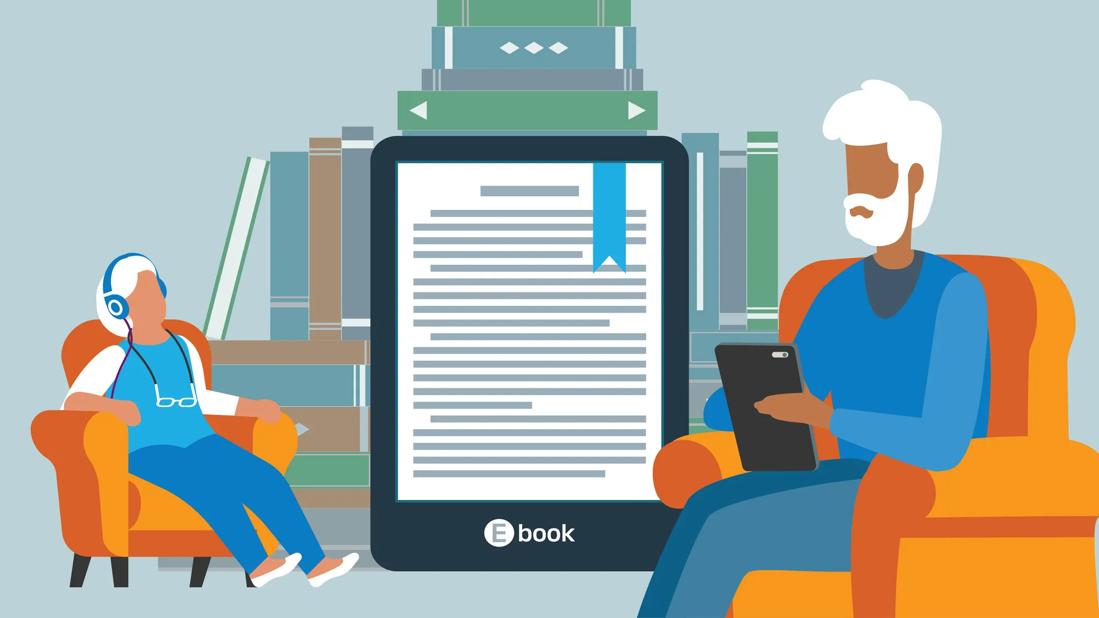
Image content: This image is available to view online.
View image online (https://assets.clevelandclinic.org/transform/b687495e-0b2d-4851-89d6-013f988937f3/ipad-books-stacks-2162645443)
Older people listening to ebooks and reading ebooks ipad, with books in background
During the final stages of age-related macular degeneration, geographic atrophy (GA) disrupts your central vision. As a result, even the simplest tasks — like reading, writing or getting around the house — can become hard to manage.
Advertisement
Cleveland Clinic is a non-profit academic medical center. Advertising on our site helps support our mission. We do not endorse non-Cleveland Clinic products or services. Policy
But today, there are plenty of tools, techniques and devices to help when you’re living with low vision.
Ophthalmologist and retina specialist Ananth Sastry, MD, shares what’s available and how they can help.
Low-vision aids help you learn how to use your remaining eyesight after experiencing vision loss. They include:
“They can be as simple as magnifiers or as sophisticated as wearable headsets that center your peripheral vision,” shares Dr. Sastry. “There’s a wide and continuously growing variety of options.”
You’ve spent years seeing the world in a certain way, and now, geographic atrophy has affected your ability to see things clearly. Learning how to live with low vision is a process that takes time — and that’s where low-vision aids can help.
“These tools are designed to help you learn how to navigate through the world with the vision you still have,” says Dr. Sastry. “Technological advances have improved low-vision aids over the years. Using them will hopefully improve your quality of life and help you feel safe and secure while doing your normal daily activities.”
Advertisement
If you have geographic atrophy, low-vision specialists and occupational therapists can help you decide which tools and techniques are right for you. Aids generally fall into one of three categories:
Geographic atrophy physically changes the way your eyesight works. Optical aids work by maximizing the potential of what’s left of your vision to make up for what’s lost. Some specialized devices require a prescription, but there are many tools out there that can be found over the counter. Examples of optical aids can include:
One of the most difficult things about living with low vision is having to find new ways to go about your daily life. Driving may become limited or even impossible. It may be difficult to navigate through your home, or even relax and unwind with a good book or movie.
Making certain changes to your environment and finding new ways of doing these activities can improve your experience. That may involve things like:
Technological devices in the digital space come with features that make them easier to use for people with low vision. Common examples include:
“When you’re living with low vision, these devices can help you maintain your independence,” reiterates Dr. Sastry.
If you notice changes in your vision that make it hard to do daily tasks, make an appointment with an eye doctor. They can take images of your eye and run specific tests to measure the progress of geographic atrophy and vision loss.
Advertisement
“If you have sudden loss of vision or you’re experiencing pain, those would be reasons to get evaluated right away,” advises Dr. Sastry.
Advertisement

Sign up for our Health Essentials emails for expert guidance on nutrition, fitness, sleep, skin care and more.
Learn more about our editorial process.
Advertisement
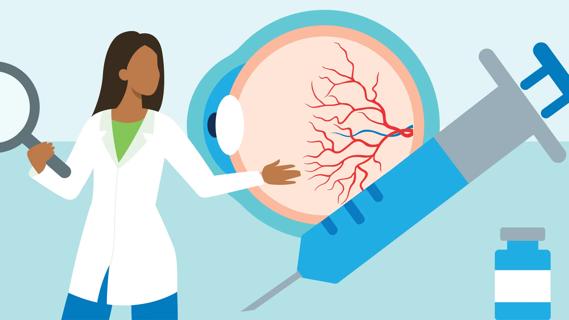
Izervay and Syfovre are long-term medications that can slow down the disease
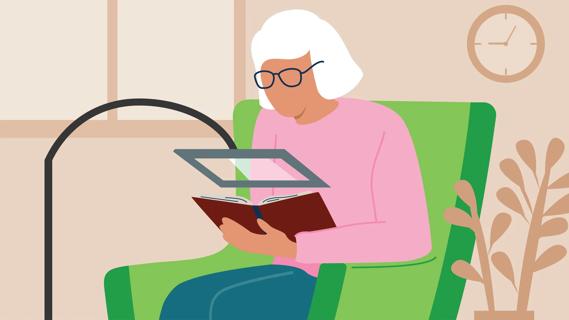
A low-vision occupational therapist can help you learn new ways of doing things so you can maintain your independence
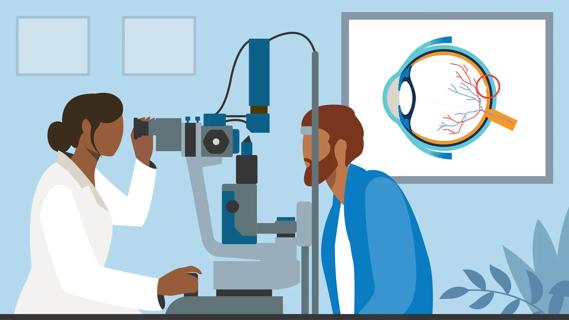
Progress can be slowed with the help of supplements, injections and close monitoring
Preserving your social life and protecting your mental health are key to living well with vision loss
Start low-vision rehabilitation as soon as possible and see your retina specialist at least every six months
These supplements are full of vitamins and minerals that benefit eye health
Having a first-degree biological relative with this eye condition raises your risk, but other factors are at play, too
A diet built around fruits, vegetables and healthy fats is a clear 20/20 benefit for your vision
Eyes typically increase to full size during two growth spurts in childhood
To start, opt for calorie-dense foods that are rich in protein and healthy fats

Pre-birth injections and monoclonal antibodies can help prevent serious complications
 Search










