Locations:





Progress can be slowed with the help of supplements, injections and close monitoring
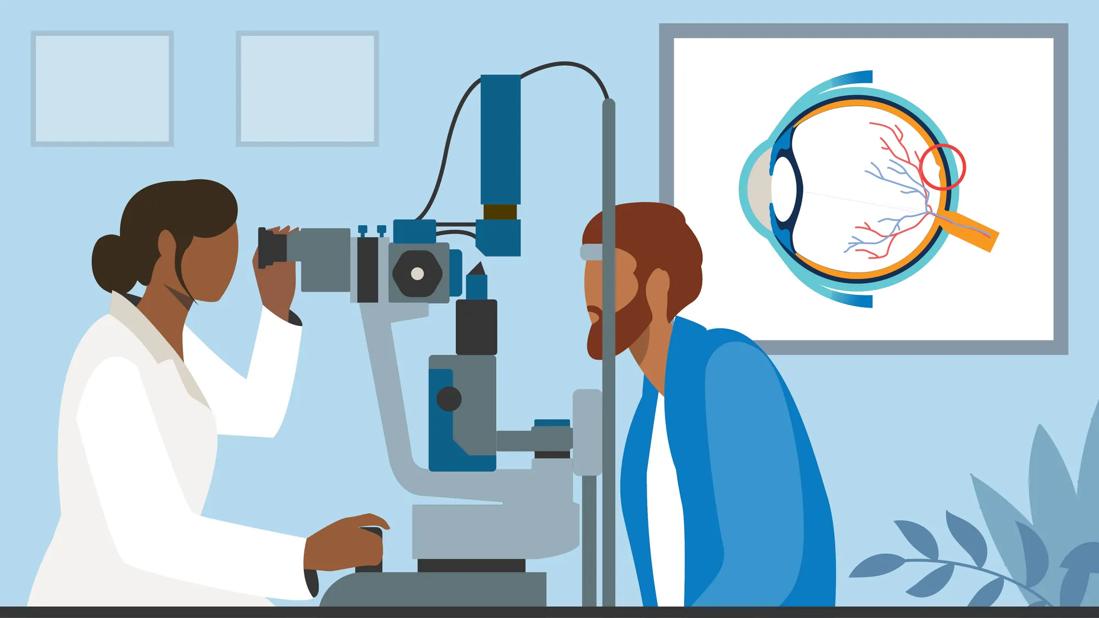
Image content: This image is available to view online.
View image online (https://assets.clevelandclinic.org/transform/203b485f-13c0-4de9-ad59-55c56ecf9653/eyesight-test-doctor-patient-macular-degeneration-1272596602)
Healthcare provider giving a retinal/eye exam to patient
More than 5 million people worldwide have geographic atrophy (GA). This advanced stage of dry age-related macular degeneration causes lesions to grow on the parts of your retina that receive light and focus your central vision.
Advertisement
Cleveland Clinic is a non-profit academic medical center. Advertising on our site helps support our mission. We do not endorse non-Cleveland Clinic products or services. Policy
GA progresses over years based on a number of factors related to your overall health and wellness. Although there isn’t a cure, there are steps you can take that may help slow its progression.
Ophthalmologist and retina specialist Ananth Sastry, MD, explains what it takes to slow progression and what to expect if you’ve been diagnosed with this condition.
Most of the time, GA progresses slowly over several years, with lesions growing at an average rate of 1.66 to 1.78 millimeters each year. These lesions are caused by drusen — yellow protein deposits that form beneath your retina.
As these deposits grow, the photoreceptors of your eye become thin. This makes it hard to catch and convert light into something you can see. As a result, the photoreceptors start to die off. In their absence, lesions begin to grow toward the fovea — the part of your retina that provides sharp, detailed vision.
“Early on, you might notice changes like letters or words disappearing while you read, or you’ll notice a blind spot that slowly increases in size,” says Dr. Sastry. “As GA progresses, more and more of your central field will become blurry.”
If progress isn’t slowed, lesions can grow over the fovea. When this happens, you experience irreversible central vision loss that can complicate everyday tasks like reading, driving or recognizing faces.
Advertisement
“You’ll still be able to see in the periphery, but the center will become very blurred,” explains Dr. Sastry. “At that stage, we work to improve your quality of life, help you learn how to live with low vision and find ways to maintain the vision you still have.”
“Not everyone who has age-related macular degeneration will develop geographic atrophy,” notes Dr. Sastry. “About 20% to 30% of people who have it will develop GA.”
How fast GA develops depends on different factors, such as:
Scientists continue to look for ways to recover vision and revive areas that’ve been damaged by GA. A recent study in The New England Journal of Medicine found some success in restoring central vision with the help of a retinal implant. But this study was very small, and more clinical trials are needed before these treatments become widely available.
“Apart from that, we don’t have anything else that can actually recover vision,” says Dr. Sastry.
Still, there are things you can do to help slow the progression of GA and maintain the vision you have. Dr. Sastry recommends the following:
Advertisement
“If we’re not able to get your vision better than 20/60, a low-vision specialist can help you learn how to live with GA,” shares Dr. Sastry. “Treating GA has challenges, but our goal is to make sure you live as full a life as possible. We do that by slowing the progression of GA and maintaining the vision you still have.”
Advertisement

Sign up for our Health Essentials emails for expert guidance on nutrition, fitness, sleep, skin care and more.
Learn more about our editorial process.
Advertisement
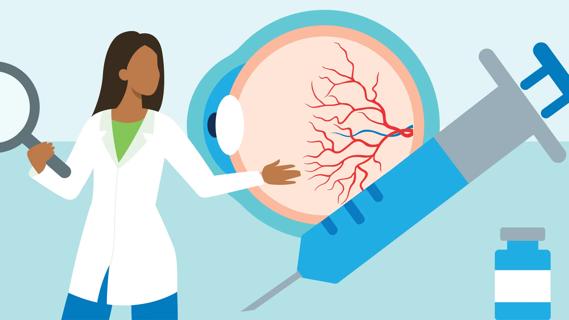
Izervay and Syfovre are long-term medications that can slow down the disease

A low-vision occupational therapist can help you learn new ways of doing things so you can maintain your independence

Tools like CCTV, voice commands and magnifiers can help improve quality of life when you’ve lost vision
Preserving your social life and protecting your mental health are key to living well with vision loss
Start low-vision rehabilitation as soon as possible and see your retina specialist at least every six months

These supplements are full of vitamins and minerals that benefit eye health

Having a first-degree biological relative with this eye condition raises your risk, but other factors are at play, too
A diet built around fruits, vegetables and healthy fats is a clear 20/20 benefit for your vision

Managing your weight through physical activity may lower your chances of getting this common cancer

It typically starts in October and winds down in early spring, with cases at their highest in the middle of winter

Anxiety disorders, health conditions and past trauma can make driving nerve-wracking — help is available
 Search










