Locations:





Stand tall and feel grounded with this foundational yoga pose
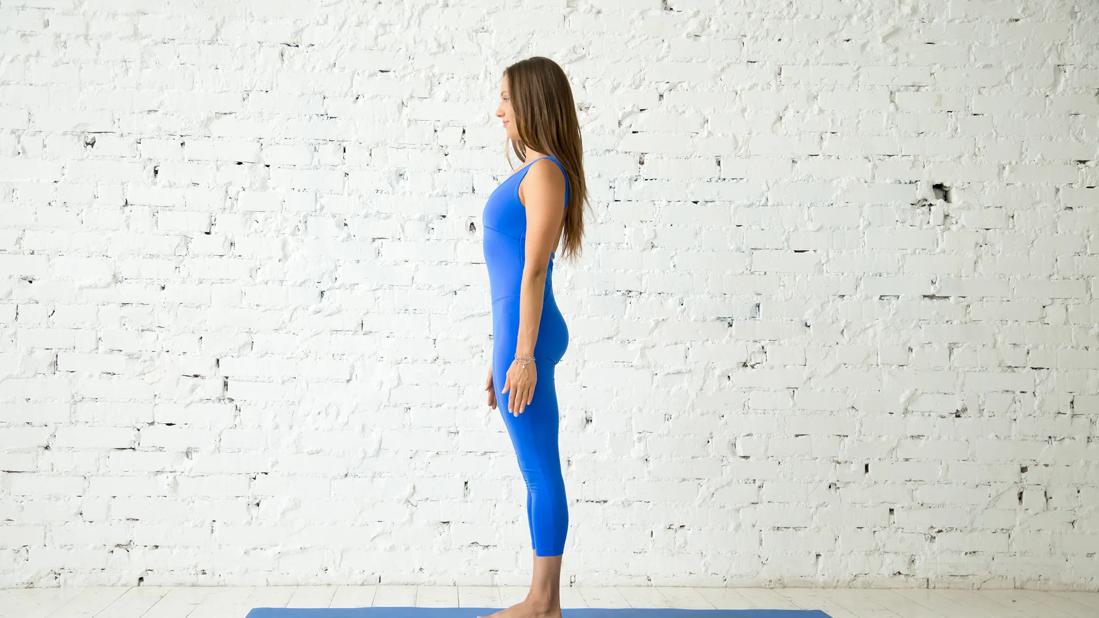
Image content: This image is available to view online.
View image online (https://assets.clevelandclinic.org/transform/c7ce8136-3b14-48ed-900a-caa5fdb31d75/mountain-pose-yoga-639100388)
Person standing tall on a yoga mat, doing the mountain pose
Mountain pose — or Tadasana — might look like you’re just standing still, but it’s a powerful way to reset your posture and build stability. Whether you’re starting your day or winding down, it can help you feel grounded, steady and aligned.
Advertisement
Cleveland Clinic is a non-profit academic medical center. Advertising on our site helps support our mission. We do not endorse non-Cleveland Clinic products or services. Policy
So, what makes this simple stance so essential — and how do you make sure you’re doing it right? We asked yoga therapist Paula Brown, C-IAYT, E-RYT 500, to walk us through it.
In mountain pose, you stand tall with your feet firmly planted. This reconnects you to your natural posture.
“A mountain isn’t just sitting on the surface. It’s rooted deep into the earth,” says Brown. “That connection is powerful. A mountain is steady, solid and unmoving. That’s what this pose helps you tap into. It’s about feeling grounded, both physically and emotionally, so you can stand tall with confidence and ease.”
Mountain pose might look simple. But when done with awareness, it has powerful benefits for both body and mind. “It’s about being present, connecting your mind and body, and working with — not against — yourself,” Brown explains.
Known as your body’s optimal posture, mountain pose sets the foundation for:
Advertisement
And the best part? You can do it anywhere. “If I’m standing in line at the grocery store and my lower back acts up, I’ll slip into mountain pose,” shares Brown. “I draw my belly in and can feel the muscles supporting my spine, taking the pressure off my lower back.” Small shifts like that can turn everyday moments into practice, no mat required.
Here’s how to practice mountain pose with proper form:
"You want to feel confident, open and grounded,” advises Brown. Hold the pose for 30 to 60 seconds, or longer as you become more comfortable. To release, simply relax your muscles and step out of the pose.
You can adjust mountain pose depending on your space, comfort or physical needs. The key is keeping alignment and breathing steadily, whether you’re standing tall or sitting in a chair.
Mountain pose is often practiced standing, but it’s just as valuable when done seated — be it on the floor, in a chair, at your desk or simply looking to bring more awareness to your posture.
To do it seated:
Raising your arms overhead adds length through your sides and spine, turning mountain into a mild stretch.
To try it:
Advertisement
For a deeper stretch, you can add a mild backbend. Go slow and avoid this variation if you have back or balance issues.
Steps:
Mountain pose is more than just a starting point. It’s a tool you can use anytime to reset, realign and refocus — wherever you are. Try these tips to deepen your practice:
“Mountain pose informs all other postures,” Brown explains. “You don’t always have to return to mountain pose — but you can use it as a reference point. If you’re unsure where your head, neck or shoulders should be, think about how they feel in mountain.”
Advertisement
Whether you’re on your mat or just standing still, mountain pose offers a simple way to feel grounded, open — and fully present.
Advertisement

Sign up for our Health Essentials emails for expert guidance on nutrition, fitness, sleep, skin care and more.
Learn more about our editorial process.
Advertisement
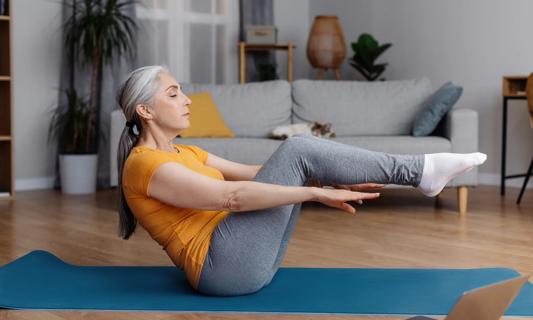
Start by creating a dedicated space where you can focus on your physical and mental health
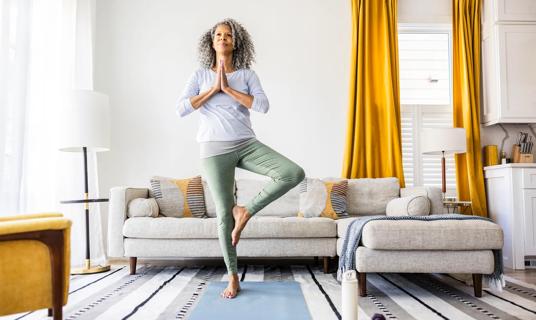
Beginner’s yoga is all about easing into the practice with foundational poses
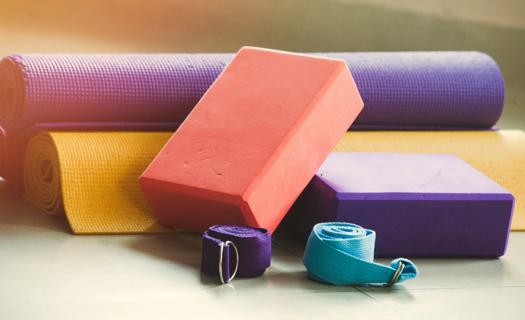
Bolsters, blankets, pillows and blocks can offer extra support, stability and comfort
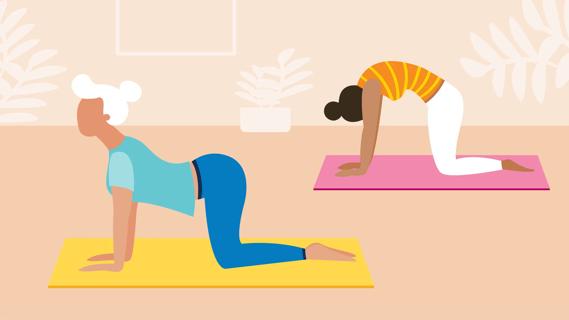
This gentle yoga stretch supports your spine, strengthens your core and calms your mind
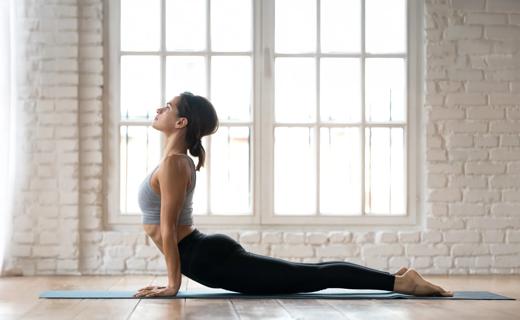
Focus on inhaling and exhaling through 12 steps of a complete sequence
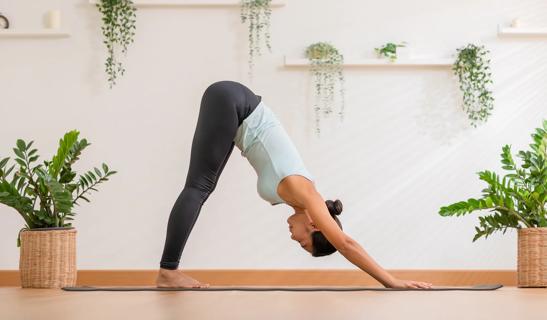
This transitional and restorative yoga pose provides a full-body stretch
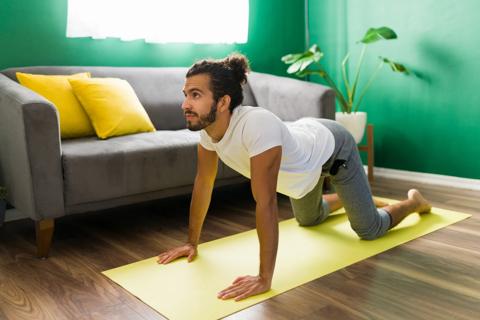
Somatic yoga focuses on the sensation and experience of movement — not striking perfect poses
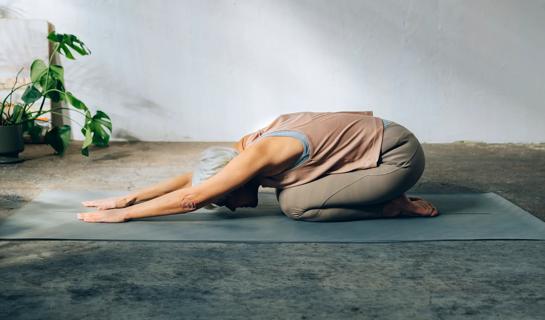
Balasana, or child’s pose, is a restorative full-body yoga technique

Hormonal changes, a slower metabolism and muscle loss can make weight gain more common around menopause — healthy habits can help you manage it

Life-threatening complications include sepsis, stroke, pneumonia and more

Fruity-smelling breath can happen when your body burns fat for energy, and in some cases, can signal a medical emergency
 Search










