Locations:





These conditions involve inflammation in different areas of your heart, leading to differences in symptoms and treatments
If you or a loved one has been diagnosed with myocarditis or pericarditis, you’re probably spending a lot of time learning about the condition and what it means for your health. But it’s not always easy to untangle the differences between conditions that look oh-so-similar at first glance.
Advertisement
Cleveland Clinic is a non-profit academic medical center. Advertising on our site helps support our mission. We do not endorse non-Cleveland Clinic products or services. Policy
To start, it helps to know that myocarditis and pericarditis are two types of heart inflammation. “Carditis” is the medical word for inflammation of the heart, or your immune system’s response to an infection or injury.
But what exactly happens inside your heart when you have myocarditis versus pericarditis? And what do these conditions feel like?
Cardiologist and Director of the Cleveland Clinic Pericardial Disease Center Allan Klein, MD, explains key differences and why they matter for your treatment plan.
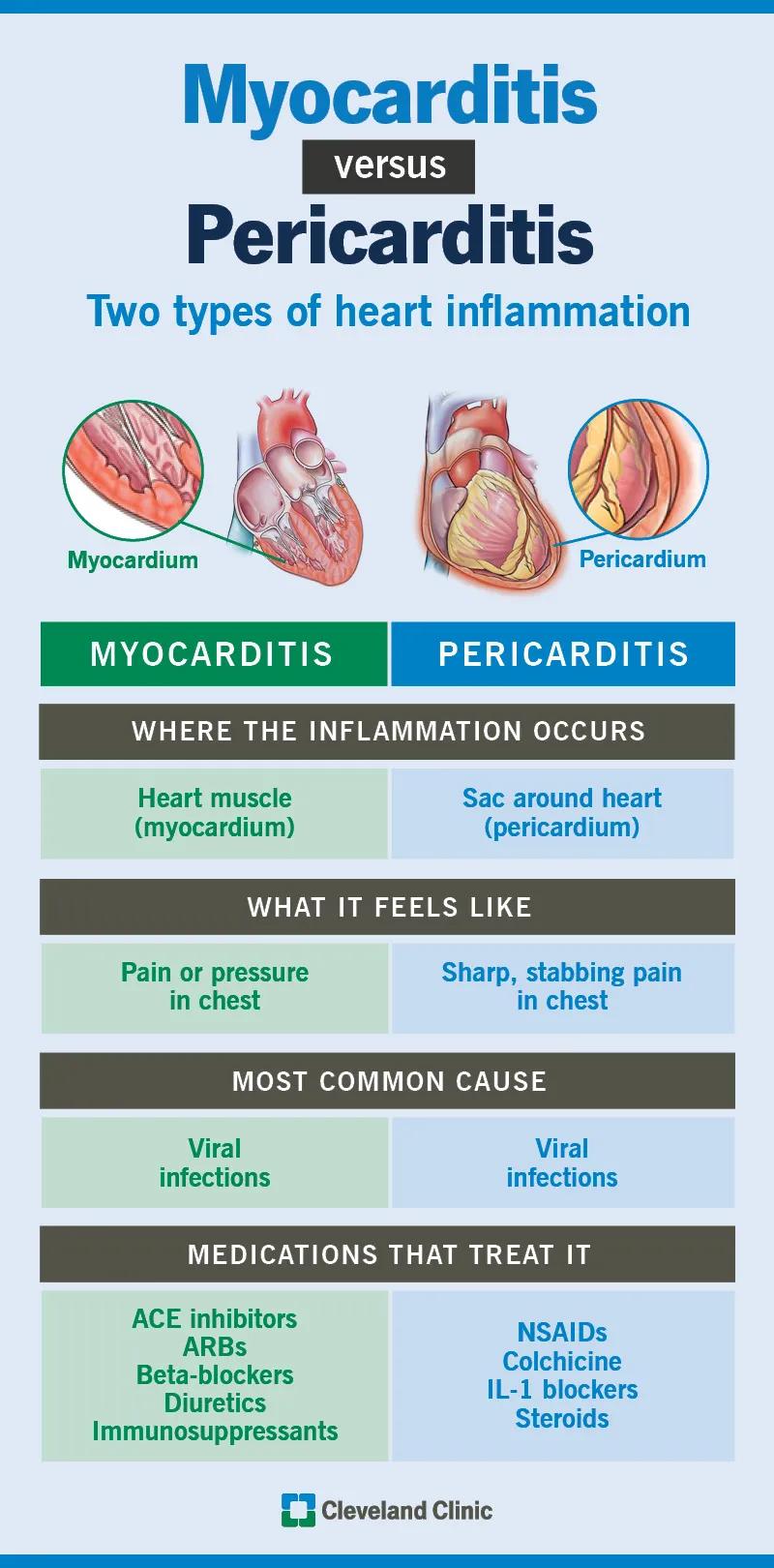
Image content: This image is available to view online.
View image online (https://assets.clevelandclinic.org/transform/7bb217aa-be6f-4c62-86a0-743addd3db0a/myocarditis-versus-pericarditis-infographic)
You can think of myocarditis and pericarditis as siblings or cousins. They may share a last name (carditis), but they’re unique in their own ways. Let’s take a closer look.
Myocarditis and pericarditis both involve inflammation, but in different areas of your heart:
But Dr. Klein emphasizes that there’s not always a hard and fast distinction between these two conditions. Rather, it’s possible to have inflammation in your myocardium and your pericardium. That’s why healthcare providers have started using the term “inflammatory myopericardial syndrome,” or “IMPS” for short.
Advertisement
“IMPS describes the whole spectrum of inflammatory conditions affecting your heart muscle and pericardium,” Dr. Klein explains. “It recognizes that there can be overlap, with more than one area of your heart inflamed at once.”
Under the IMPS umbrella, you might be diagnosed with:
Myocarditis and pericarditis share many symptoms, like fatigue, flu-like symptoms and shortness of breath.
It’s also possible for either condition to lead to swelling in your legs or belly. That’s because severe cases of myocarditis can lead to fluid buildup. A serious form of pericarditis, called constrictive pericarditis, may cause these symptoms when the pericardial sac gets stiffened or inflamed and compresses the heart.
But myocarditis and pericarditis also have some distinctive features that can help clue you in to what’s going on.
“Chest pain is a symptom that’s common both to myocarditis and pericarditis,” Dr. Klein notes. “But the exact nature of the chest pain varies according to the condition. Your doctor will ask you to describe your pain because that helps them narrow down the diagnosis.”
Myocarditis causes chest pain or discomfort that can easily be confused for a heart attack. You might feel like there’s heavy pressure on your chest. But you typically won’t have the sharp pain that’s associated with pericarditis (more on that in a moment). And the pain won’t change if you adjust your body position.
Pericarditis causes very sharp, stabbing pain in your chest that may spread to your left shoulder. “This is the classic symptom of pericarditis,” Dr. Klein says.
The pain typically gets worse when you breathe deeply or lie down. It gets better when you sit forward. This “positional” nature of the chest pain sets pericarditis apart from myocarditis.
Certain symptoms are more likely to stem from myocarditis than pericarditis. These include:
Signs and symptoms more likely to stem from pericarditis include:
Advertisement
Both myocarditis and pericarditis require medications to help your heart heal. But the specific meds you need — and any additional treatments your doctor may recommend — depend on your exact diagnosis and where along the IMPS spectrum you fall.
Dr. Klein walks us through the differences.
“Myocarditis, which affects your heart muscle, typically requires medications to help your heart pump better and send enough blood to your body,” Dr. Klein says. “On the other hand, pericarditis calls for medications that directly reduce inflammation in your pericardium to ease symptoms and prevent recurrences.”
Medications for myocarditis include:
Medications for pericarditis include:
Advertisement
Often, NSAIDs and colchicine are given together for pericarditis.
Most people don’t need a procedure or surgery for either condition. But if you do need one, the options differ based on your diagnosis:
Despite their differences, myocarditis and pericarditis share some common ground, including their:
Advertisement
If you’re living with myocarditis or pericarditis, Dr. Klein wants you to know there’s hope.
“We’ve made significant strides in diagnosing and treating these conditions,” he shares. “Among many tools in our belt, we have advanced tests that can visualize the inflammation and track improvement. New medications are available, and more are under investigation. We’ve helped a lot of people heal their hearts and get back to doing what they love.”

Sign up for our Health Essentials emails for expert guidance on nutrition, fitness, sleep, skin care and more.
Learn more about our editorial process.
Advertisement

Both are medical emergencies, but they are very distinct events with different causes

Taking prescribed medicines, prioritizing rest and finding sources of joy can help heal your heart and boost your spirits

There are several options to reduce inflammation and manage symptoms

Making a health plan with your doctor before you leave will make it easier to sit back and enjoy your flight

From heartburn and panic attacks to muscle spasms and heart attacks, lots of medical conditions can cause chest pain

You may notice this combination when you’re exercising or after standing up too fast

Deep breathing, yoga and meditation are just some ways to bring your heart rate down right away

Lifestyle changes can help strengthen your heart so it doesn’t have to work as hard when your body is at rest

Hormonal changes, a slower metabolism and muscle loss can make weight gain more common around menopause — healthy habits can help you manage it

Life-threatening complications include sepsis, stroke, pneumonia and more

Fruity-smelling breath can happen when your body burns fat for energy, and in some cases, can signal a medical emergency
 Search










