Locations:





Negative symptoms refer to a lack of emotional expression and motivation
Medical terms can be confusing. Case in point: Some symptoms of schizophrenia are described as negative. But don’t all symptoms of medical conditions mean something’s not working?
Advertisement
Cleveland Clinic is a non-profit academic medical center. Advertising on our site helps support our mission. We do not endorse non-Cleveland Clinic products or services. Policy
“In medical lingo, negative means something isn’t there,” explains psychiatrist Travis Krew, MD. “It isn’t describing something as bad — just like positive doesn’t mean something good in the medical world.”
Dr. Krew simplifies this concept and details what the five negative symptoms of schizophrenia look like.
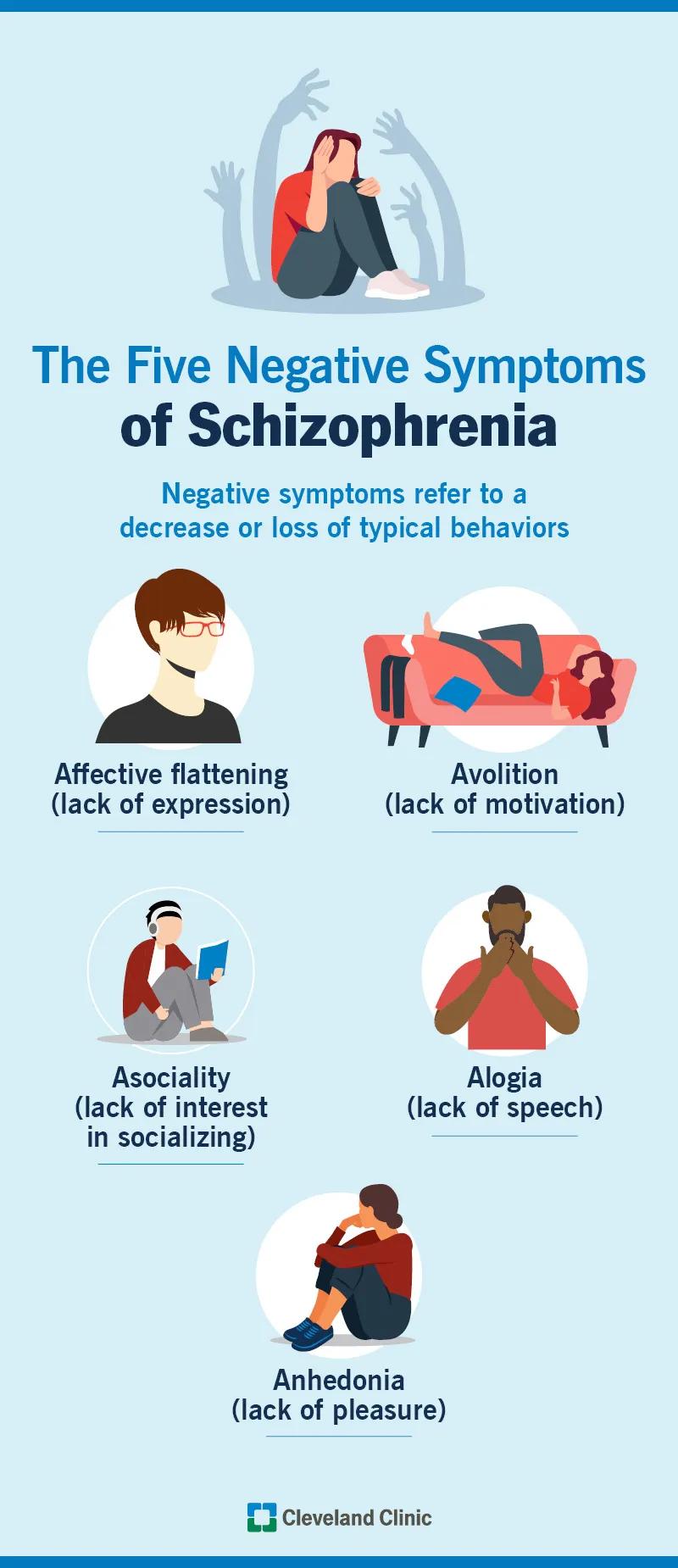
Image content: This image is available to view online.
View image online (https://assets.clevelandclinic.org/transform/93212a75-9a8d-4e18-b0d1-c6ba053483c7/negative-symptoms-schizophrenia-infographic)
Negative symptoms of schizophrenia refer to a decrease or loss of typical behaviors and emotions. It’s like the things that make you feel like yourself are dialed down.
“You can think of negative symptoms like subtraction. They’re expressions and behaviors that are taken away,” illustrates Dr. Krew.
For example, most people naturally use facial expressions, body language and tone to show how they feel when speaking. Brain changes that lead to schizophrenia may limit that expression, making communication seem flat or emotionless.
Negative symptoms are one of several criteria healthcare providers consider when diagnosing schizophrenia. You don’t need them for a diagnosis, but they’re common.
“They’re often some of the earliest signs,” says Dr. Krew. “But people don’t tend to seek care until positive symptoms — like hallucinations and delusions — appear.”
Sticking with the math analogy, positive symptoms are additions. They’re “extra” experiences, like hearing voices that aren’t there.
Advertisement
Negative symptoms tend to persist in schizophrenia, while positive symptoms can come and go.
There are five main negative symptoms of schizophrenia — known as the 5 As:
Here’s what those terms mean — and what they look like outside of a medical textbook.
Affective flattening is reduced emotional expression. It’s one of the most common negative symptoms.
When you speak, you may have:
“Affective flattening doesn’t mean you lack emotions entirely,” clarifies Dr. Krew. “You may still feel them, but it’s harder to show them to others.”
Avolition is a lack of motivation. It’s another common negative symptom.
Avolition makes it hard to:
“Avolition isn’t laziness,” explains Dr. Krew. “It’s not that you avoid these activities. It’s more like your brain hits a pause button — you want to act, but your brain won’t allow you to get started.”
Asociality is a lack of interest in social connection.
You may:
“As a whole, these behaviors look like social withdrawal. It can make it harder to get the support you need,” says Dr. Krew.
Alogia, also known as “poverty of speech,” means speaking less than usual.
You may:
“This doesn’t mean you don’t want to communicate,” notes Dr. Krew. “It means your brain has trouble forming thoughts and finding the right words.”
Anhedonia is a lack of interest in or pleasure from life’s experiences. You may not get as excited about things as you used to, like:
“People with schizophrenia may still enjoy things in the moment,” Dr. Krew says. “But it’s harder to anticipate that enjoyment, which makes it tough to feel motivated to do activities.”
Feeling like your personality has disappeared can be confusing and upsetting. It’s normal to want to feel like you again.
Unfortunately, negative symptoms can be difficult to treat, and right now, there aren’t any medications approved specifically for them.
Advertisement
Most schizophrenia medications target positive symptoms, like hallucinations. In some cases, they may even make negative symptoms worse because of how they affect your brain chemistry.
“Each case is different,” says Dr. Krew. “A psychiatrist can help you find a treatment plan that fits your symptoms.”
Treatment for negative symptoms often includes a combination of:
Researchers are actively studying new drugs that treat negative symptoms. In the meantime, your provider may recommend options like antidepressants or certain atypical antipsychotics to help manage symptoms.
Talk therapy and supportive programs that may help negative symptoms include:
Negative symptoms of schizophrenia can quietly affect how you feel and move through daily life. They’re not about a lack of effort. They reflect real changes in how your brain works.
Advertisement
While negative symptoms can be challenging to manage, support is available. With the right treatment plan and guidance, you can better understand these symptoms and find ways to improve your quality of life.
Advertisement

Sign up for our Health Essentials emails for expert guidance on nutrition, fitness, sleep, skin care and more.
Learn more about our editorial process.
Advertisement

While outdated, these subtypes highlight the many signs of schizophrenia
The first symptoms of schizophrenia can be subtle, but recognizing them may help you get treatment sooner

Certain B vitamins, omega-3 fatty acids and a healthy diet can serve as complementary treatments for schizophrenia

Following your treatment plan, finding a community, staying active and maintaining a healthy diet can help manage this psychiatric condition

People with schizoaffective disorder have additional mood symptoms

Consider the severity and location of your arthritis to decide on the right support
Eyes typically increase to full size during two growth spurts in childhood

Pre-birth injections and monoclonal antibodies can help prevent serious complications

Managing your weight through physical activity may lower your chances of getting this common cancer

It typically starts in October and winds down in early spring, with cases at their highest in the middle of winter

Anxiety disorders, health conditions and past trauma can make driving nerve-wracking — help is available
 Search










