Locations:





Research points to an association between the health of your gums and cardiovascular disease
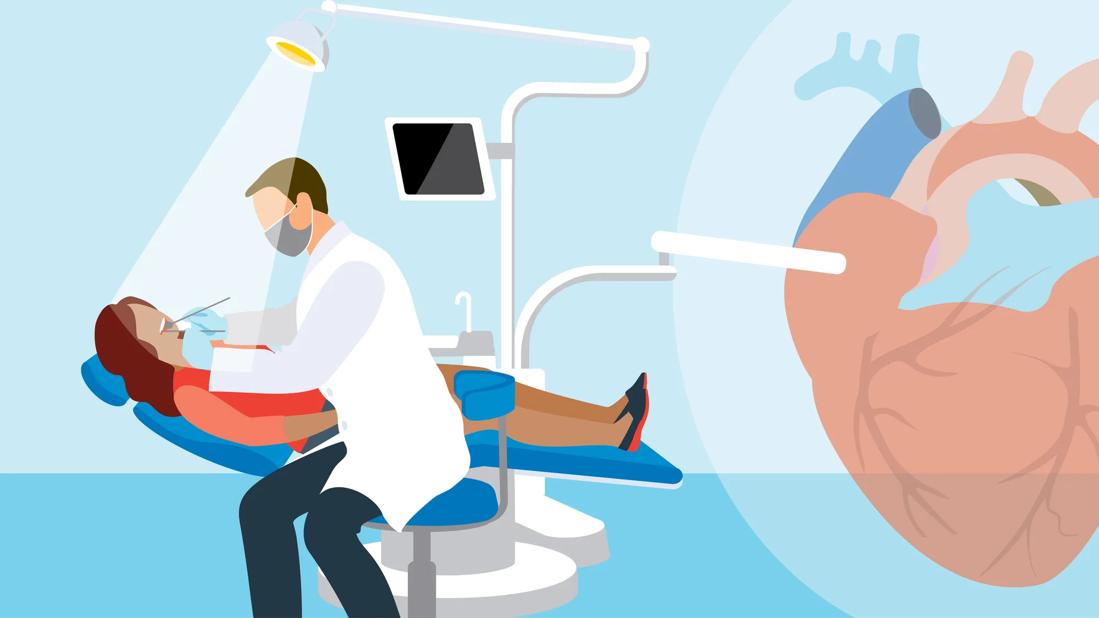
Image content: This image is available to view online.
View image online (https://assets.clevelandclinic.org/transform/6c425f4d-b047-41ab-9d2c-4113be752ab7/teeth-and-heart-health-dentist-1196021900)
Person in dentist chair receiving an exam from dentist, oversized heart nearby
Tools to protect your heart are probably sitting on your bathroom counter right now — and odds are you don’t even realize it. After all, we’re talking about your toothbrush and dental floss.
Advertisement
Cleveland Clinic is a non-profit academic medical center. Advertising on our site helps support our mission. We do not endorse non-Cleveland Clinic products or services. Policy
Surprised? That understandable. The connection seems pretty … well, odd and unusual. But research consistently shows an association between gum disease and increased risk for heart disease.
But to be clear, that doesn’t mean daily brushing and flossing alone can prevent a heart attack or stroke. Good oral hygiene can’t erase genetics or a lifetime of greasy double cheeseburgers.
But there’s a definite link between gum health and heart health, even if it’s not fully understood. Let’s find out more from cardiologist Christine Jellis, MD, and dentist Anne Clemons, DMD.
Inflammation is your body’s natural response to handle injuries, bacteria or illness. It’s how your body jumpstarts the healing process, whether for a sprained ankle, a paper cut or the common cold.
This type of “good” inflammation typically disappears quickly once the issue is addressed.
But sometimes, inflammation doesn’t just go away. It lingers and puts stress on your body. Chronic inflammation is a common factor in numerous health conditions — including gum disease and heart disease.
“Oral and heart disease can both be linked to chronic inflammation, so that’s always created the suspicion that there is a link between the two,” notes Dr. Jellis.
Advertisement
The American Heart Association (AHA) reports that chronic gum inflammation may be associated with higher blood pressure and coronary artery disease.
Additionally, in some situations where there’s a mouth infection or bleeding related to a dental procedure, bacteria can travel through the bloodstream to heart valves or other heart structures and cause endocarditis. (People with prosthetic heart valves are at the highest risk for this and are therefore advised to take preventive antibiotics before dental work.)
The overlap between gum disease and heart disease also might be explained by less-than-ideal lifestyle habits that fuel both conditions, says Dr. Jellis. The list includes:
Video content: This video is available to watch online.
View video online (https://cdnapisec.kaltura.com/p/2207941/sp/220794100/playManifest/entryId/1_tyfsp4eg/flavorId/1_5f3sgelj/format/url/protocol/https/a.mp4)
Keeping up with your oral hygiene routine is a good place to start when it comes to trying to protect your heart through your gums.
That means brushing your teeth twice a day for two minutes each time, says Dr. Clemons. Need an incentive to brush for that long? Consider this: Researchers found that brushing less than that triples your risk of heart issues.
Flossing once a day is also critical to keep bacteria, tartar and plaque from building up along your gumline to invite infection.
Don’t forget about regular checkups with your dentist for an evaluation and professional cleaning either. One to two visits a year is generally recommended to keep tabs on your teeth and gums.
You can also take steps to limit gum disease and heart disease by:
If you have a heart issue, talk to your dentist about it during checkups.
“So much in your body is surprisingly connected — and that includes your mouth and your heart,” says Dr. Clemons. “Taking care of one may help you take care of the other.”
Advertisement

Sign up for our Health Essentials emails for expert guidance on nutrition, fitness, sleep, skin care and more.
Learn more about our editorial process.
Advertisement

Heart medications can help manage blood pressure, cholesterol and other issues that contribute to heart disease

If you’ve heard that heart disease mostly affects men or that you’re fine if you don’t feel any symptoms, it’s time to learn the facts

This naturally occurring nutrient supports energy and heart health, but supplements aren’t necessary for everyone

Age, sex and genetics are just a few factors that can affect your risk of developing coronary artery disease

Eating heart-healthy foods, moving around more and getting quality sleep are a few ways to get started

You don’t have to wait until you have symptoms of heart disease to seek cardiology care

Making a health plan with your doctor before you leave will make it easier to sit back and enjoy your flight

From heartburn and panic attacks to muscle spasms and heart attacks, lots of medical conditions can cause chest pain

Hormonal changes, a slower metabolism and muscle loss can make weight gain more common around menopause — healthy habits can help you manage it

Life-threatening complications include sepsis, stroke, pneumonia and more

Fruity-smelling breath can happen when your body burns fat for energy, and in some cases, can signal a medical emergency
 Search










