Locations:





Weight loss may cause loose, sagging skin and muscle loss to your rear
If you take Ozempic® or other semaglutides for weight loss, you’re probably prepared to see a difference in your overall appearance when you look in the mirror. But people are noticing they have “Ozempic butt” — or sagging and loose skin — among other physical changes to their body.
Advertisement
Cleveland Clinic is a non-profit academic medical center. Advertising on our site helps support our mission. We do not endorse non-Cleveland Clinic products or services. Policy
People refer to terms like “Ozempic butt” or “Wegovy butt” when they notice loose, flabby or wrinkly skin around their buttock area and experience muscle loss in their backside.
But those changes aren’t directly connected to these medications, or any specific weight loss medication, explains obesity medicine subspecialist W. Scott Butsch, MD, who’s also employed by Novo Nordisk (the makers of Ozempic and Wegovy™).
“The public term ‘Ozempic butt’ may be a result of what we see with weight loss in general,” says Dr. Butsch. “When somebody loses weight — whether that’s with diet changes, an increase in physical activity, medication or bariatric surgery — we know there’s a reduction in fat mass, as well as a reduction in muscle mass. Your body doesn’t need to carry that previous weight, so there’s a shrinking of the muscle.”
“Ozempic butt” isn’t a medical term or official diagnosis, but more of a way that people talk about this unwanted side effect of weight loss while on a weight loss drug. It’s not specific to a particular medication, like Ozempic, Wegovy, Mounjaro® or Zepbound®.
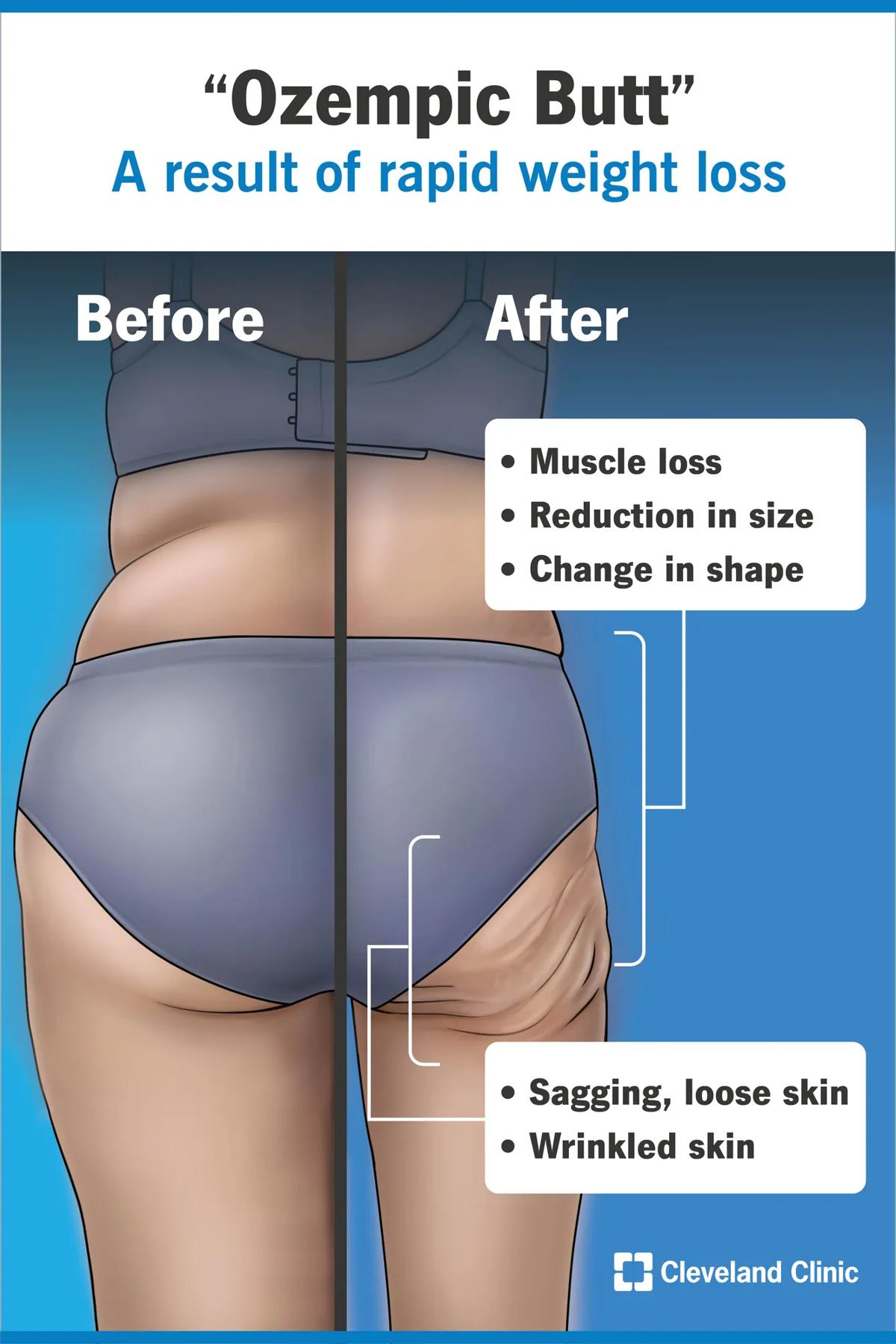
Image content: This image is available to view online.
View image online (https://assets.clevelandclinic.org/transform/165cad4a-aba5-4d37-97cb-b55f439c50ef/OzempicButt-infographic-800x1199)
You may notice the following changes around your backside area:
Advertisement
You may think you have a deflated derriere.
Rapid or extreme weight loss over a short timeframe can lead to saggy or loose skin in some people.
Think about it this way: When you gain weight, it likely wasn’t overnight. It was a gradual increase over time — giving your body time to adjust to any added weight.
More recently, medications like semaglutide (Ozempic and Wegovy) or tirzepatide (Mounjaro or Zepbound) may result in significant weight loss. If you lose weight quickly, your body (and particularly your skin) doesn’t have the ability to recover as quickly. Your skin may even lose collagen and elastin — essential to having skin that can bounce back.
The result? Sagging or loose skin.
You may also lose muscle as you burn fat. If your body is in a calorie deficit — using up more calories in exercise than you’re taking in from your diet — your body may need to use muscle alongside fat for energy.
That can contribute to the overall appearance of Ozempic butt.
Other factors that can contribute to sagging skin and muscle loss include:
Before you start a weight loss medication, Dr. Butsch suggests the following:
If you’ve already noticed a sagging, deflated look, there are a few things you can do:
Your body not only loses fat when you lose weight on new medications like semaglutide or tirzepatide. It can lose muscle, too. And your skin may not bounce back like it used to. This one-two punch may lead to what people nickname “Ozempic butt.”
But there are steps you can take to prevent it from happening in the first place.
“We have to look more into how we’re assessing muscle change in the setting of weight loss,” says Dr. Butsch. “It’s not clear if there is something unique about this class of drugs that leads to specific outcomes on the muscle, whether it’s a loss of mass or an improvement in muscle function and performance.
“Studies need to be done to better understand the changes of muscle after weight loss while on these new highly effective obesity medications.”
Advertisement
Advertisement

Sign up for our Health Essentials emails for expert guidance on nutrition, fitness, sleep, skin care and more.
Learn more about our editorial process.
Advertisement
Abruptly ending treatment often comes with weight regain and other issues
Despite their name, these patches don’t contain GLP-1 medication and have dubious effects
Rapid weight loss can cause loose skin, facial volume loss and body contour changes

Eat smaller meals, stay hydrated, avoid high-fat foods and, if needed, ask your doctor about switching to a lower dosage
Taking a smaller dose than what your doctor recommends isn’t a good idea

Both are GLP-1 medications that are FDA-approved for Type 2 diabetes and weight loss, but how they work differs

Healthy eating helps, but so do a lot of other strategies for improving your overall health and wellness

Exercising while taking semaglutide and other GLP-1s helps prevent muscle loss and boosts metabolism

Hormonal changes, a slower metabolism and muscle loss can make weight gain more common around menopause — healthy habits can help you manage it
Life-threatening complications include sepsis, stroke, pneumonia and more
Fruity-smelling breath can happen when your body burns fat for energy, and in some cases, can signal a medical emergency
 Search










