Locations:





Pink eye tends to start in one eye before spreading to the other, while allergies usually affect both eyes at the same time
A case of red, itchy eyes often means one of two things: You have “pink eye” (infectious conjunctivitis) or you’re dealing with allergies (allergic conjunctivitis). Both share overlapping symptoms, but they have very different causes that require different treatments.
Advertisement
Cleveland Clinic is a non-profit academic medical center. Advertising on our site helps support our mission. We do not endorse non-Cleveland Clinic products or services. Policy
Optometrist Robert Engel, OD, shares what you need to know to protect your eyes from pink eye or allergies.
Pink eye and allergic eye reactions are two different types of conjunctivitis, a condition in which the conjunctiva (the thin tissue over the white part of the eye in the inner eyelids) becomes inflamed.
Bacterial and viral infections often cause this inflammation. But allergens — like ragweed, pet dander, dust or pollen — can affect your eyes in a similar way.
Pink eye is a contagious infection caused by an organism or a germ, like a:
You can get pink eye when you come into contact with someone who has it or you rub your eyes after touching a contaminated surface.
Allergic conjunctivitis isn’t contagious, and you can experience it year-round. It’s triggered when your eyes come into direct contact with allergens. Products that commonly cause contact dermatitis (like certain soaps, detergents, or moisturizers) can also cause an allergic eye reaction, says Dr. Engel.
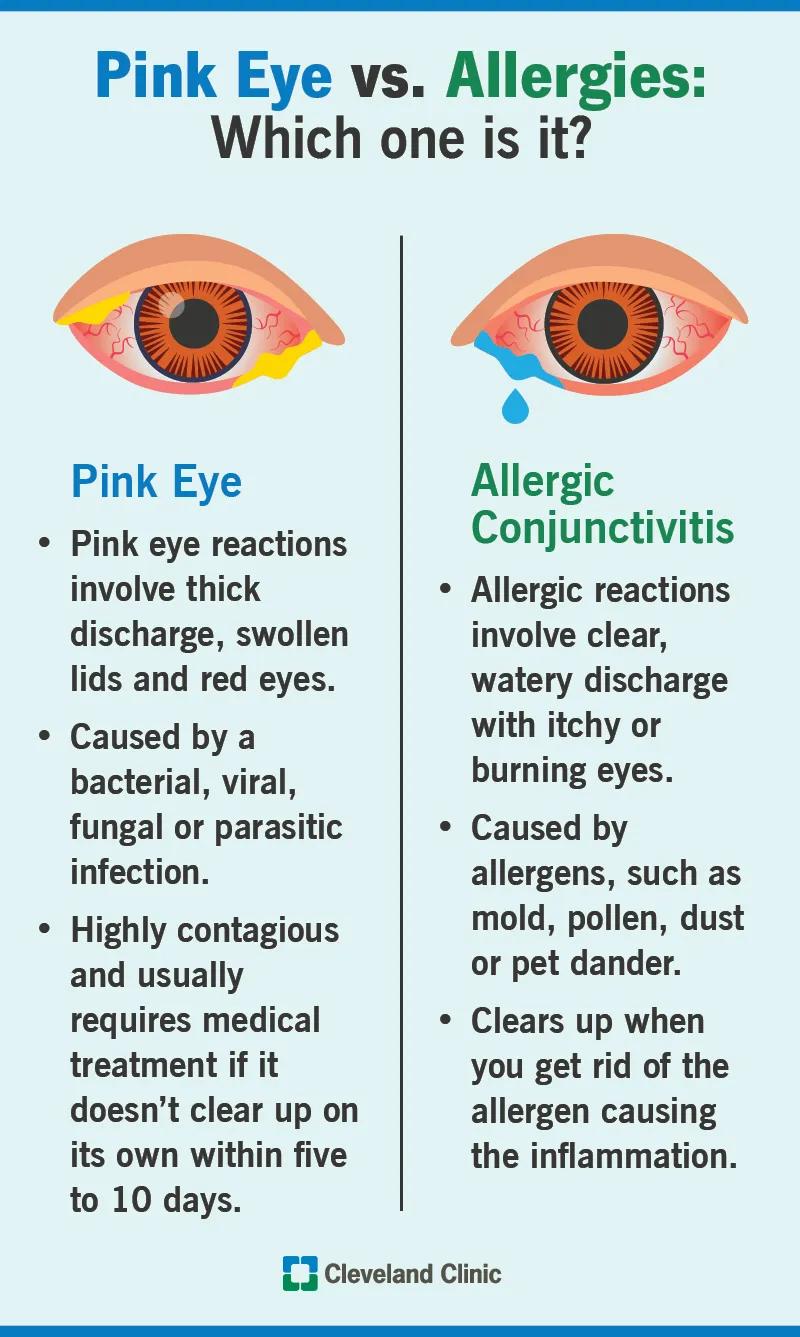
Image content: This image is available to view online.
View image online (https://assets.clevelandclinic.org/transform/f3233d36-1ab2-4e67-8343-27dff62d0897/ItchyRedEyesAllergyInfection-infographic)
“Pink eye usually starts in one eye before spreading to the other, while allergic conjunctivitis can affect one or both eyes at the same time,” says Dr. Engel. “Pink eye can sometimes be connected to more than one respiratory infection symptom, like coughing, sneezing, runny nose, fever and sore throat. But allergic conjunctivitis usually has a simpler association with sneezing and a runny nose.”
Advertisement
Pink eye and allergies share a lot of the same symptoms, but some of them are different. These symptoms include:
| Common symptoms | Allergies | Pink eye |
|---|---|---|
| Redness | Yes | Yes |
| Itching | Moderate to severe | Mild |
| Burning | Yes | Yes |
| Swelling of the white of the eye | Yes | No |
| Clear, watery discharge | Often “rope-like” | Viral |
| Pain | No | No |
| Gritty feeling in eyes | Yes | Yes |
| Sensitivity to light | Very rare | Very rare |
| Thick discharge | No | Bacterial |
| Common symptoms | ||
| Redness | ||
| Allergies | ||
| Yes | ||
| Pink eye | ||
| Yes | ||
| Itching | ||
| Allergies | ||
| Moderate to severe | ||
| Pink eye | ||
| Mild | ||
| Burning | ||
| Allergies | ||
| Yes | ||
| Pink eye | ||
| Yes | ||
| Swelling of the white of the eye | ||
| Allergies | ||
| Yes | ||
| Pink eye | ||
| No | ||
| Clear, watery discharge | ||
| Allergies | ||
| Often “rope-like” | ||
| Pink eye | ||
| Viral | ||
| Pain | ||
| Allergies | ||
| No | ||
| Pink eye | ||
| No | ||
| Gritty feeling in eyes | ||
| Allergies | ||
| Yes | ||
| Pink eye | ||
| Yes | ||
| Sensitivity to light | ||
| Allergies | ||
| Very rare | ||
| Pink eye | ||
| Very rare | ||
| Thick discharge | ||
| Allergies | ||
| No | ||
| Pink eye | ||
| Bacterial |
“In general, allergic conjunctivitis is paired with marked itching, redness and watery discharge, whereas infectious conjunctivitis has discomfort, chronic discharge and less itching,” clarifies Dr. Engel. “If you have light sensitivity, you should be seen promptly because this could indicate a more serious condition called uveitis.”
Infectious conjunctivitis often improves within five to 10 days with no treatment at all or with simple drops like artificial tears. But it can still be very uncomfortable. If you have worsening symptoms after more than two days, Dr. Engel recommends making an appointment to determine if prescription eye drops are more appropriate.
Allergic conjunctivitis often gets better when you limit your interactions with the allergen that’s causing eye inflammation. But symptoms can linger for many weeks with seasonal changes that come in the spring and fall, requiring a prescription steroid eye drop to break the cycle of itching and inflammation.
“The bottom line: Neither of these conditions is sight-threatening,” states Dr. Engel. “But it’s always best to seek an opinion from an eye doctor if you’re unable to treat symptoms adequately at home after a couple days, especially if you’re experiencing worsening vision or light sensitivity.”
Other at-home remedies for pink eye and allergies include:
Avoid using drops that have only naphazoline or oxymetazoline longer than five days — these drops can improve comfort and redness, but they can cause a form of eye-drop addiction.
“Getting a quick diagnosis and treatment is the key when you have irritated eyes,” reinforces Dr. Engel. “It doesn’t matter if it’s pink eye or allergies, your eye doctor can help you find the right treatment and the relief you need whenever you’re dealing with these conditions.”
Advertisement

Sign up for our Health Essentials emails for expert guidance on nutrition, fitness, sleep, skin care and more.
Learn more about our editorial process.
Advertisement
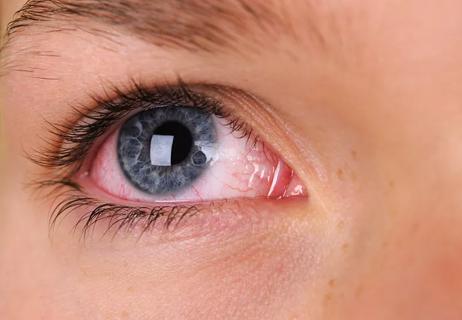
Red eyes can happen for many reasons, from allergies and dry eye to pink eye and other infections
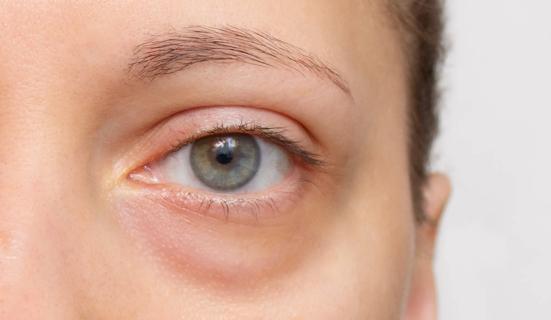
Applying a cold compress, using antihistamine eye drops and limiting salt can help reduce puffiness
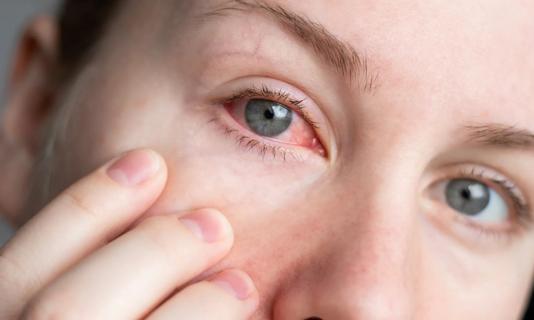
Early morning red eyes can be a sign of several conditions, like dry eyes, allergies and eye strain
See an eye specialist if your pain isn’t going away and comes with other symptoms
Your eyes could be burning because of allergies, elevated salt levels, dry eyes and more

One is a raised yellow spot on your eye, the other is a fleshy growth
When worn incorrectly, contacts can cause or worsen dry eye symptoms
Preservative-free lubricating drops, a humidifier, sunglasses and preventive medications can help with dry eyes, no matter the season

Managing your weight through physical activity may lower your chances of getting this common cancer

It typically starts in October and winds down in early spring, with cases at their highest in the middle of winter

Anxiety disorders, health conditions and past trauma can make driving nerve-wracking — help is available
 Search










