Locations:





Crunchy, delicious and nutritious!
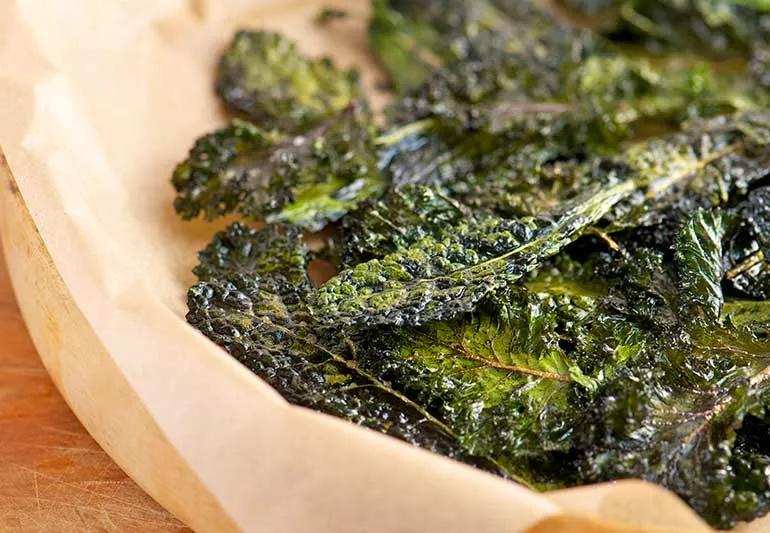
Image content: This image is available to view online.
View image online (https://assets.clevelandclinic.org/transform/3f5bc771-4d08-4778-978f-39db18f9ee2e/Baked-Kale-185251692-770x533-1_jpg)
Bowl of baked kale.
No potato chip can beat this crispy snack — it’s not only scrumptious but also super nutritious!
Advertisement
Cleveland Clinic is a non-profit academic medical center. Advertising on our site helps support our mission. We do not endorse non-Cleveland Clinic products or services. Policy
A serving only has 112 calories and 1 gram of saturated fat, and you get a whopping 309% of the recommended daily amount of vitamin A, 201% of vitamin C, 14% of calcium and 10% of iron. Enjoy these tasty little numbers in good health.
*If kale still bends (rather than crackles) when you touch it, it isn’t done yet. Return the tray to the oven. Turn down the heat if it’s getting too brown. Continue cooking until crispy. Remove from oven, sprinkle with sea salt and serve immediately.
Makes 4 servings
Serving size = 1.5 cups
Calories: 112
Total fat: 8 g
Saturated fat: 1 g
Cholesterol: 0 mg
Sodium: 280 mg
Total carbohydrate: 10 g
Dietary fiber: 2 g
Sugar: 0 g
Protein: 3 g
Advertisement
Advertisement

Sign up for our Health Essentials emails for expert guidance on nutrition, fitness, sleep, skin care and more.
Learn more about our editorial process.
Advertisement

A warm dessert alternative to enjoy on a cold day

A simple yet impressive and nutritious dessert

A perfect treat any time of year

Sweet with hints of vanilla, this lower-fat classic won’t disappoint!
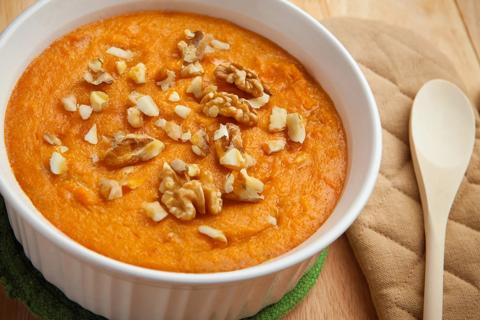
A delicious stovetop dessert fit for any season

A delicious classic holiday pie, flavored with ground almonds, cinnamon, nutmeg and vanilla

A creamy, dreamy and low-cal dessert

Fun to make — and fun to eat!

Hormonal changes, a slower metabolism and muscle loss can make weight gain more common around menopause — healthy habits can help you manage it

Life-threatening complications include sepsis, stroke, pneumonia and more

Fruity-smelling breath can happen when your body burns fat for energy, and in some cases, can signal a medical emergency
 Search










