Locations:





Choose hearing aids that are comfortable, fit your routine and work for your level of hearing loss
Shopping for hearing aids can feel overwhelming. Between different styles, features and technologies, you’ve got options. Lots of them.
Advertisement
Cleveland Clinic is a non-profit academic medical center. Advertising on our site helps support our mission. We do not endorse non-Cleveland Clinic products or services. Policy
“There isn’t one hearing aid that’s best for everyone,” says audiologist Penny Heba, AuD. “The right choice depends on your hearing loss, your lifestyle and what you need from the device.”
Dr. Heba shares details about several types of hearing aids so that you can make an informed choice.
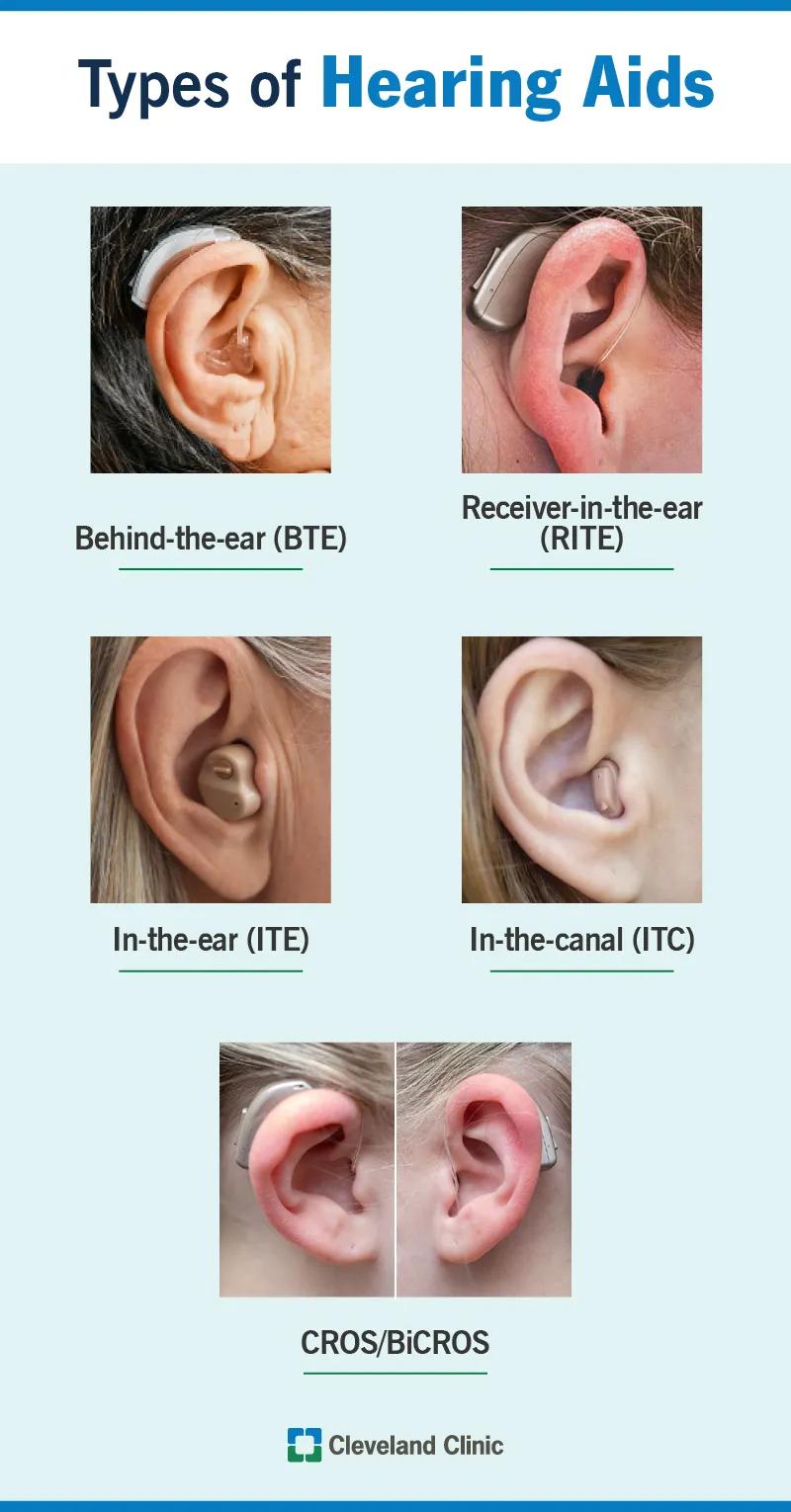
Image content: This image is available to view online.
View image online (https://assets.clevelandclinic.org/transform/8959bf26-14c7-458e-b3ec-217808777567/hearing-aid-types)
There are several different types of hearing aids. Some are more noticeable than others. Some can connect wirelessly to your phone and other devices. Some are available over the counter (OTC), while others require a prescription.
“OTC hearing aids aren’t appropriate for more than a mild hearing loss,” Dr. Heba says. “For the right hearing loss, they can be a very good option.”
But all hearing aids have the same goal: helping you hear conversations and everyday sounds more clearly. The biggest differences lie in:
Let’s take a quick look at some of the options before diving into the specifics.
As the name implies, behind-the-ear (BTE) hearing aids house all the electronics — including a speaker — behind your ear. A custom earmold or thin tube connects the device to your ear.
Advertisement
BTE hearing aids can be an option for all levels of hearing loss, from mild to profound.
“They’re often a great choice because they can accommodate a wide range of hearing needs while offering many of the latest features,” Dr. Heba explains.
Because BTE devices have multiple parts, they may be more difficult to insert and remove if you have arthritis or limited dexterity in your hands.
Receiver-in-the-ear (RITE) hearing aids look similar to BTE devices. And like BTE hearing aids, they require you to be able to handle small parts.
Also, like BTE devices, the main body sits behind your ear. But instead of housing the speaker there, a thin wire connects it to a receiver that sits inside your ear canal. That means these types of hearing aids may provide a more natural listening experience than BTE devices.
RITE hearing aids work well if you have mild to severe hearing loss.
Instead of sitting behind your ear, in-the-ear (ITE) hearing aids fit inside your concha. That’s the bowl-like part of your outer ear. Some fill the entire space, while others are slightly smaller.
ITE hearing aids are often recommended for people with moderate to severe hearing loss, and they may be easier to handle than smaller devices.
“If inserting and removing very small hearing aids is challenging, an in-the-ear style can be easier to manage,” Dr. Heba confirms.
If keeping your hearing aids as discreet as possible is important to you, an in-the-canal (ITC) device may be worth considering. They work best for mild to moderate hearing loss.
These hearing aids sit deeper in your ear canal, making them less visible than larger hearing aids. Some people may even qualify for completely-in-the-canal (CIC) hearing aids, which fit even farther into your ear canal.
The tradeoff is that their smaller size can make them more difficult to insert, remove and maintain. They typically require very small batteries, too, which can be tough for some people to handle.
CROS and BiCROS hearing aids are designed for people who have much better hearing in one ear than the other.
With both systems, you wear a microphone on your poorer-hearing side. It sends sounds to a hearing aid worn on your better-hearing side.
Advertisement
“With these types of hearing aids, sounds picked up on your weaker side are transmitted to your better-hearing ear,” Dr. Heba explains. “That makes it easier to hear conversations regardless of where someone is standing.”
Choosing hearing aids isn’t just about picking the smallest device or the latest technology. It’s about finding one that fits your hearing needs and your everyday life.
“It’s important to choose something that’s comfortable and works well for your routine,” Dr. Heba advises. “Your hearing aids should feel good, work well and be convenient for you to use.”
Finding hearing aids that you’ll use consistently isn’t just about better hearing. Left untreated, hearing loss can make you feel isolated and can affect your mental health and even your memory and brain function.
When looking for hearing aids, consider:
If you’re not sure where to begin, that’s OK. There are a lot of options, and they deserve a close look.
An audiologist can help you find the right hearing aids so you can hear well, communicate with confidence and live a fuller life.
Advertisement

Sign up for our Health Essentials emails for expert guidance on nutrition, fitness, sleep, skin care and more.
Learn more about our editorial process.
Advertisement
Seeing a licensed professional is still key to treating hearing loss
Hearing aid technology has vastly improved over the last several years
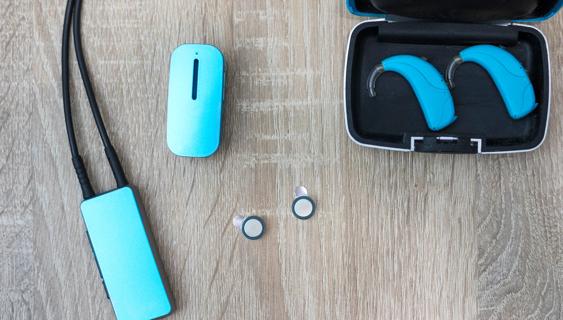
Hearing aids can be enough for some people, but other devices — like for your phone, TV and fire alarm — can help, too

Reduce background noise, don’t talk too fast or too slow and above all, ask what’s most helpful to them

Learn how to help encourage a better quality of life

Consider the severity and location of your arthritis to decide on the right support
Eyes typically increase to full size during two growth spurts in childhood

Pre-birth injections and monoclonal antibodies can help prevent serious complications

Managing your weight through physical activity may lower your chances of getting this common cancer

It typically starts in October and winds down in early spring, with cases at their highest in the middle of winter

Anxiety disorders, health conditions and past trauma can make driving nerve-wracking — help is available
 Search










