Locations:





This phenomenon explains why unfinished tasks loom large in your mind
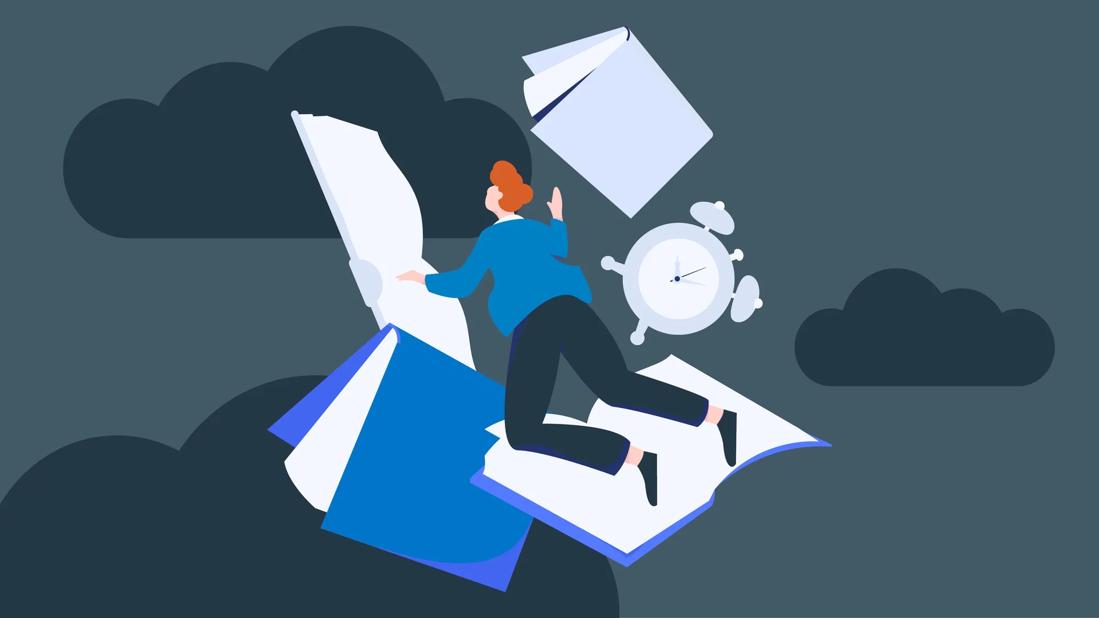
Image content: This image is available to view online.
View image online (https://assets.clevelandclinic.org/transform/e31eb580-29bc-4d2f-b684-37368153dfc3/not-finishing-book-zeigarnik-effect)
Person floating among open books with a clock passing time
If you’re a fan of scary movies, you’ve probably heard a character or two describe ghosts as being trapped on Earth due to unfinished business. Turns out, they aren’t the only ones who crave closure — flesh-and-blood humans do, too. There’s even a name for it: The Zeigarnik effect.
Advertisement
Cleveland Clinic is a non-profit academic medical center. Advertising on our site helps support our mission. We do not endorse non-Cleveland Clinic products or services. Policy
Psychologist Susan Albers, PsyD, explains what this effect is, how it works and how to use it to your advantage.
The Zeigarnik effect (named for psychologist Bluma Zeigarnik) is a cognitive phenomenon that explains why the tasks we haven’t finished yet tend to linger in our minds longer than the ones we’ve completed.
“Our brains are wired to hold onto unfinished business,” Dr. Albers says. “When something’s incomplete, your brain creates a thought loop, which builds tension and anxiety.”
Like your fight-or-flight response, the Zeigarnik effect is a stress response that made sense as a survival mechanism once upon a time. After all, forgetting to return to a task like hunting, foraging, fetching water or crafting a tool could be disastrous.
But now? Not so much. At least, not in the same way.
“We complete so many tasks at once now,” Dr. Albers notes. “The Zeigarnik effect can be helpful because it motivates us to complete tasks. But it can also keep you up at night, make you feel guilty and cause intrusive thoughts.”
The term may be new to you, but chances are good that you feel the impact of this effect every day. Dr. Albers shares a few examples:
Advertisement
The Zeigarnik effect may be linked to your brain’s anterior cingulate cortex (ACC). Among other responsibilities, your ACC helps:
When you don’t complete a task or can’t resolve a situation, your ACC may help keep it active in your working memory, so you don’t forget it.
This effect can be harmful at times — but it can also be an ally. It can help you get more done and make it easier to spot (and resist) the forces in our lives that keep us stuck.
Dr. Albers offers the example of an online shopping cart.
“When online retailers send you reminder emails about your shopping cart, they’re using the Zeigarnik effect as a marketing strategy to pull you back in and make the sale,” Dr. Albers illustrates. “But now that you understand it, you can decide whether you really want to close that particular loop.”
You can also use the Zeigarnik effect to:
While it can be beneficial at times, the Zeigarnik effect can also make you uncomfortable. It can keep your attention divided at moments when you really need to focus — and be a source of ongoing stress. Over time, that feeling of perpetual overwhelm can lead to burnout.
You may also find it more troubling than helpful if you have a mental health disorder or developmental condition that:
“You may feel this urge to get something done, but your brain is standing in the way,” Dr. Albers says. This push-and-pull is common for people with conditions like:
If feelings of stress, overwhelm or guilt are making it hard to function in your daily life, Dr. Albers recommends trying cognitive behavioral therapy (CBT).
If you have a psychiatrist, consider reaching out to them, too. They may want to adjust any medications you’re taking. Don’t have a therapist or a psychiatrist? Visit your primary care provider. They’ll help you build a care team tailored to your needs.
Understanding the Zeigarnik effect may help you work with your brain instead of against it. But if a lack of closure has become a source of stress, getting support from a mental health professional can make a real difference.
Advertisement

Sign up for our Health Essentials emails for expert guidance on nutrition, fitness, sleep, skin care and more.
Learn more about our editorial process.
Advertisement
Mindfulness, distractions and therapy can help when negative thoughts are stuck on repeat

Physical activity can lift your mood, increase your energy and boost your self-esteem

Simplifying choices, a reassuring attitude and avoiding information overload can help you overcome indecision

Even small moments of time outdoors can help reduce stress, boost mood and restore a sense of calm

Burnout is often driven by long periods of stress without time to recover — but practicing self-care and creating work/life boundaries can help

Try breaking down tasks into manageable to-do lists and relying on time management techniques
If you’re torn between contradictory beliefs, questioning your decisions or feeling ashamed about your choices, you may be experiencing cognitive dissonance
These beliefs or rituals connect specific actions, objects or events to good or bad luck, which can help us feel more in control

Managing your weight through physical activity may lower your chances of getting this common cancer

It typically starts in October and winds down in early spring, with cases at their highest in the middle of winter

Anxiety disorders, health conditions and past trauma can make driving nerve-wracking — help is available
 Search










