Locations:





Mindfulness, distractions and therapy can help when negative thoughts are stuck on repeat
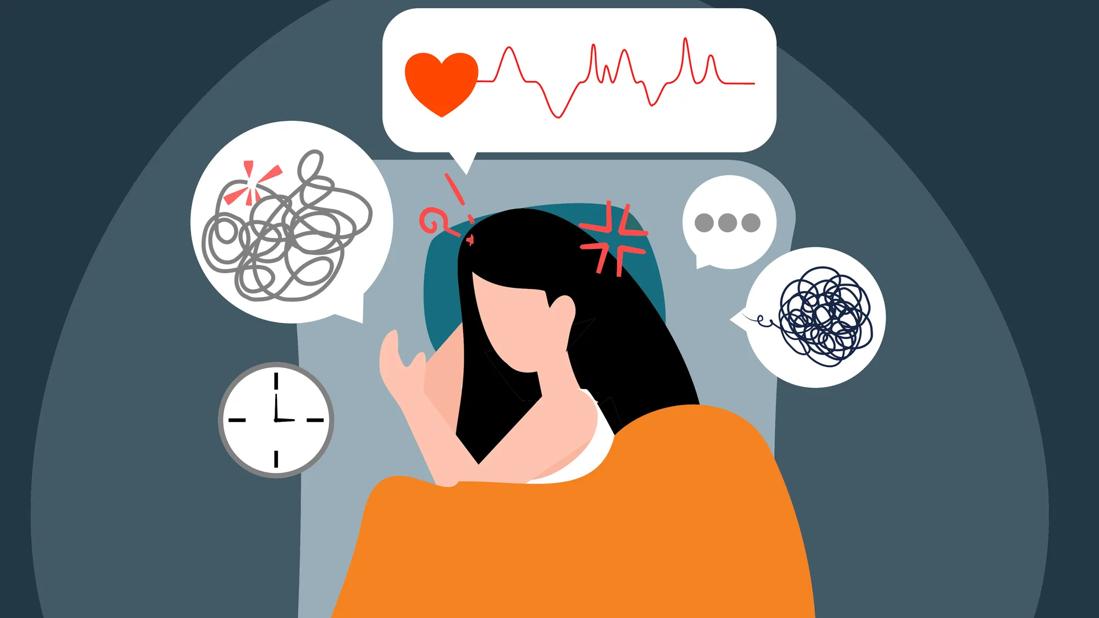
Image content: This image is available to view online.
View image online (https://assets.clevelandclinic.org/transform/7dd50ffc-f9ea-4b0c-9193-9da1e3059b3c/rumination-2221703263)
Person trying to sleep with upsetting thoughts popping into their mind in the middle of the night
You finally get cozy in bed, ready to drift off to sleep. But your mind has other plans. It replays that awkward moment at the park. Over. And over. And over again.
Advertisement
Cleveland Clinic is a non-profit academic medical center. Advertising on our site helps support our mission. We do not endorse non-Cleveland Clinic products or services. Policy
Why did I say that? Did I offend them? I’m so embarrassing.
If this sounds familiar, you’re not alone. It’s a common negative thought trap called rumination.
Everyone rehashes mistakes and worries sometimes. But frequent rumination can leave you trapped. Psychologist Susan Albers, PsyD, explains why your brain does this and how you can break the cycle.
Rumination is when your mind keeps replaying the same negative thoughts without finding a solution. It’s like your brain is stuck hitting replay, hoping for a different ending.
You might ruminate about:
“Everyone has negative thoughts,” Dr. Albers points out. “The difference is whether they pass through as visitors or live rent-free in your mind.”
Spinning your wheels mentally can drain your energy and affect your mood. Over time, it can worsen conditions and issues like:
It also pulls you out of the present moment. Physically, you might be with family or friends, but your mind is somewhere else — replaying yesterday or worrying about tomorrow.
“Rumination tends to happen with other thinking traps, like catastrophizing and taking things personally,” Dr. Albers says.
Advertisement
Your brain is built to solve problems. That’s helpful most of the time. But sometimes, it goes too far.
“When something feels unresolved or uncomfortable, your brain wants to figure it out,” explains Dr. Albers. “But not everything has a clear answer.” That’s where rumination comes in. It can feel productive, but it isn’t.
“It’s like pacing in a room,” she illustrates. “You’re doing a lot of work, but you're not actually getting anywhere.”
You might tell yourself, If I think about this a little longer, I’ll figure it out!
But rumination doesn’t pose helpful questions. Instead of asking, What can I learn?, it keeps you stuck on:
“Healthy self-reflection often gives you an ‘aha’ moment that helps you move forward,” Dr. Albers clarifies. “Rumination keeps you going in circles, with no feeling of relief.”
Exiting a rumination roundabout isn’t always easy, but it’s possible. Dr. Albers shares five strategies.
Mindfulness is about being in the moment. Instead of chasing a thought down a rabbit hole, try observing it and letting it pass.
“Mindfulness helps you sit with an uncomfortable feeling without trying to change or judge it,” says Dr. Albers.
Sometimes, your brain needs a refresh. Do something that fully engages your mind or body — go for a walk, clean out a drawer or try something creative.
“It’s much harder to ruminate when your hands and mind are busy in the present,” Dr. Albers notes.
Not every thought you have is true. But that can be hard to remember when you’re in the thick of it.
“Thought challenging” is a technique from cognitive behavioral therapy (CBT), a common form of talk therapy. It can help you step back and examine negative automatic thoughts.
“You may realize you’re treating assumptions like facts,” says Dr. Albers.
If certain thoughts keep coming back, write them down. Then, physically put the paper away, like in a drawer or envelope.
This practice may seem overly simple, but Dr. Albers emphasizes that it helps create distance between you and those thoughts.
Instead of trying to stop the ruminating thoughts entirely, give them a specific time and place. For example, tell yourself, I’ll think about this at 6 p.m. for 10 minutes.
“Many people find that their urge to ruminate fades before that time comes,” Dr. Albers says.
If rumination starts to interfere with your daily life, it may be time to talk with a mental health professional.
“Therapy can be very effective,” encourages Dr. Albers. “It can help you understand why you ruminate, identify triggers and develop healthier ways to respond.”
Advertisement
Sometimes, therapy alone isn't enough. If anxiety or depression fuel the cycle, medication can help quiet your brain enough to use the tools you learn in therapy.
And remember — your thoughts don’t have to run the show. With practice, you can turn down the volume and enjoy the moments in front of you.
Advertisement

Sign up for our Health Essentials emails for expert guidance on nutrition, fitness, sleep, skin care and more.
Learn more about our editorial process.
Advertisement

Physical activity can lift your mood, increase your energy and boost your self-esteem

This phenomenon explains why unfinished tasks loom large in your mind

Simplifying choices, a reassuring attitude and avoiding information overload can help you overcome indecision

Even small moments of time outdoors can help reduce stress, boost mood and restore a sense of calm

Burnout is often driven by long periods of stress without time to recover — but practicing self-care and creating work/life boundaries can help

Try breaking down tasks into manageable to-do lists and relying on time management techniques
If you’re torn between contradictory beliefs, questioning your decisions or feeling ashamed about your choices, you may be experiencing cognitive dissonance

These beliefs or rituals connect specific actions, objects or events to good or bad luck, which can help us feel more in control

Managing your weight through physical activity may lower your chances of getting this common cancer

It typically starts in October and winds down in early spring, with cases at their highest in the middle of winter

Anxiety disorders, health conditions and past trauma can make driving nerve-wracking — help is available
 Search










