Locations:
Search IconSearch
March 16, 2021/Living Healthy/Sleep

4 Simple Steps to Get You Back to Sleep Fast

Good nighttime and daytime habits can keep you well-rested
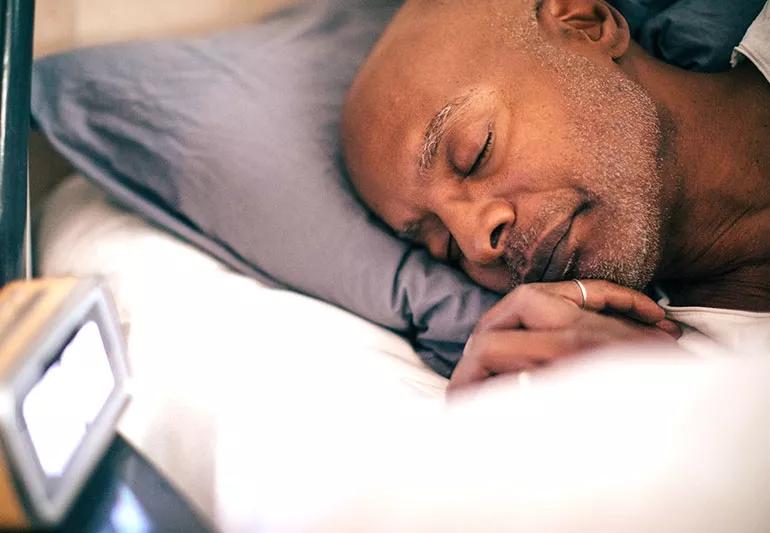
Person sleeping in bed with their head on a pillow

How many times have you experienced this: You’re wide awake at 3 a.m., unable to get back to sleep. Your mind races with a rising sense of panic about the difficult day ahead if you don’t fall back to sleep. But it seems impossible, at that point, to drift back to sleep.

Advertisement

Cleveland Clinic is a non-profit academic medical center. Advertising on our site helps support our mission. We do not endorse non-Cleveland Clinic products or services. Policy

What you’re experiencing is a type of insomnia, says behavioral sleep disorders specialist Michelle Drerup, PsyD.

Many underlying health problems such as chronic painsleep apnea or acid reflex can cause insomnia. But if your difficulty getting to and staying asleep isn’t due to health problems, here are some tips that can help you get back to sleep fast.

  1. Stop watching the clock. Marking off the minutes only heightens your distress about being awake.
  2. Try relaxing your body to fall asleep. Working from your toes to your forehead, tightly tense each muscle group for five seconds, then relax.
  3. If you can’t fall back to sleep after approximately 15 to 20 minutes, get out of bed. Use your “mind clock, ” Dr. Drerup says, to estimate how long you’ve been awake. After 20 minutes of wakefulness, get up and leave your bedroom. “Don’t spend time in bed trying to fall asleep,” she says. “You’ll probably worry about not falling asleep and then learn to associate the bedroom with not sleeping well.”
  4. Find an uninteresting activity. Read something uninteresting. Listen to relaxing music. When you start to feel drowsy, go back to bed.

In addition to these tips above, you can also adopt daytime habits that will help you sleep better at night, Dr. Drerup says.

Advertisement

  • Create a consistent sleeping and waking schedule — even on the weekends and days off work. “What works best is going to around bed at the same time and waking up at same time every day,” Dr. Drerup says.
  • Avoid consuming drinks or food with caffeine before bedtime. Don’t drink caffeinated beverages for at least five to six hours before you plan to retire, Dr. Drerup says. “Caffeine can play a major role in not getting a good night’s sleep,” she says.
  • Make your sleeping environment comfortable. The room should be set at a temperature that’s not too warm or too cold. Find a mattress and pillow with a firmness level that you find restful.
  • One hour before bedtime, stop doing work or other mentally-challenging tasks. Switch to something calming such as reading a book.
  • Use your bed only for sleep or intimacy. Do not watch television or play with electronic devices while lying in bed. “Otherwise, we come to associate the bedroom with not sleeping,” Dr. Drerup says.

Chronic insomnia affects up to 15 % of adults, and many don’t seek treatment for it.

If your symptoms last longer than a month or so, it’s time to seek medical advice. Ditto if lack of sleep interferes with your daytime activities, Dr. Drerup says.

Advertisement

Cleveland Clinic icon
Health Essentials logo
Subscription icon

Better health starts here

Sign up for our Health Essentials emails for expert guidance on nutrition, fitness, sleep, skin care and more.

Learn more about our editorial process.

Related Articles

female awake in bed staring ahead with male next to her asleep
January 19, 2024/Sleep

3 Steps for Managing Sleep Maintenance Insomnia

Keeping a sleep diary and seeing a sleep specialist can help you stay asleep and get the ZZZs you need

woman listening to music at night
May 27, 2021/Mental Health

How To Calm Your Anxiety at Night

What to do when your worries are keeping you from sleep
Graphic of woman having trouble falling asleep.
May 28, 2020/Sleep

If You’re Having Trouble Sleeping, Here’s What To Do

Expert tips from sleep specialists to get your sleep back on track
Multiple alarm clocks showing how people with insomnia struggle to fall asleep.
May 4, 2020/Sleep

Here’s How You Can Overcome Insomnia

Sweet dreams are made of these

Person waking up, sitting up in bed, stretching, with sleep mask raised to forehead
February 23, 2026/Sleep

How a Sleep Mask Might Help You Get Better Rest

Sleep masks can help you create total darkness so you can sleep better

Two nightshift workers consulting
February 10, 2026/Sleep

How To Sleep Better When You Work the Night Shift

To avoid sleep deprivation and shift work sleep disorder, try adopting habits that minimize light exposure and prioritize daytime sleep

Person in bed, waking up tired, stretching
January 30, 2026/Sleep

6 Reasons Why You Wake Up Tired, Even After a Long Night’s Sleep

Sleep disorders, mental health conditions and other health concerns can all affect the quality of your sleep

Person snuggled up to pillow, asleep in bed
January 28, 2026/Sleep

How Long Should It Take To Fall Asleep?

Most people fall asleep within 10 to 20 minutes, but if your experience is different, adjusting your sleep schedule may help

Trending Topics

Person riding bike on pavement outside

7 Self-Care Tips for People With Type 2 Diabetes

Prioritize your health by managing stress, strengthening your social connections and getting quality sleep

Assortment of colorful yoga props, including straps, mats and blocks

Essential Yoga Props for Every Yoga Practice

Bolsters, blankets, pillows and blocks can offer extra support, stability and comfort

Person coughing into the crook of their elbow

Why Am I Coughing So Much?

Allergies, postnasal drip, asthma or reflux could be to blame for a cough that won’t quit

Ad