Locations:





These supplements are full of vitamins and minerals that benefit eye health

Image content: This image is available to view online.
View image online (https://assets.clevelandclinic.org/transform/d08b4ac9-f749-49f5-a18c-1ba713f80c1d/vitamins-eye-health-2209355886)
Bottle of supplements, with oversized eye
Age-related macular degeneration brings gradual vision loss. It may not be curable, but can the process be slowed?
Advertisement
Cleveland Clinic is a non-profit academic medical center. Advertising on our site helps support our mission. We do not endorse non-Cleveland Clinic products or services. Policy
The answer is yes — sometimes, the disease can be kept at bay with the help of AREDS2 supplements.
Ophthalmologist Kevin Keppel, MD, explains how they work, what’s in them and what to expect for your vision long term.
AREDS2s are vitamin-packed supplements available online and over-the-counter for anyone with intermediate age-related macular degeneration in one or both eyes or advanced age-related macular degeneration in one eye.
“AREDS2 hasn’t been shown to prevent early AMD, but it can slow the progression of disease before it becomes more severe,” says Dr. Keppel. “AREDS2 may prevent vision loss in the future.”
The supplement gets its name from a series of landmark clinical trials. The Age-Related Eye Disease Study (AREDS) was the first to prove that high levels of antioxidants and zinc could reduce the risk of advanced AMD.
The second study (AREDS2) further clarified that the addition of lutein and zeaxanthin had significant benefits for slowing the progression of AMD (more on that later).
AREDS2 supplements can help slow the progression of AMD before it reaches more advanced stages because of a powerful combination of vitamins and minerals that support eye health:
Advertisement
“Most of these components are antioxidants,” notes Dr. Keppel. “They help protect the retina from damage that plays a major role in macular degeneration.”
The revamped AREDS2 formula adds lutein and zeaxanthin to replace the beta-carotene in the original AREDS. The reason: They were found to be more effective at protecting the eyes.
Researchers also found that people taking AREDS2 have an 18% lower risk of progressing to late-stage AMD than those who take the original formula.
AREDS2 supplements are designed as preventive treatments. As a result, it can help:
“AREDS2 is a long-term protective supplement that can help lower your risk of future vision loss,” says Dr. Keppel. “AMD usually progresses slowly over time. So, if you stop taking AREDS2, AMD could continue to get worse until you develop geographic atrophy or wet AMD, the two more advanced forms of the disease.”
It’s common for AREDS2 to cause mild digestive side effects, like:
“Overall, AREDS2 supplements are very safe, but there are some rare negative effects if you’re consuming high amounts of zinc and vitamin E,” cautions Dr. Keppel.
High levels of zinc can lead to copper deficiency. The AREDS2 formula added copper to offset this risk — but if you’re getting high levels of zinc from other dietary sources, it may be worth limiting how much zinc you consume.
High levels of vitamin E can increase your risk of bleeding. So, AREDS2 supplements may also increase complications when using blood thinners like warfarin (Coumadin® and Jantoven®).
“It’s important to talk to your primary care physician about AREDS2 supplements before taking them just to make sure there are no possible interactions with any of your other medications,” advises Dr. Keppel.
AREDS2 has proven to be more effective, but the original AREDS formula is still available over the counter. That said, the original version can be harmful for anyone who smokes or has a history of smoking.
“We strongly recommend the AREDS2 formula for anyone who smokes because the original formula has been shown to increase your risk of lung cancer,” warns Dr. Keppel. “Be careful about which version you’re taking.”
AREDS2 has been found to lower the risk of progression of intermediate macular degeneration to advanced macular degeneration by about 25%. That’s great news for people with intermediate dry AMD because it may help delay the development of geographic atrophy or wet AMD, the two advanced forms of the disease.
Advertisement
And as AMD tends to set in with age, Dr. Keppel recommends yearly eye exams after age 50 to monitor for AMD and other age-related eye conditions and to determine whether AREDS2 may be appropriate.
“AREDS2 is meant to provide long-term protection from a disease that gets progressively worse,” says Dr. Keppel. “If you do experience loss of vision, there are assistive devices and strategies that can help improve your quality of life, too.”
Advertisement

Sign up for our Health Essentials emails for expert guidance on nutrition, fitness, sleep, skin care and more.
Learn more about our editorial process.
Advertisement
Having a first-degree biological relative with this eye condition raises your risk, but other factors are at play, too

Eating a balanced diet can help protect your eyes and may prevent AMD from progressing

They may help, but it depends on factors like the stage of your disease
Wet age-related macular degeneration is rarer and always advanced
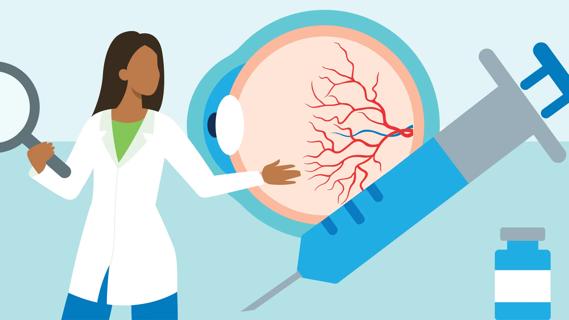
Izervay and Syfovre are long-term medications that can slow down the disease
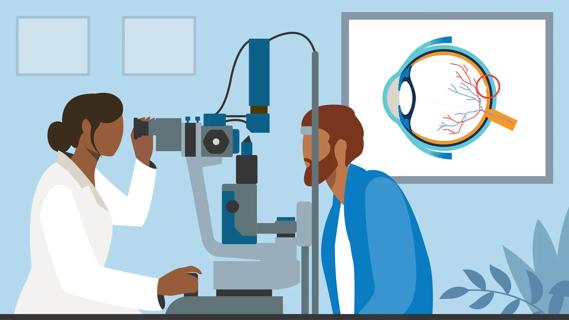
Progress can be slowed with the help of supplements, injections and close monitoring

Tools like CCTV, voice commands and magnifiers can help improve quality of life when you’ve lost vision

A diet built around fruits, vegetables and healthy fats is a clear 20/20 benefit for your vision

Managing your weight through physical activity may lower your chances of getting this common cancer

It typically starts in October and winds down in early spring, with cases at their highest in the middle of winter

Anxiety disorders, health conditions and past trauma can make driving nerve-wracking — help is available
 Search










