Locations:





Izervay and Syfovre are long-term medications that can slow down the disease
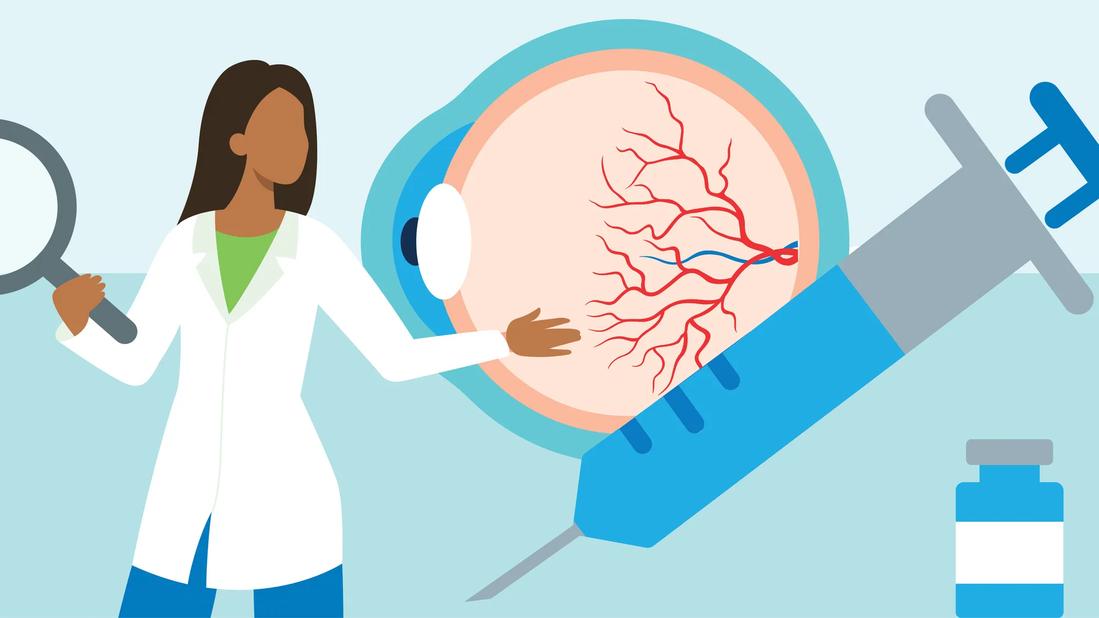
Image content: This image is available to view online.
View image online (https://assets.clevelandclinic.org/transform/fce844fb-f34d-4f26-ae54-e8b1885c439b/doc-eye-injection-1410729522)
Healthcare provider holding oversized magnifying glass, with oversized syringe and bloodshot eye
Geographic atrophy is the most advanced form of dry age-related macular degeneration (AMD). During the late stages of this disease, the retina in your eye grows thin, leading to central vision loss and blind spots.
Advertisement
Cleveland Clinic is a non-profit academic medical center. Advertising on our site helps support our mission. We do not endorse non-Cleveland Clinic products or services. Policy
Previously, there weren’t any treatments for geographic atrophy. Now, there are monthly eye injections that can slow down the progression of geographic atrophy.
Ophthalmologist Kevin Keppel, MD, explains what to expect from these treatments and how they work over time.
There are currently two monthly eye injections that can slow the progression of geographic atrophy:
“Geographic atrophy injections are relatively new,” explains Dr. Keppel. “Unfortunately, you won’t notice any improved vision with the injections, but they’re done as a form of long-term protection for the vision you still have.”
Eye injections can be a major source of anxiety. No one likes the idea of getting poked in the eye, especially with a needle. But healthcare providers do what they can to make it as comfortable and pain-free as possible.
Advertisement
“A lot of people understandably have hesitancy with eye injections,” shares Dr. Keppel. “The vast majority of people who get eye injections end up saying the experience was much easier than they imagined it would be.”
If anxiety is holding you back from getting an eye injection, consider the following advice:
Here’s what happens during an eye injection:
“In total, the entire procedure takes about 15 minutes or less,” says Dr. Keppel. “You get them once a month on a recurring basis.”
It’s common to experience some short-term irritation or watery eyes. In some cases, you may notice visual floaters immediately after an injection. Usually, these side effects go away within 24 hours.
Advertisement
More serious side effects, though rare, can include:
Treatments for geographic atrophy also increase your risk of developing wet macular degeneration, another form of advanced AMD that has the possibility of causing more rapid visual changes. “Fortunately, wet AMD can be treated, and your vision can return to baseline if the disease is caught early,” says Dr. Keppel.
Your healthcare provider will monitor for this and other side effects closely while you’re receiving Izervay or Syfovre.
“Most of the side effects or risks are related to the injection process itself,” he clarifies. “Anytime you consider one of these procedures, have an in-depth conversation with an eye specialist about the potential risks.”
In the first 24 hours after an eye injection, it’s important to avoid:
Over time, as you continue to get monthly eye injections, an eye specialist will monitor the growth of geographic atrophy and how the medications are working.
Though the idea of eye injections may be uncomfortable at first, it’s a promising treatment that can save your quality of life as you continue to age. The upside of these injections is that they represent major progress in this field.
Advertisement
“We didn’t have any treatments at all for geographic atrophy just a few years ago. Now, we have two treatment options, and I suspect we’ll have more someday soon,” encourages Dr. Keppel.
“These medications work, and they slow geographic atrophy down by about 20%, so they can help to preserve vision and quality of life.”
Advertisement

Sign up for our Health Essentials emails for expert guidance on nutrition, fitness, sleep, skin care and more.
Learn more about our editorial process.
Advertisement

A low-vision occupational therapist can help you learn new ways of doing things so you can maintain your independence
Progress can be slowed with the help of supplements, injections and close monitoring

Tools like CCTV, voice commands and magnifiers can help improve quality of life when you’ve lost vision

Preserving your social life and protecting your mental health are key to living well with vision loss

Start low-vision rehabilitation as soon as possible and see your retina specialist at least every six months

These supplements are full of vitamins and minerals that benefit eye health

Having a first-degree biological relative with this eye condition raises your risk, but other factors are at play, too

A diet built around fruits, vegetables and healthy fats is a clear 20/20 benefit for your vision

Managing your weight through physical activity may lower your chances of getting this common cancer

It typically starts in October and winds down in early spring, with cases at their highest in the middle of winter

Anxiety disorders, health conditions and past trauma can make driving nerve-wracking — help is available
 Search










